
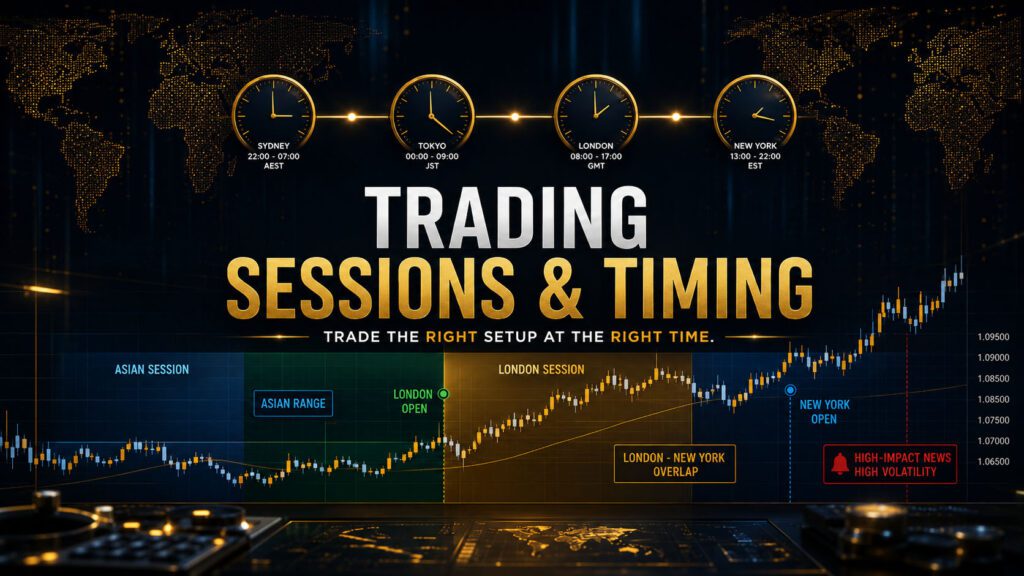
Trading Sessions & Timing
Learn how liquidity, volatility, session opens, market overlaps, economic releases, and time-of-day behavior affect trade quality and execution.Lesson Introduction
A Good Setup at the Wrong Time Can Become a Bad Trade
Trading is not only about identifying direction, structure, entries, stop losses, and profit targets. Timing matters. The same technical setup can behave very differently depending on whether it forms during a major trading session, a quiet period, a session overlap, or immediately before an economic release. Forex markets operate twenty-four hours a day during the trading week, but activity is not evenly distributed. Different financial centers become active at different times, bringing changes in liquidity, volatility, spread, momentum, and institutional participation. A clean breakout during the London session may attract strong follow-through. The same breakout during a quiet late-session period may fail because there is not enough participation behind the move. This lesson builds on Building a Trade Setup, Entry Confirmation, Stop Loss Placement, and Take Profit & Trade Management.Professional principle: Do not ask only whether the setup is valid. Ask whether the market is active enough, stable enough, and properly timed for the setup to perform.
Learning Objectives
- Understand how the global forex trading day is organized.
- Identify the characteristics of the Asian, London, and New York sessions.
- Understand why session overlaps create greater activity.
- Recognize when spreads and volatility commonly expand.
- Match currency pairs with the sessions where they are most active.
- Avoid entering immediately before major economic releases.
- Understand the difference between active and low-liquidity periods.
- Create a personal trading window that supports discipline.
- Reduce overtrading by limiting chart time.
- Use timing as part of a complete trade filter.
1. Why Time of Day Matters in Forex
1
Liquidity Changes
Liquidity refers to how easily orders can be filled without causing large price changes. Major sessions usually offer deeper liquidity and smoother execution.2
Volatility Changes
Price ranges often expand when major financial centers open and contract when market participation decreases.3
Spreads Change
Spreads are commonly tighter during liquid periods and wider during rollover, news releases, holidays, and quiet market conditions.Timing does not replace technical analysis. It strengthens technical analysis by identifying when a setup has enough participation and market energy behind it.
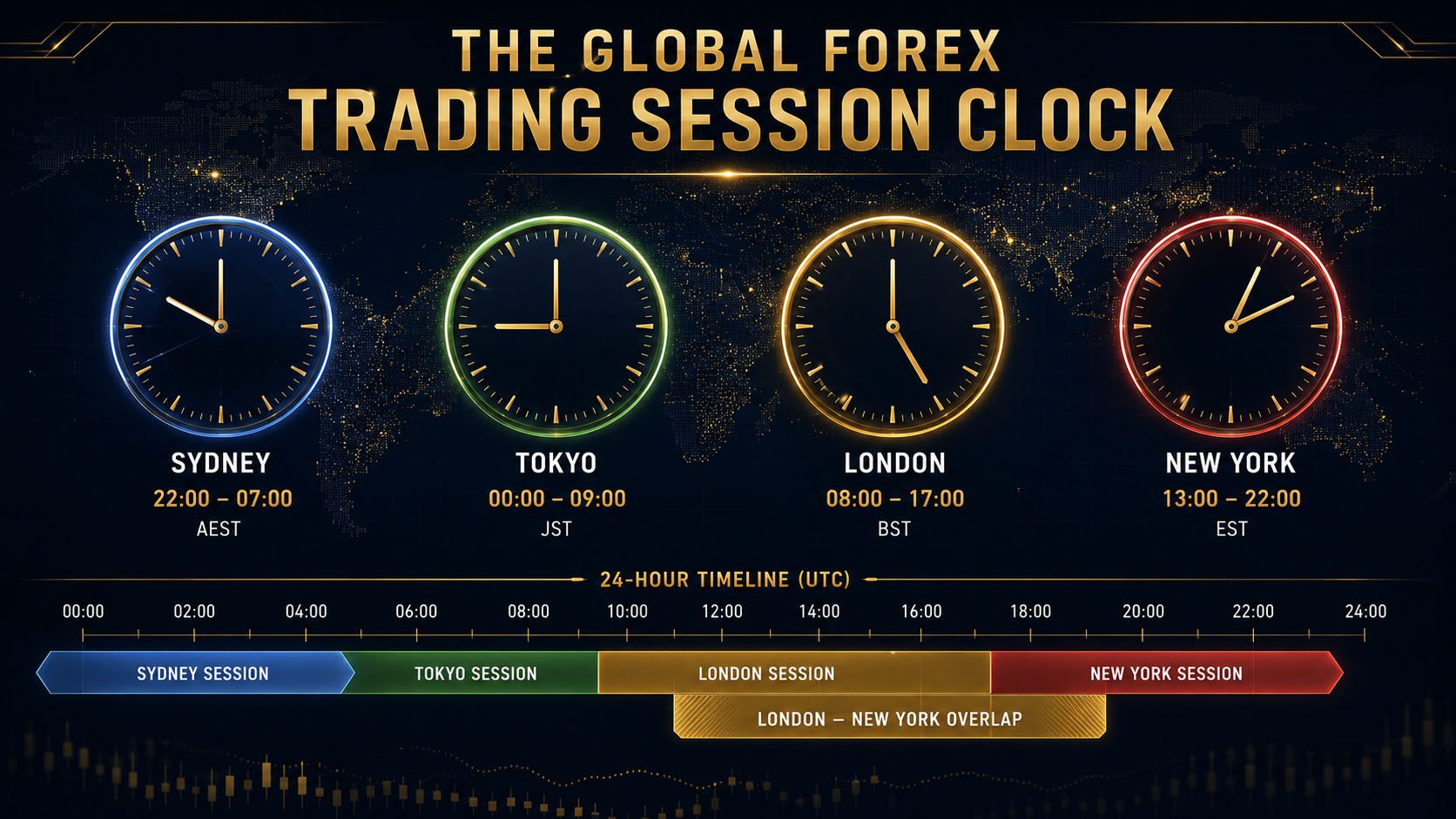
2. The Four Major Forex Trading Sessions
Sydney
Session Transition
Sydney begins the new trading day. Activity is generally lighter, although AUD and NZD pairs may respond to regional news.Tokyo
Asian Session
JPY, AUD, and NZD pairs often receive the most attention. Price may consolidate, form ranges, or react to Asian economic data.London
European Session
Liquidity and volatility usually increase significantly. EUR, GBP, and CHF pairs often become more active.New York
North American Session
USD pairs, gold, indices, and risk-sensitive markets often become highly active, particularly around US economic releases.Exact session times can shift relative to your local clock because different countries change daylight-saving time on different dates. Always confirm current session times using a reliable market clock.
3. The Asian Trading Session
The Asian session is generally quieter than London and New York. This does not mean that no opportunities exist, but market behavior is often different.
Common Asian Session Characteristics
- Lower average volatility on many EUR, GBP, and USD pairs.
- Greater activity in JPY, AUD, and NZD currency pairs.
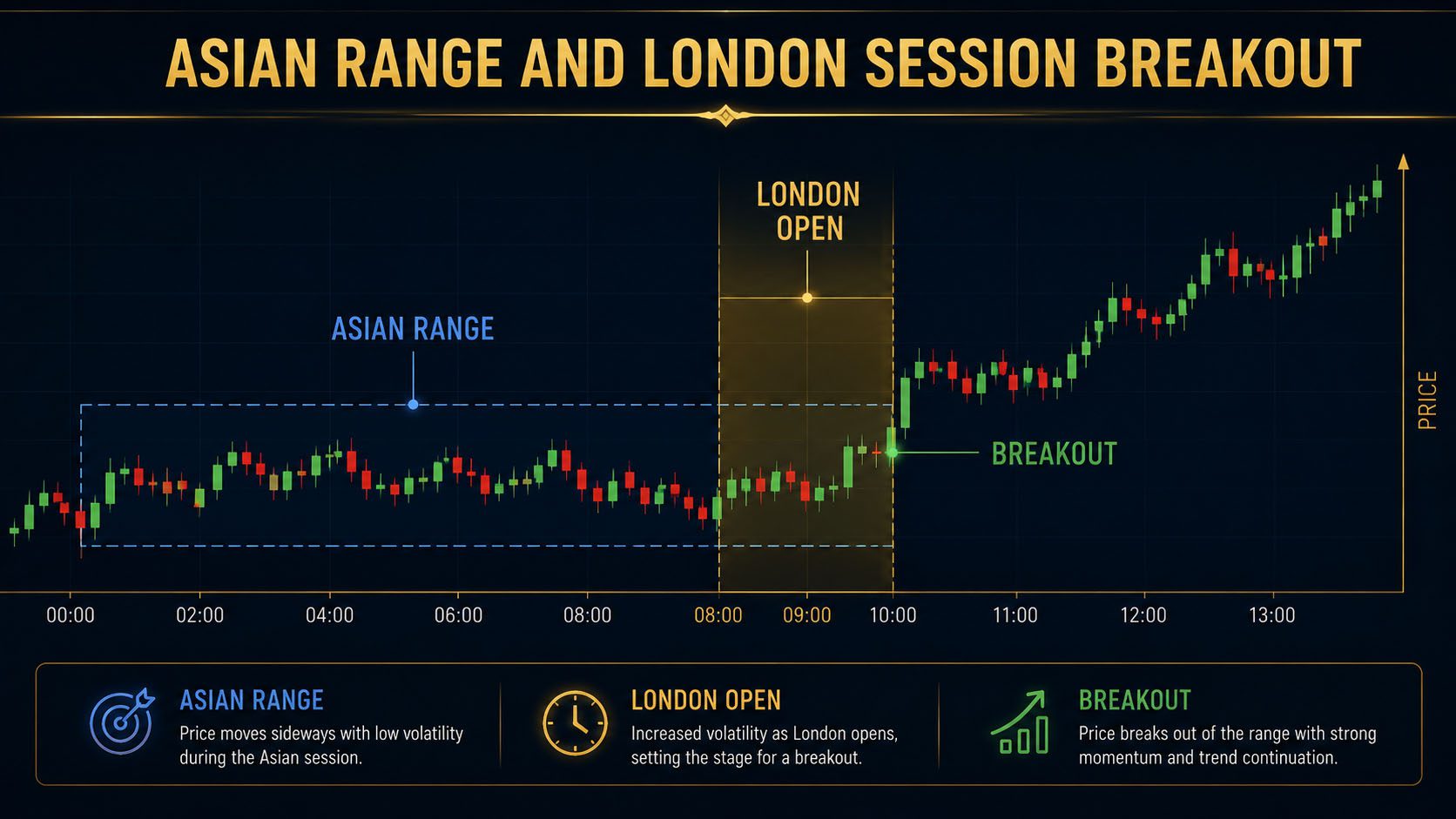
- Range formation before the London session.
- Reaction to Japanese, Australian, New Zealand, and Chinese data.
- Occasional sharp moves when regional central banks speak.
- Potentially thinner liquidity outside the most active regional hours.
Common Asian Session Opportunities
- Range trading when support and resistance are clearly established.
- JPY-pair continuation after regional economic data.
- AUD and NZD movement following domestic reports.
- Preparation for a possible London breakout from the Asian range.
Do not force a breakout strategy inside a quiet range unless your strategy has been specifically tested for Asian-session conditions.
4. The London Trading Session
London is one of the most important forex trading sessions. A large portion of global currency activity occurs as European banks, funds, institutions, and professional traders enter the market.
Use Market Context and Understanding Market Structure to avoid trading every session breakout blindly.
Common London Session Characteristics
- Higher liquidity and tighter spreads on major currency pairs.
- Stronger movement in EUR and GBP pairs.
- Breakouts from the Asian session range.
- Increased momentum near the London open.
- Frequent reactions to European and UK economic releases.
- Clearer intraday trends when institutional direction develops.
Why the London Open Matters
The London open can trigger a rapid increase in volume and volatility. Price may break the Asian high or low, sweep liquidity on one side of the range, and then establish the primary direction of the morning.Example: London Breakout With Confirmation
Assume EURUSD trades inside a narrow range during Asia. Shortly after London opens, price briefly moves below the Asian low, rejects the level, breaks short-term bearish structure, and then returns above the range.- The initial move below the range may be a liquidity sweep.
- The rejection shows that sellers failed to hold below support.
- The bullish structure break provides confirmation.
- The next target may be the Asian high or higher-timeframe resistance.
5. The New York Trading Session
The New York session introduces major participation from US banks, institutional traders, hedge funds, corporations, and futures markets. USD pairs, gold, stock indices, and other risk-sensitive instruments often become highly active.
Common New York Session Characteristics
- Strong movement around US economic releases.
- High activity in USD pairs and gold.
- Continuation or reversal of the London trend.
- Increased volatility during the London–New York overlap.
- Potential slowdown after European markets begin closing.
- Sharp changes in sentiment following economic or central-bank news.
London Continuation vs New York Reversal
New York does not always continue the London move. Sometimes London establishes a trend and New York extends it. At other times, London reaches a major higher-timeframe target before New York opens, creating conditions for profit-taking or reversal.Never assume New York will reverse London or continue London. Read the market structure, location, liquidity, and economic context first.

6. The London–New York Overlap
Advantages
Why Traders Like the Overlap
- Two major financial centers are active.
- Liquidity is typically high.
- Spreads are often competitive on major pairs.
- Momentum can be strong.
- Important US data is often released during this period.
- Breakouts and continuation setups may receive follow-through.
Risks
Why the Overlap Can Be Dangerous
- Volatility may expand quickly.
- Major news can cause slippage.
- False breakouts can occur near session highs and lows.
- Traders may chase moves after missing the initial entry.
- Several correlated markets can move simultaneously.
- Emotional overtrading becomes more likely.
The overlap offers opportunity, not permission to trade everything. Strong conditions still require a valid setup, confirmation, risk control, and realistic target.
7. Session Opens and Liquidity Sweeps
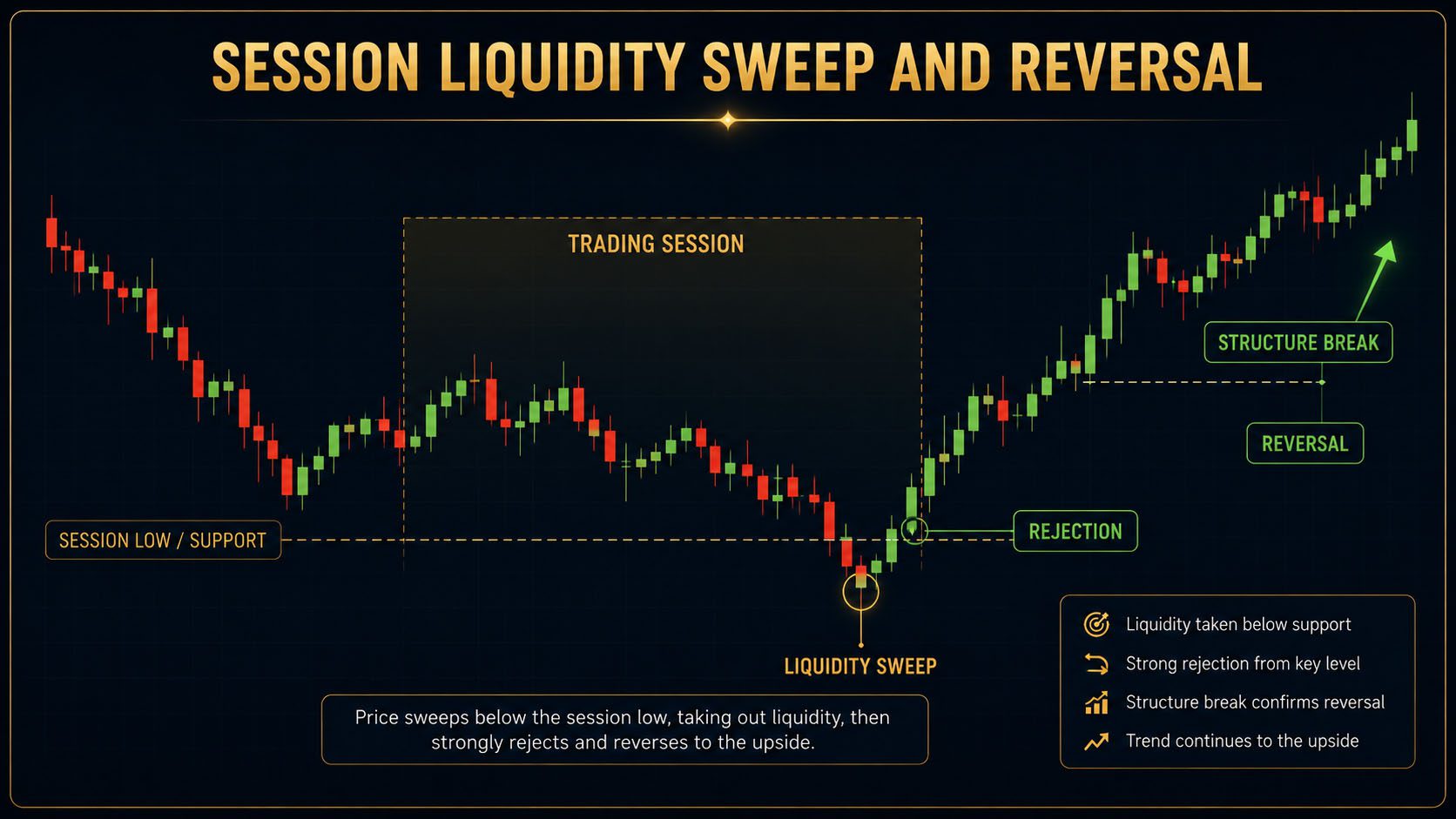
Session opens frequently attract price toward visible liquidity. Traders place stop losses above recent highs and below recent lows. When a major session begins, price may move into these areas before establishing the true direction.
Common Liquidity Areas
- Asian session high and low.
- Previous day high and low.
- Equal highs and equal lows.
- London session high and low.
- Major support and resistance.
- Round-number price levels.
What a Liquidity Sweep May Look Like
- Price approaches an obvious high or low.
- Price briefly trades beyond the level.
- Orders and stop losses are triggered.
- Price rejects and returns through the level.
- Lower-timeframe structure shifts in the opposite direction.
- A controlled entry appears after confirmation.
8. Economic News and Trade Timing
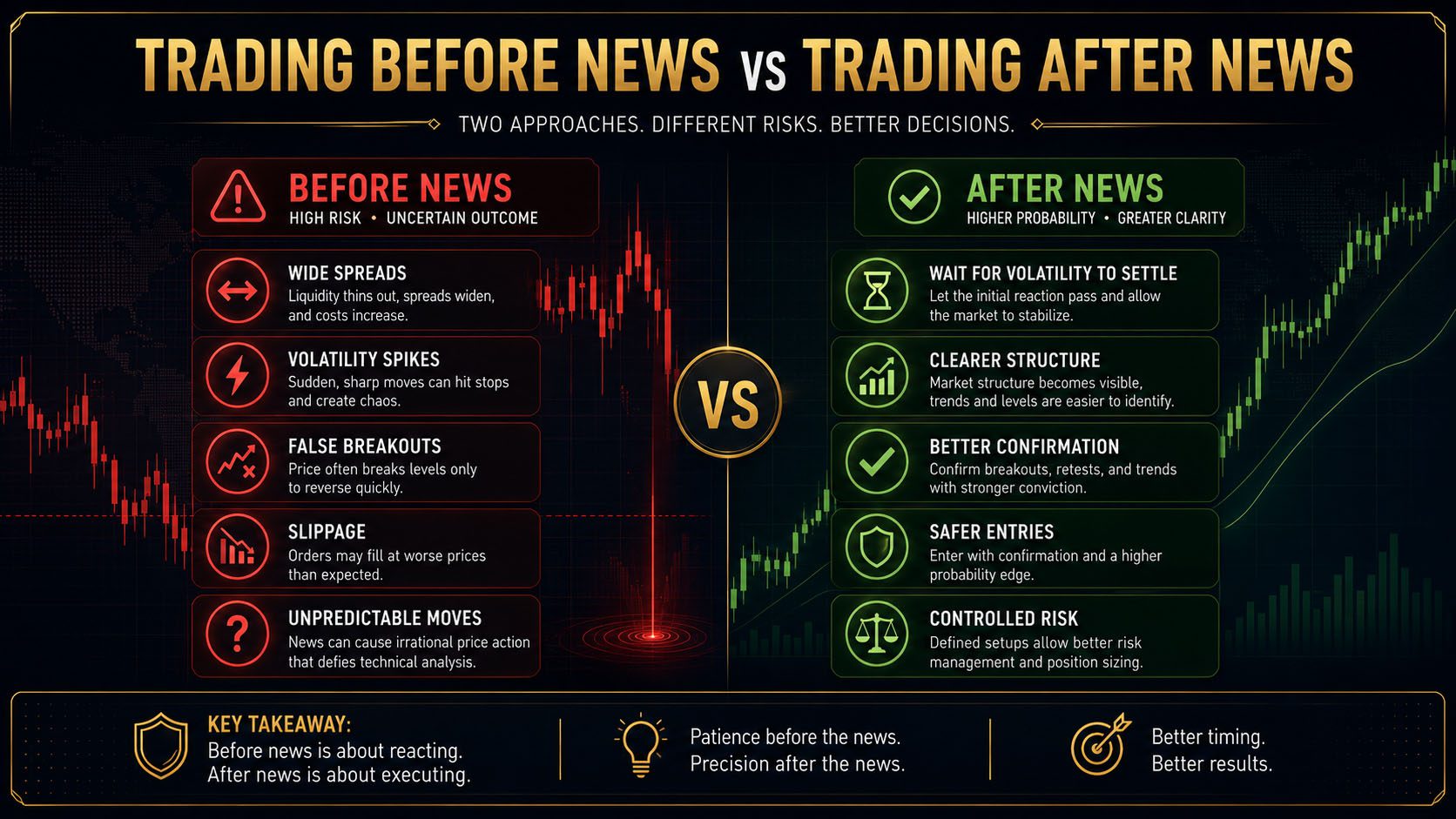
Economic releases can create some of the strongest intraday movements in forex. They can also create unstable spreads, rapid slippage, false breakouts, and unpredictable price behavior.
Examples of High-Impact Events
- Interest-rate decisions.
- Central-bank press conferences.
- Inflation reports.
- Employment reports.
- Gross domestic product data.
- Retail sales.
- Purchasing managers’ index reports.
- Initial jobless claims.
- Unexpected political or geopolitical announcements.
Avoid entering immediately before major scheduled releases unless trading news is part of a professionally tested strategy. A technically perfect setup can be invalidated within seconds.
Why the First Move Can Be Misleading
After major news, algorithms and institutional orders may cause price to spike sharply in both directions. The first move may reflect stop orders and thin liquidity rather than the final market interpretation.A More Controlled Approach
- Wait for the release to occur.
- Allow the initial volatility to settle.
- Observe whether price holds or rejects a major level.
- Wait for structure and confirmation to return.
- Enter only when the stop location and reward remain logical.
9. The 8:30 AM Economic Release Window
Many major US and Canadian economic reports are released around 8:30 AM Eastern Time. This period can create extremely fast movement in USD and CAD pairs, gold, indices, and other markets.
Common Risks Around This Time
- Rapid spread expansion.
- Stop loss slippage.
- False breaks above and below structure.
- Large candles that destroy normal risk-to-reward.
- Execution delays during extreme volatility.
- Emotional chasing after the first move.
For this Academy’s conservative execution model, avoid entering immediately before 8:30 AM economic releases. Wait until the release is complete and market structure becomes readable again.
10. Matching Currency Pairs to Trading Sessions
| Session | Commonly Active Markets | Typical Behavior | Main Consideration |
|---|---|---|---|
| Asian | USDJPY, AUDUSD, NZDUSD, AUDJPY, NZDJPY | Ranges, regional data reactions, quieter movement | Avoid forcing momentum strategies in low volatility. |
| London | EURUSD, GBPUSD, EURGBP, GBPJPY, EURJPY | Breakouts, strong liquidity, trend development | Watch Asian highs, lows, and European news. |
| New York | EURUSD, GBPUSD, USDCAD, USDJPY, XAUUSD, indices | US news, trend continuation, reversals | Watch economic releases and London structure. |
| London–New York overlap | Major USD pairs, gold, indices | Highest liquidity and strong momentum | Fast movement can increase slippage and chasing. |
| Late New York | Reduced activity across many instruments | Slower movement, profit-taking, consolidation | Avoid forcing late entries after the main move. |
11. Low-Liquidity Periods
Low liquidity means fewer active buyers and sellers. During these periods, price can become slow, irregular, or unusually sensitive to smaller orders.
Periods That May Have Lower Liquidity
- Late New York after the main session activity ends.
- The daily rollover period.
- Major public holidays.
- Days between Christmas and New Year.
- Periods before major central-bank decisions.
- Quiet Asian hours for European currency pairs.
- Friday afternoon after institutional traders reduce exposure.
Problems Caused by Low Liquidity
- Wider spreads.
- Slower follow-through.
- Erratic candle movement.
- False breakouts.
- Poorer order execution.
- Targets taking longer to reach.
12. The Daily Rollover Period
The forex trading day transitions at the daily rollover. Brokers process swaps, spreads may widen, and liquidity can temporarily decrease.
Why Rollover Requires Caution
- Spreads can become significantly wider.
- Stops placed close to price may be triggered.
- Market orders may receive poor execution.
- Chart movement may appear irregular.
- Swap charges may be applied to positions held overnight.
Avoid opening new short-term trades during rollover unless the strategy is specifically designed and tested for that period.
13. Best Days of the Week to Trade
Monday
Monday can begin slowly as the market establishes the new week’s direction. Weekend gaps, positioning changes, and limited early participation may create unstable conditions.Tuesday
Tuesday often provides clearer liquidity and direction as institutional participation increases and weekly structure begins developing.Wednesday
Wednesday can contain important economic releases, central-bank events, and midweek reversals. This Academy’s conservative model avoids Wednesday trading when conditions are unclear or event risk is elevated.Thursday
Thursday may offer continuation opportunities as the weekly trend becomes more established, but major economic reports can create volatility.Friday
Friday can be active early, especially around US releases. Later in the day, institutions may close positions, creating profit-taking and less reliable movement.Weekend
Spot forex markets are closed for normal retail trading. Crypto remains open, but it has different liquidity and risk conditions.A professional trader does not need to trade every day. The objective is to trade only when timing, structure, confirmation, and risk align.
14. Why Limiting Your Trading Window Improves Discipline
Watching charts all day creates more opportunities to invent trades that do not meet your plan. A defined trading window helps reduce overtrading and decision fatigue.
Benefits of a Fixed Trading Window
- Creates a repeatable routine.
- Reduces impulsive entries.
- Improves focus during active market conditions.
- Makes performance easier to measure.
- Prevents low-quality late-session trades.
- Reduces emotional fatigue.
- Supports consistent preparation and review.
A trader who watches the market for ten hours is not automatically more professional than a trader who waits patiently for one carefully selected two-hour window.
15. Example Professional Trading Schedule
London Session Routine
- Before session: Mark higher-timeframe structure, support, resistance, and Asian range.
- At session open: Observe whether price sweeps liquidity or breaks the range.
- After confirmation: Enter only when structure, stop loss, and reward align.
- During trade: Follow the predetermined management plan.
- After window ends: Stop looking for new trades and review execution.
New York Session Routine
- Before session: Review London direction and important US news.
- Before 8:30 AM releases: Avoid new entries.
- After news: Wait for volatility to settle and structure to become clear.
- During overlap: Trade only confirmed setups with controlled risk.
- Late session: Avoid chasing moves after the main opportunity has passed.
16. Timing a Trade With Multi-Timeframe Analysis
Higher timeframes help identify direction and important locations. Lower timeframes help refine timing. The session determines when the setup has the greatest chance of receiving active participation.
Example Workflow
- Use the four-hour or one-hour chart to identify the trend.
- Mark major support, resistance, and liquidity areas.
- Wait for price to reach the planned area during London or New York.
- Use the fifteen-minute or five-minute chart for confirmation.
- Place the stop beyond invalidation.
- Target the next logical structure level.
17. Common Session and Timing Mistakes
| Mistake | Why It Hurts Performance | Professional Correction |
|---|---|---|
| Trading every session | Creates fatigue and encourages low-quality setups. | Choose one primary trading window. |
| Entering immediately before news | Spreads and volatility may become unpredictable. | Wait until the release is complete. |
| Chasing a London breakout | The entry may be far from structure with poor reward. | Wait for a pullback or skip the trade. |
| Ignoring Asian range highs and lows | Important liquidity levels are missed. | Mark session structure before London opens. |
| Trading late New York momentum | The main move may already be complete. | Stop when the planned window closes. |
| Using the same strategy in every session | Different sessions have different behavior. | Test the strategy by session and instrument. |
| Ignoring daylight-saving changes | Session and news timing becomes incorrect. | Confirm the current market clock. |
| Forcing trades on holidays | Liquidity may be unusually thin. | Reduce activity or remain out of the market. |
18. The Professional Timing Process
1
Choose the Session
Select the session that best matches your strategy, instrument, and schedule.2
Check the Calendar
Identify high-impact releases, speeches, holidays, and major events.3
Mark Session Levels
Identify previous highs, lows, ranges, support, resistance, and liquidity.4
Wait for Activity
Allow the session to reveal direction rather than predicting the first move.5
Confirm the Setup
Require structure, entry confirmation, logical risk, and realistic reward.6
End the Session
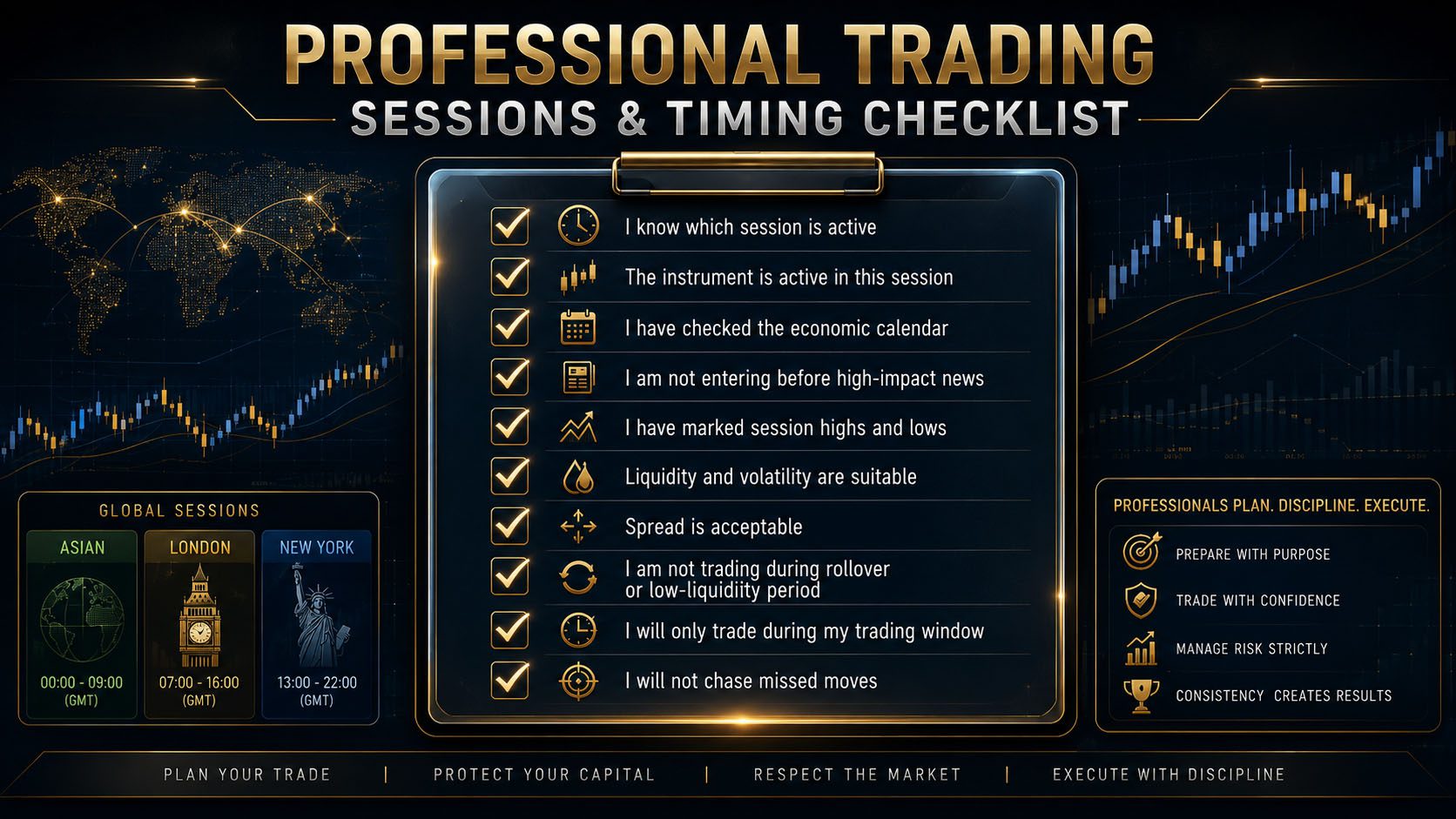
Stop trading when the planned window closes, whether or not a trade occurred.19. Trading Sessions and Timing Checklist
- I know which trading session is active.
- The instrument is normally active during this session.
- I checked for major economic releases.
- I am not entering immediately before high-impact news.
- I marked the Asian, London, or previous-session high and low.
- I identified higher-timeframe support and resistance.
- Liquidity and volatility are appropriate for my strategy.
- The spread is acceptable.
- I am not trading during rollover.
- I am not forcing a setup during a holiday or quiet period.
- I waited for confirmation after the session opened.
- The entry has not already moved too far from structure.
- I will stop trading when my trading window ends.
- I will not chase a move I missed.
Frequently Asked Questions
What is the best forex trading session?
There is no single best session for every trader. London and New York generally provide greater liquidity and volatility, while the Asian session may suit range-based strategies and JPY, AUD, or NZD pairs.Is the London–New York overlap the best time to trade?
It is one of the most active periods, but high activity does not guarantee a good setup. Volatility, news, structure, and risk must still align.Should I trade immediately when London opens?
Not automatically. The opening move may sweep liquidity or create a false breakout. Wait for structure and confirmation.Why should traders avoid entering before news?
Spreads, slippage, and volatility can increase rapidly. Technical levels may be broken before the market establishes a stable direction.Can I trade the Asian session?
Yes, especially if your strategy is tested for Asian-session conditions. Avoid expecting every instrument to produce strong momentum during quieter periods.How many hours should I trade each day?
Many disciplined traders use a focused window of one to three hours. More chart time does not automatically create better results.Why do spreads widen at rollover?
Liquidity temporarily decreases while brokers process the transition between trading days and swap calculations.Knowledge Check Quiz
1. Why does time of day matter in forex?
2. Which session often breaks the Asian range?
3. Why should traders avoid entering immediately before major news?
4. What is a liquidity sweep?
5. What is a major benefit of limiting your trading window?
6. What should a trader do after missing a major move?
Quiz Answer Key
Question 1 Answer
B. Liquidity, volatility, spread, and institutional participation change throughout the trading day.Question 2 Answer
A. London frequently breaks or sweeps the range created during the Asian session.Question 3 Answer
B. Economic releases can create rapid volatility, wider spreads, and slippage.Question 4 Answer
B. A liquidity sweep briefly trades beyond an obvious level before price rejects and returns.Question 5 Answer
C. A defined trading window reduces overtrading, fatigue, and impulsive entries.Question 6 Answer
C. Wait for a controlled pullback and confirmation, or accept that the opportunity has passed.Key Takeaways
What You Must Remember
- Forex is open twenty-four hours, but market quality changes by session.
- London and New York generally provide the greatest liquidity.
- The London–New York overlap can create strong opportunity and strong risk.
- Asian-session ranges often become important London liquidity levels.
- Do not trade session opens blindly.
- Avoid entering immediately before major economic releases.
- Be especially cautious around 8:30 AM Eastern Time data.
- Low-liquidity periods can create wider spreads and false breakouts.
- A fixed trading window reduces overtrading.
- Timing should confirm the setup, not replace analysis.
Lesson Summary
Trading sessions and timing influence how technical setups behave. Liquidity, volatility, spread, momentum, and institutional participation change throughout the day, creating different conditions during Asia, London, New York, and the session overlaps.
Professional traders select a trading window that matches their strategy and instruments. They check the economic calendar, mark session highs and lows, wait for active market conditions, and avoid unstable periods such as rollover and major news releases.
The goal is not to stay in front of the chart all day. The goal is to be prepared during the specific period when your strategy has the best chance of producing a clean, controlled setup.
In the next lesson, you will combine market context, entries, stops, targets, timing, and risk rules to build your first complete trading strategy.