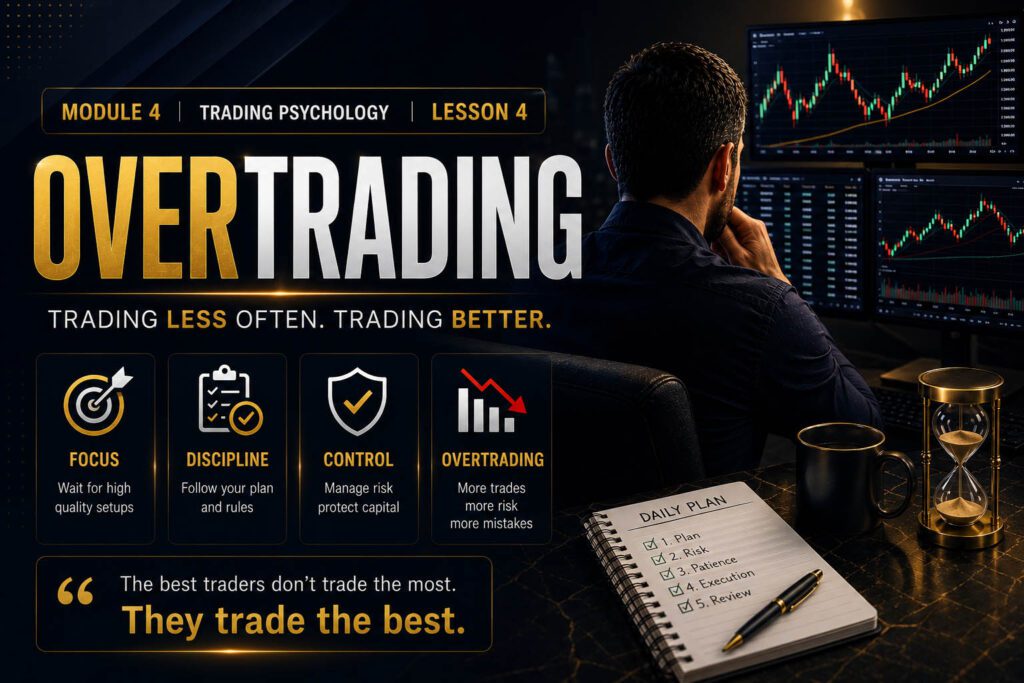
Overtrading
Overtrading happens when a trader keeps clicking after the high-quality opportunities are gone. It turns a clean trading plan into noise, emotional fatigue, and unnecessary drawdown.
Learning Objectives
By the end of this lesson, you should understand why overtrading happens, how it damages prop firm accounts, and how to build rules that keep your trading selective.
- Understand what overtrading really means.
- Identify the difference between active trading and excessive trading.
- Recognize emotional triggers that lead to too many trades.
- Learn why overtrading destroys consistency inside prop firm challenges.
- Create daily limits for trades, losses, and screen time.
- Protect your account from unnecessary exposure and emotional fatigue.
What Is Overtrading?
Overtrading is taking more trades than your plan requires. It usually happens when a trader becomes impatient, emotional, bored, greedy, or desperate to recover losses.
Overtrading does not always mean taking twenty trades in one day. For some strategies, taking four trades may already be too much if only one or two clean setups were available.
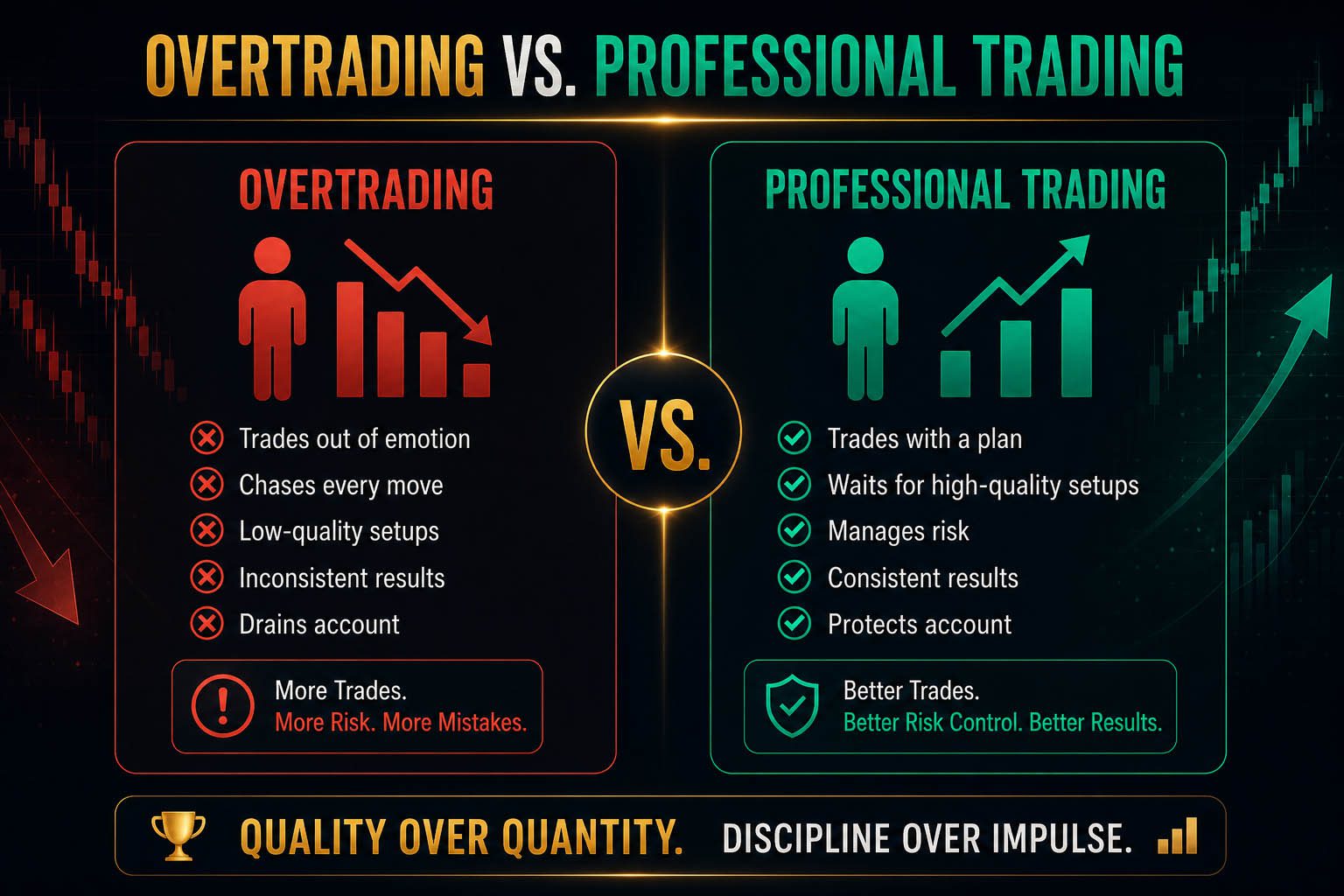
Professional Trading
You wait for the setup, execute with planned risk, and stop when the plan says to stop.
Overtrading
You keep searching for action, force weak setups, chase movement, and trade because you want something to happen.
Overtrading often starts the same way as revenge trading: the trader reacts emotionally instead of following the plan.
Why Traders Overtrade
Most traders overtrade because they confuse activity with progress. They think more trades means more chances to win. In reality, more low-quality trades usually means more exposure to mistakes.
Common Reasons Traders Overtrade
- Boredom during slow market conditions.
- Trying to recover a previous loss.
- Greed after a winning trade.
- Fear of missing out when price moves quickly.
- Pressure to pass a challenge faster.
- Believing that every market movement is an opportunity.
This is where fear and greed become dangerous. Fear makes you chase missed moves, and greed makes you keep trading after the plan has already done its job.
Active Trading vs Overtrading
A professional trader can be active without overtrading. The difference is quality. Active trading is planned. Overtrading is emotional.
| Category | Active Trading | Overtrading |
|---|---|---|
| Reason for Entry | The setup matches the plan. | The trader wants action. |
| Risk | Fixed and controlled. | Random or increasing. |
| Emotional State | Calm and selective. | Rushed, frustrated, excited, or desperate. |
| Trade Quality | Clear confirmation. | Weak setups and forced entries. |
| Outcome | Consistent execution. | Fatigue, mistakes, and drawdown. |
Why Overtrading Destroys Prop Firm Accounts
Prop firm accounts reward discipline. They punish unnecessary exposure. Every extra trade increases the chance of hitting daily loss limits, max drawdown, consistency rules, or emotional mistakes.
The trader who overtrades may not fail because the strategy is bad. They fail because they keep trading after the real opportunities are finished.
Example
A trader starts the day with one clean winning trade. Instead of stopping, they continue searching for more. The next two trades are weak setups. One loses. Then they enter again to recover. By the end of the day, the trader gives back the profit and adds drawdown.
The mistake was not taking the first trade. The mistake was refusing to stop after the plan had already done its job.
That is why overtrading is so dangerous around daily drawdown and maximum drawdown rules.
The Hidden Cost of Too Many Trades
Overtrading does not only hurt the account balance. It also damages your decision-making. Every trade uses mental energy. The longer you sit in front of charts forcing decisions, the more likely you are to break rules.
| Cost | How It Shows Up |
|---|---|
| Mental Fatigue | You start missing details and taking weaker setups. |
| Emotional Volatility | Wins make you greedy and losses make you reactive. |
| Execution Errors | You enter late, move stops, or forget your rules. |
| Drawdown Pressure | Small losses stack up and create unnecessary account stress. |
| Loss of Confidence | You start questioning the strategy because of trades that should never have been taken. |
Signs You Are Overtrading
Overtrading usually gives warning signs before the damage becomes obvious. Pay attention to your behavior, not just your account balance.
- You keep looking for trades after your best setup already passed.
- You lower your standards just to enter something.
- You take trades outside your normal session time.
- You increase lot size after losses or wins.
- You feel bored when there is no trade.
- You feel uncomfortable closing the platform.
- You take trades you cannot clearly explain.
A written professional trading plan helps stop overtrading because it defines when there is a trade and when there is no trade.
The Professional Trade Limit System
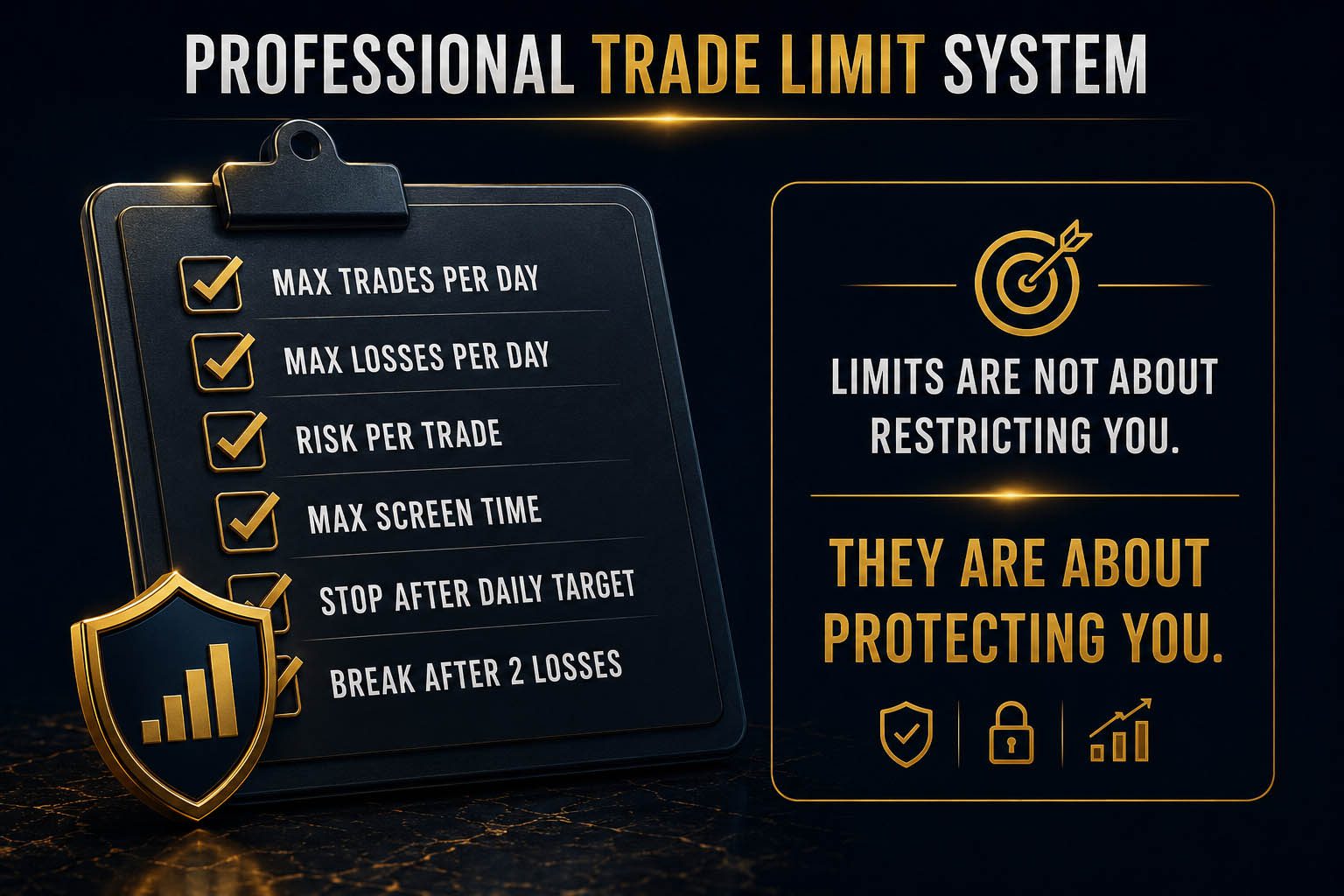
Professional traders use limits to protect themselves from emotional decision-making. Limits do not reduce opportunity. They protect you from low-quality opportunity.
Useful Daily Limits
- Maximum trades per day.
- Maximum losses per day.
- Maximum risk percentage per trade.
- Maximum screen time per session.
- Mandatory stop after hitting daily profit target.
- Mandatory break after two consecutive losses.
These limits work best when paired with proper position sizing, because every trade should have a defined risk before the entry is placed.
Sample Overtrading Prevention Plan
Here is a simple framework a prop firm trader can use to avoid unnecessary trades.
| Rule | Purpose |
|---|---|
| Maximum 3 trades per day | Prevents random entries and emotional chasing. |
| Stop after 2 losses | Prevents revenge trading and daily drawdown damage. |
| Stop after daily target | Protects profits from greed-based decisions. |
| Trade only during planned sessions | Prevents boredom trading outside high-quality market hours. |
| Write the setup before entry | Forces objective reasoning before risking capital. |
How to Become More Selective
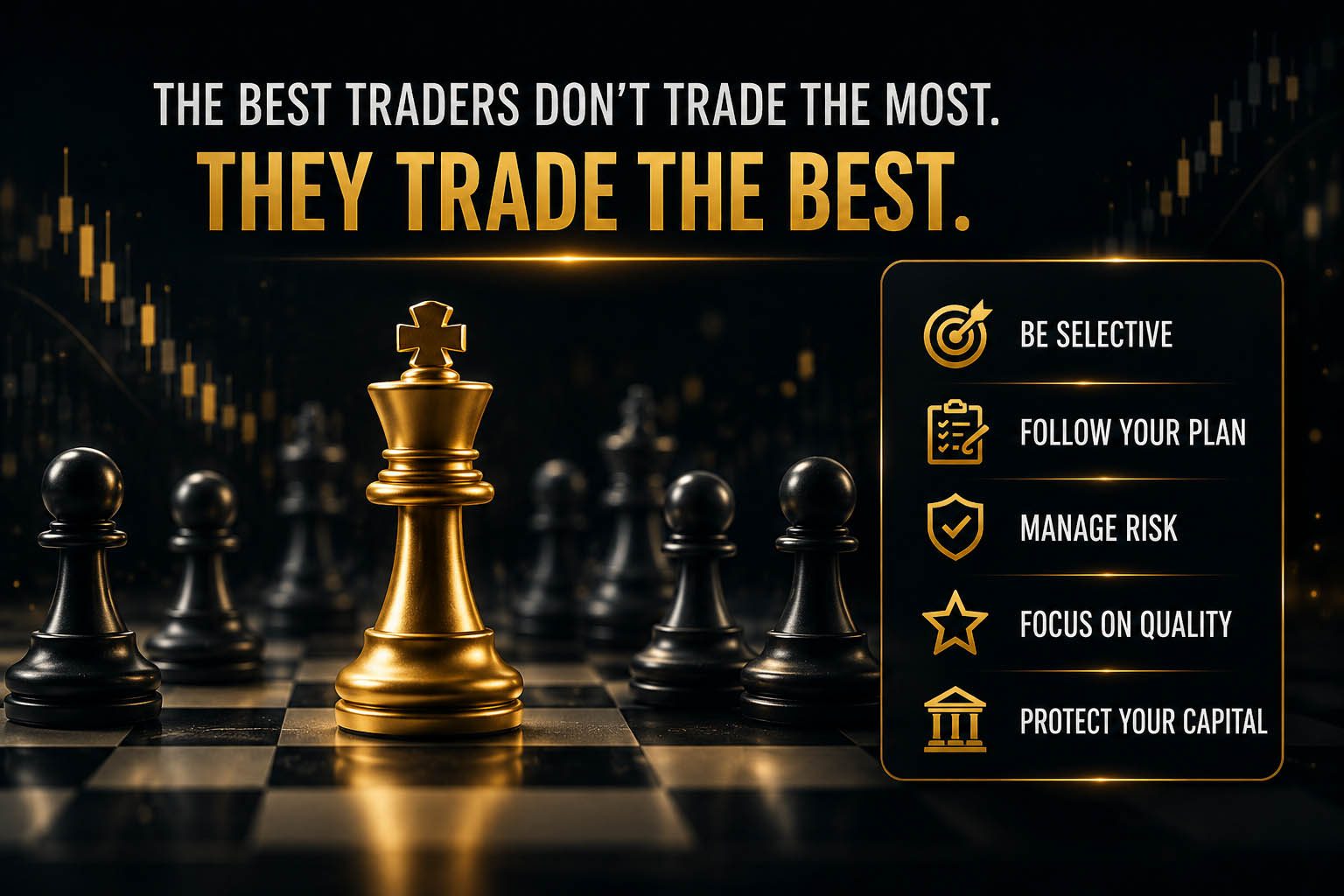
Selectivity is one of the biggest differences between amateur traders and professional traders. Beginners want more trades. Professionals want better trades.
Define Your A+ Setup
Know exactly what your best trade looks like. If the market does not show it, there is no trade.
Use a Trade Checklist
Confirm trend, entry zone, risk, target, timing, and emotional state before entering.
Track Trade Quality
Grade every trade after the session. Separate good losses from bad trades.
Respect No-Trade Days
Some days are not worth trading. Protecting capital is still progress.
This is the same mindset from when not to trade: discipline sometimes means doing nothing.
FAQ
How many trades per day is overtrading?
There is no universal number. It depends on your strategy. If the trades do not match your plan, even two trades can be overtrading.
Is scalping the same as overtrading?
No. Scalping can be structured and professional. Overtrading happens when trades are emotional, forced, or outside the plan.
Why do I keep trading after I already made money?
Usually greed, excitement, or the belief that more profit is always better. In prop firm trading, protecting profit is often more important than squeezing one more trade.
Can overtrading happen after losses?
Yes. This is common. A trader loses, feels pressure to recover, and starts forcing trades.
What is the easiest way to stop overtrading?
Set a maximum number of trades per day and stop after your daily target or daily loss limit is reached.
10-Question Quiz
- What is overtrading?
Answer: Taking more trades than your plan requires. - What is one common reason traders overtrade?
Answer: Boredom or emotional pressure. - Why is overtrading dangerous in prop firm accounts?
Answer: It increases the chance of drawdown and rule violations. - What separates active trading from overtrading?
Answer: Trade quality and planning. - What is a sign of overtrading?
Answer: Taking trades you cannot clearly explain. - What should a trader do after reaching daily target?
Answer: Stop or protect the account according to plan. - Why can too many trades cause mistakes?
Answer: They increase mental fatigue and emotional decisions. - What is a useful overtrading prevention rule?
Answer: Maximum trades per day. - What is a no-trade day?
Answer: Sometimes a professional decision. - What do professionals want?
Answer: Better trades, not more trades.
Key Takeaways
- Overtrading means taking unnecessary trades outside your plan.
- More trades do not always mean more opportunity.
- Overtrading increases mental fatigue, execution mistakes, and drawdown risk.
- Prop firm traders must protect the account from unnecessary exposure.
- Professional traders are selective. They want better trades, not more trades.
Lesson Summary
Overtrading happens when a trader takes unnecessary trades outside the plan. It is often caused by boredom, greed, revenge, fear of missing out, or pressure to pass faster. Professional traders protect themselves with maximum trades, daily loss limits, session rules, trade checklists, and no-trade days. The goal is not more trades. The goal is better execution.