Revenge Trading
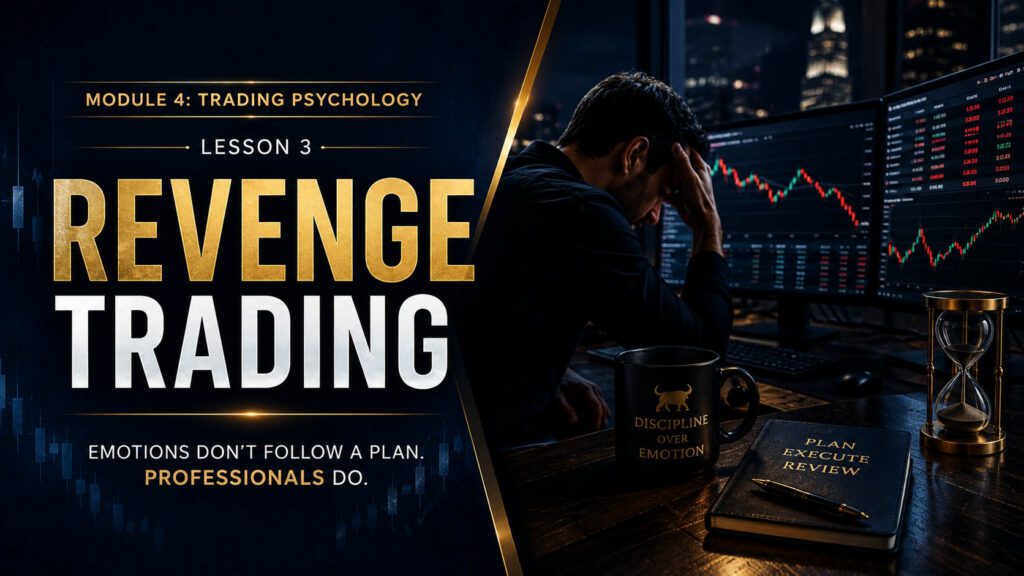
Revenge trading happens when a trader stops following the plan and starts trying to “win back” money from the market. It is one of the fastest ways to destroy a prop firm challenge, a funded account, and your confidence.
Learning Objectives
By the end of this lesson, you should understand what revenge trading is, why it happens, and how to stop it before it damages your account.
- Define revenge trading in simple, practical terms.
- Recognize the emotions that trigger revenge trades.
- Understand why revenge trading is especially dangerous in prop firm accounts.
- Learn how one loss can turn into a full account failure.
- Build a simple prevention system for stopping revenge trading early.
- Protect your trading plan from anger, urgency, and emotional recovery attempts.
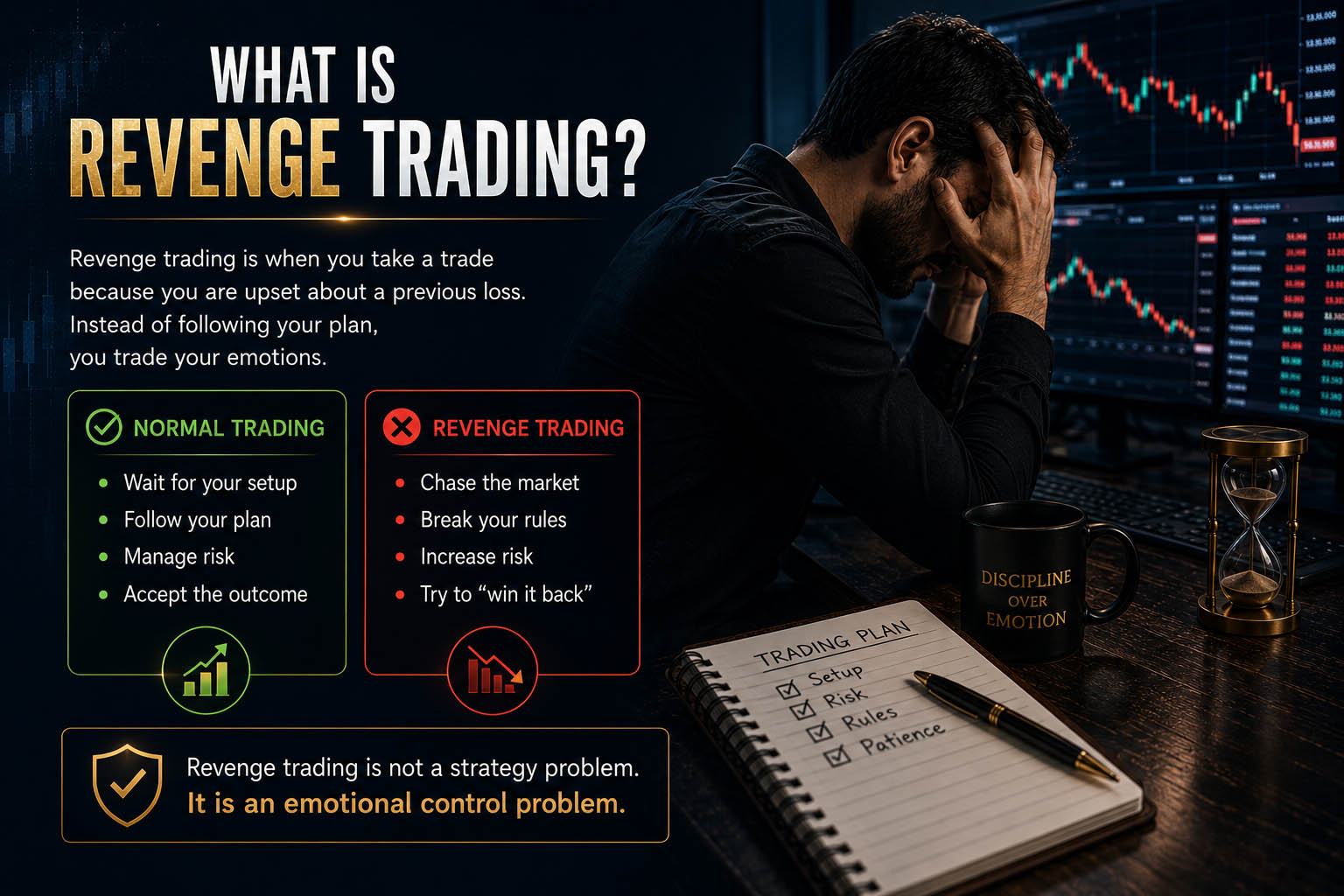
What Is Revenge Trading?
Revenge trading is when you take a trade because you are upset about a previous result. Instead of trading a valid setup, you are trading your frustration.
The trader is not thinking, “Does this trade fit my plan?” The trader is thinking, “I need to make that money back.” That shift is dangerous.
Normal Trading
You wait for your setup, use planned risk, accept the outcome, and move on.
Revenge Trading
You chase, force entries, increase size, ignore rules, and try to erase the pain of a loss.
This lesson builds directly on Fear vs Greed, because revenge trading often starts when fear, frustration, and greed collide.
Why Traders Revenge Trade
Revenge trading usually starts with emotional pressure. The trader feels disrespected by the market. The loss feels personal. Instead of accepting that losses are part of the business, the trader tries to fight back.
Common Triggers
- A trade hits stop loss and immediately moves in the original direction.
- A trader exits early, then watches price run to target.
- A trader gets close to passing a phase and then loses.
- A trader has a winning streak and suddenly takes a loss.
- A trader feels pressure to make money quickly.
This is why revenge trading is one of the clearest examples of trader self-destruction. The first loss is normal. The emotional reaction is what creates real account damage.
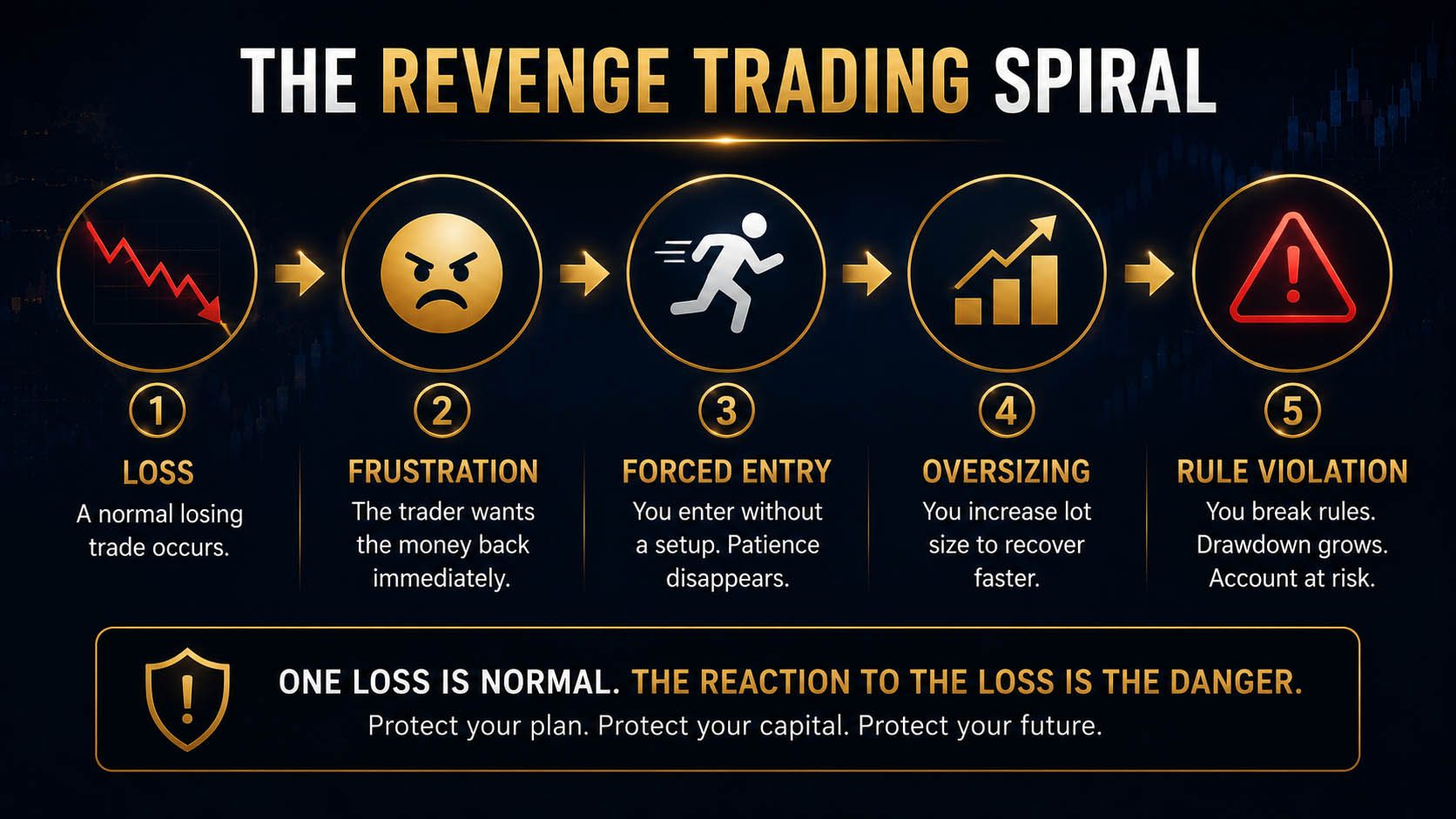
The Revenge Trading Spiral
Revenge trading usually does not destroy an account with one trade. It destroys the account through a chain reaction.
| Stage | What Happens | The Danger |
|---|---|---|
| 1. Loss | The trader takes a normal losing trade. | The loss feels personal. |
| 2. Frustration | The trader wants the money back immediately. | Patience disappears. |
| 3. Forced Entry | The trader enters without a clean setup. | Execution quality drops. |
| 4. Oversizing | The trader increases lot size to recover faster. | Drawdown risk grows. |
| 5. Rule Violation | The trader breaks daily loss, max loss, or strategy rules. | The account can fail. |
Why Revenge Trading Is Brutal in Prop Firm Challenges
Prop firm accounts are rule-based environments. You are not only trying to make profit. You must survive daily drawdown, max drawdown, consistency rules, news rules, lot size restrictions, and payout requirements.
This means revenge trading can do more than create a bad trading day. It can instantly fail the challenge or make the account ineligible for payout.
Example
A trader risks 0.5% on a valid setup and loses. Instead of stopping, they take another trade at 1.5% risk to recover quickly. That trade also loses. Now a controlled 0.5% loss becomes a 2% drawdown event. The trader gets emotional, takes another entry, and suddenly the daily loss limit is close.
The problem was not the first loss. The problem was the reaction to the first loss.
That is why every trader must understand daily drawdown and maximum drawdown before trading under pressure.
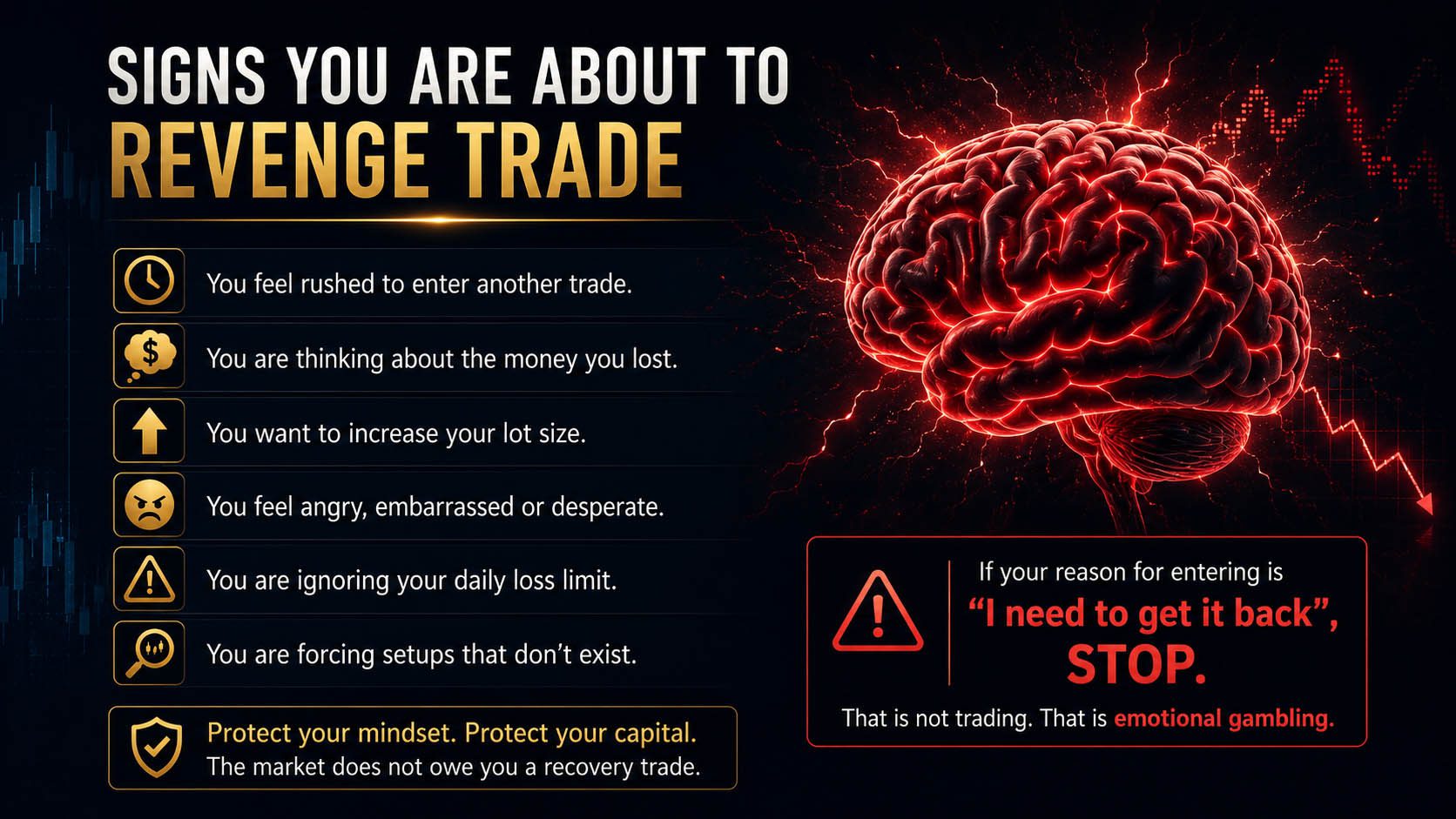
Signs You Are About to Revenge Trade
Revenge trading usually gives warning signs before it happens. The key is catching yourself before you click the button.
- You feel rushed to enter another trade.
- You are staring at the chart trying to force a setup.
- You are thinking about the money you lost instead of the setup.
- You want to increase lot size to recover faster.
- You feel angry, embarrassed, or desperate.
- You are ignoring your original daily trade limit.
The warning signs become easier to catch when you track them in a trading journal and compare your emotions against your professional trading plan.
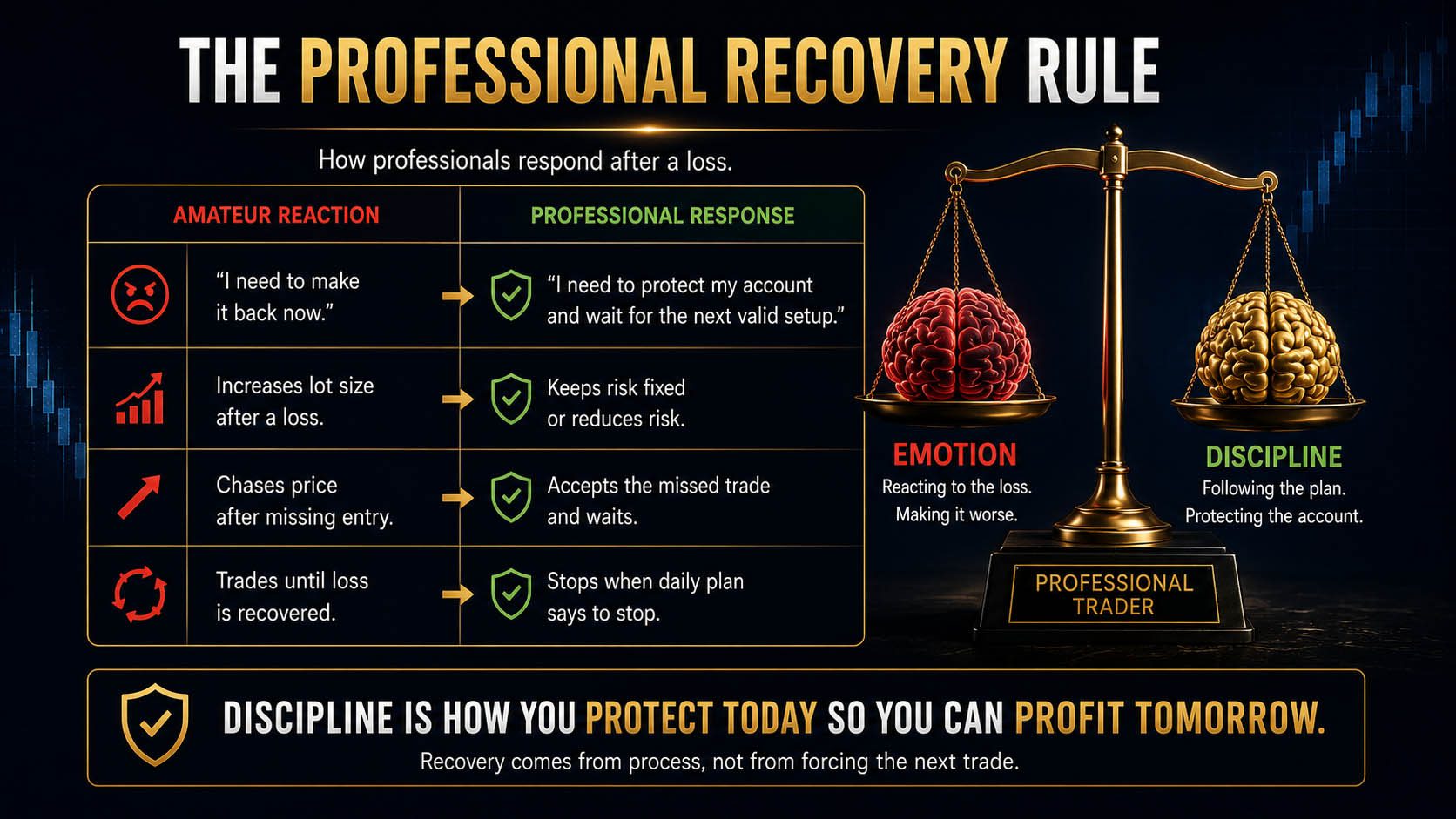
The Professional Recovery Rule
Professional traders do not try to recover losses immediately. They return to process. Recovery comes from clean execution over time, not from forcing one big trade.
| Amateur Reaction | Professional Response |
|---|---|
| “I need to make it back now.” | “I need to protect my account and wait for the next valid setup.” |
| Increases lot size after a loss. | Keeps risk fixed or reduces risk after emotional pressure. |
| Chases price after missing entry. | Accepts the missed trade and waits. |
| Trades until the loss is recovered. | Stops when the daily plan says to stop. |
How to Stop Revenge Trading
You stop revenge trading by creating rules before the emotion appears. Once you are angry, your judgment is already weaker. Your system must protect you before that moment.
Use These Rules
- After two losses in a row, stop trading for the session.
- After one emotional loss, take a 20-minute break.
- Never increase lot size after a losing trade.
- Set a maximum daily loss below the prop firm’s actual limit.
- Write the reason for every trade before entering.
- Do not enter a trade unless it matches your written setup criteria.
These rules work best when paired with proper position sizing, because fixed risk prevents one emotional trade from becoming account-level damage.
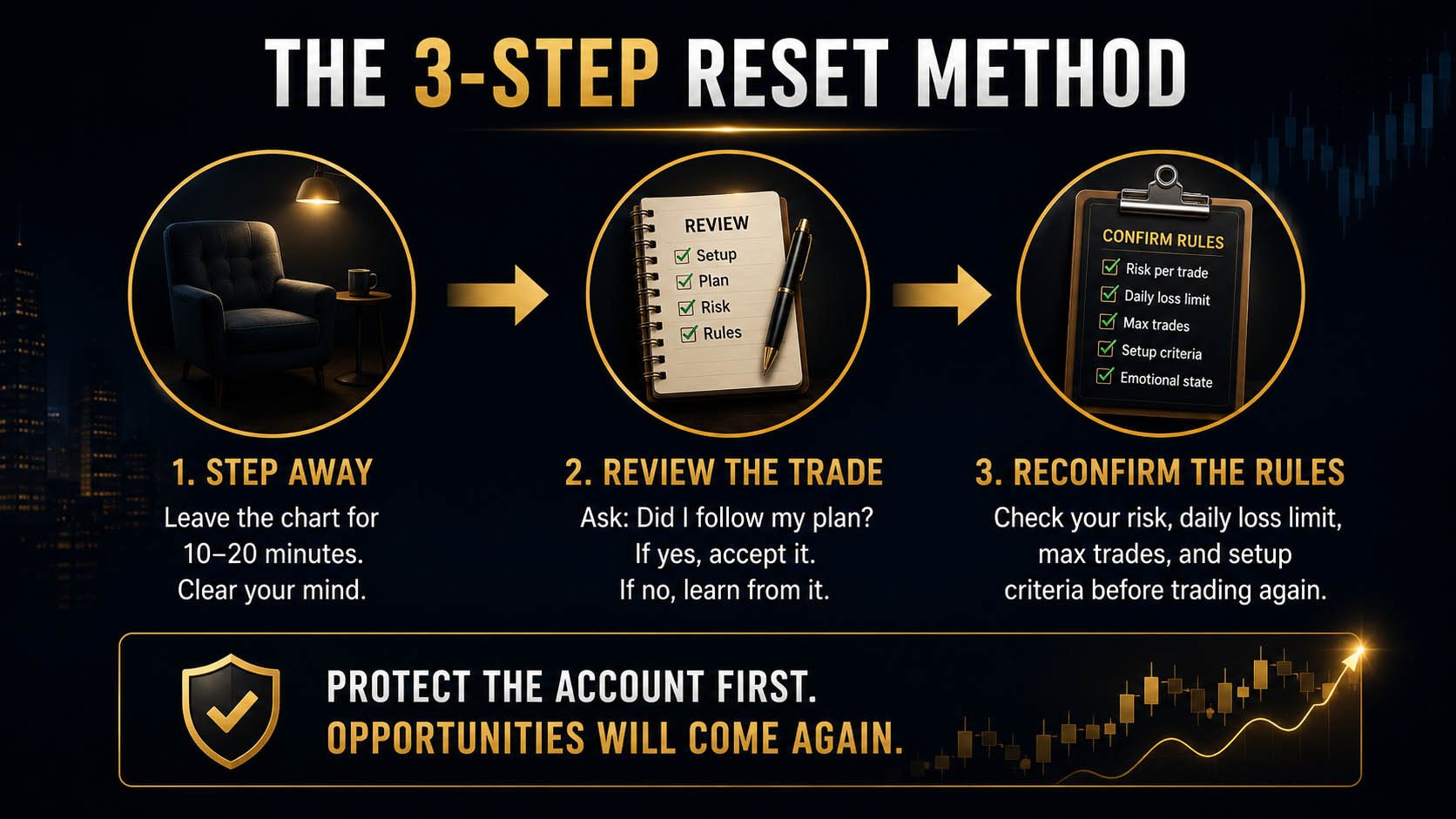
The 4-Step Reset Method
Use this reset method immediately after a loss that makes you emotional.
1. Step Away
Leave the chart for at least 10 to 20 minutes. Do not keep staring at price movement while emotional.
2. Review the Trade
Ask one question: did the trade follow the plan? If yes, accept it. If no, record the mistake.
3. Reconfirm the Rules
Before trading again, confirm your daily loss limit, max trades, risk size, and setup criteria.
4. Trade Smaller If Needed
If you still feel emotional, reduce size or stop completely. There is no shame in protecting the account.
FAQ
Is taking another trade after a loss always revenge trading?
No. If the next trade is valid, planned, and within your risk rules, it may be fine. It becomes revenge trading when the goal is emotional recovery instead of clean execution.
Should I stop after every losing trade?
Not always. Some traders can continue calmly. But if the loss triggers anger, panic, or urgency, stepping away is the smarter move.
Why do traders increase lot size after losing?
They want to recover faster. This is dangerous because the trader is now sizing based on emotion, not risk management.
Can revenge trading happen after a winning trade?
Yes. A trader can become greedy after a win, lose the next trade, then start revenge trading because they feel they gave profit back.
What is the best way to avoid revenge trading?
Use written rules, fixed risk, max daily loss limits, and mandatory breaks after emotional trades.
10-Question Quiz
- What is revenge trading?
Answer: Taking trades to emotionally recover from a loss. - What usually triggers revenge trading?
Answer: Emotional reaction to a loss. - Why is revenge trading dangerous in prop firm accounts?
Answer: It can quickly lead to drawdown and rule violations. - What is a common revenge trading behavior?
Answer: Increasing lot size after a loss. - What should you do after an emotional loss?
Answer: Step away and reset. - What is the best revenge against the market?
Answer: Discipline. - What question should you ask after a loss?
Answer: Did I follow my plan? - What does revenge trading usually damage first?
Answer: The trading plan and emotional control. - What is a good rule after two losses in a row?
Answer: Stop trading for the session. - When is another trade after a loss acceptable?
Answer: When it fits the plan and risk rules.
Key Takeaways
- Revenge trading happens when emotion takes control after a loss.
- The first loss usually is not the real problem. The reaction is.
- Prop firm accounts punish revenge trading quickly because of strict rules.
- Never increase lot size just to recover faster.
- Professional traders recover through discipline, not desperation.
Lesson Summary
Revenge trading is the emotional attempt to win back money after a loss. It usually starts with frustration, urgency, or embarrassment, then turns into forced entries, oversized positions, and rule violations. Professional traders do not recover through desperation. They recover by stepping away, reviewing the trade, returning to fixed risk, and waiting for the next valid setup.