
Fear vs Greed
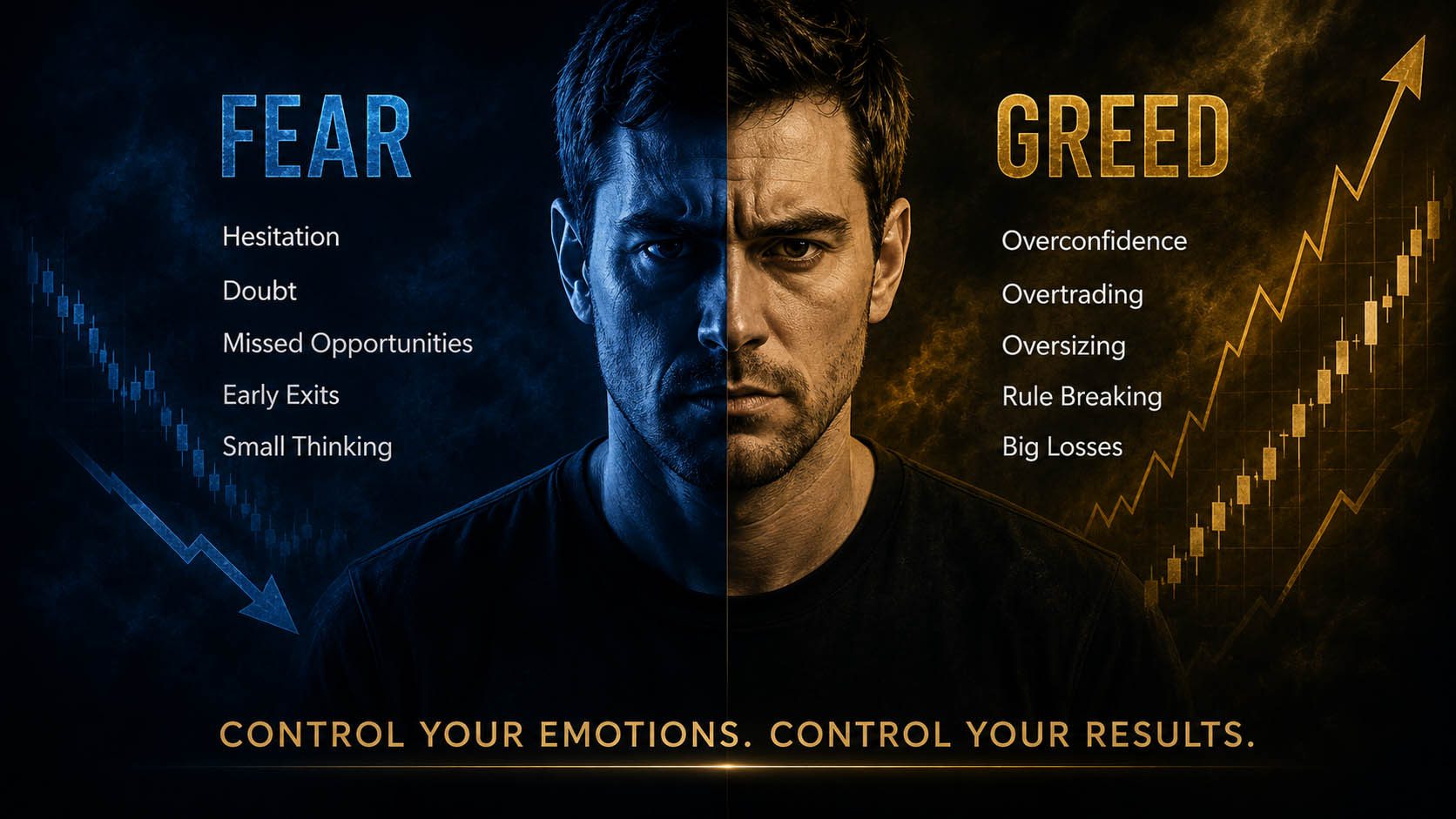
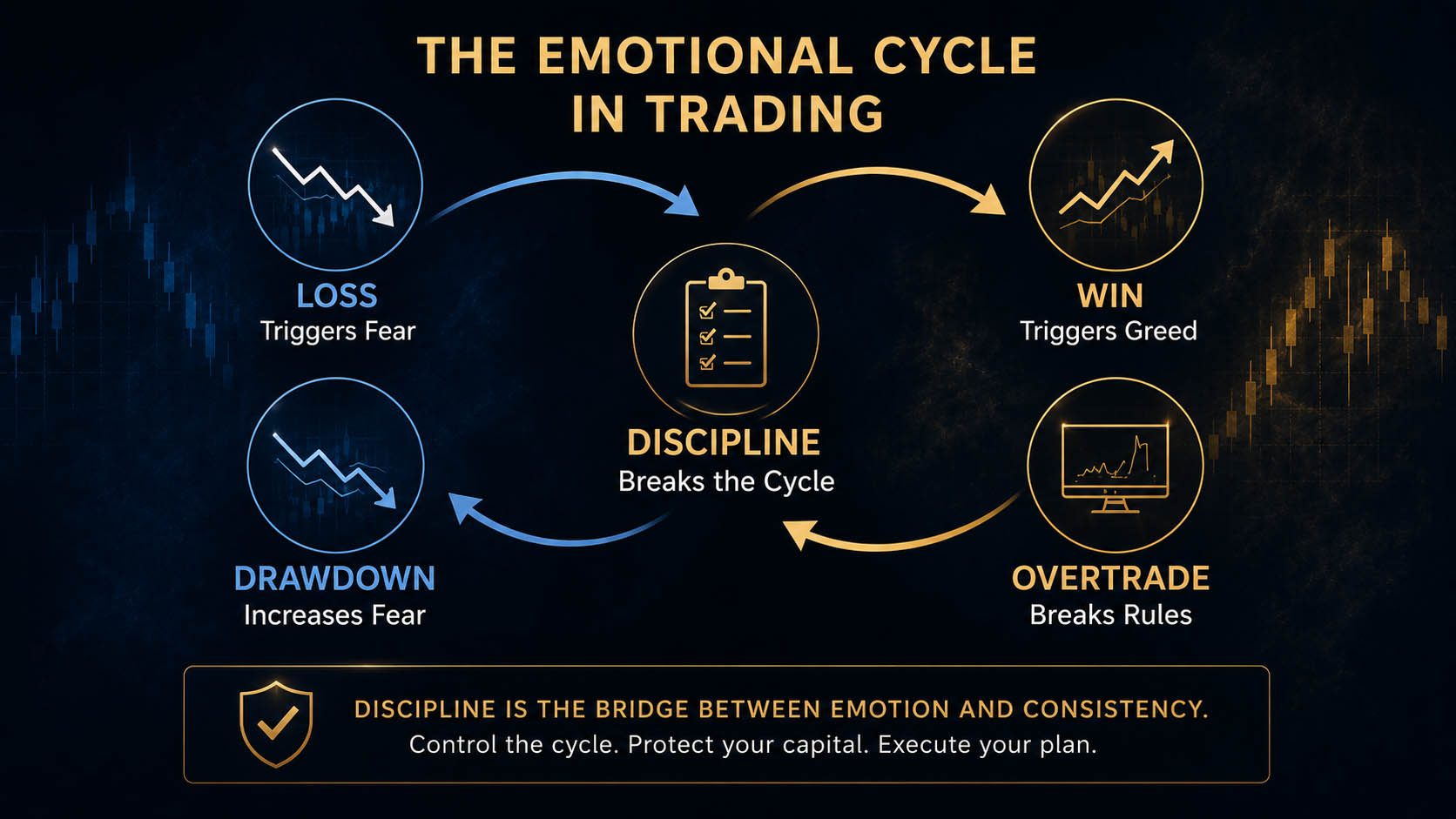
Fear makes traders hesitate when they should execute. Greed makes traders overreach when they should protect capital. Professional traders learn to recognize both emotions before they start controlling the account.
Learning Objectives
By the end of this lesson, you should understand how fear and greed show up in real trading decisions and how to stop them from damaging your prop firm account.
- Understand the difference between fear-based trading and greed-based trading.
- Identify the common behaviors caused by each emotion.
- Learn how fear can make you miss valid trades or exit too early.
- Learn how greed can lead to oversized positions, overtrading, and rule violations.
- Create simple rules that keep your trading decisions objective.
- Protect your prop firm account from emotional execution mistakes.
The Two Emotions That Control Most Traders
Most trading mistakes are not caused by a lack of market knowledge. They are caused by emotional reactions. Two emotions dominate beginner and intermediate traders: fear and greed.
Fear
Fear is the emotion that makes you avoid risk even when the trade fits your plan. It causes hesitation, early exits, missed setups, and panic closing.
Greed
Greed is the emotion that makes you chase more than the plan allows. It causes oversized trades, revenge entries, holding too long, and breaking daily risk rules.
This lesson builds directly on why traders self-destruct. Fear and greed are two of the biggest triggers behind emotional account damage.
How Fear Shows Up in Trading
Fear usually appears after a loss, a drawdown, a missed trade, or a period of uncertainty. It convinces you that avoiding action is safer than following the plan.
Common Fear-Based Behaviors
- Skipping a valid setup because the previous trade lost.
- Closing a trade too early even though the trade idea is still valid.
- Moving the stop loss too tight because you are scared to lose.
- Reducing position size randomly instead of following your risk model.
- Freezing when price reaches your entry zone.
The goal is not to ignore risk. The goal is to follow your trading plan instead of letting fear rewrite the plan in real time.
How Greed Shows Up in Trading
Greed usually appears after a win, a strong trading day, or a feeling that the market is “easy.” It makes you believe you deserve more than your plan allows.
Common Greed-Based Behaviors
- Increasing lot size after one or two wins.
- Taking extra trades after reaching the daily target.
- Holding a winning trade past the planned exit because you want more.
- Entering late because you are scared to miss the move.
- Ignoring drawdown limits because you feel confident.
Greed often attacks your position sizing first. If your lot size changes because you feel confident, your risk plan is no longer in control.
Fear vs Greed Comparison
| Emotion | What It Sounds Like | Common Mistake | Professional Response |
|---|---|---|---|
| Fear | “What if this loses?” | Skipping valid setups | Trade only when the setup matches the plan. |
| Fear | “I need to protect this small profit.” | Exiting too early | Use predefined exits. |
| Greed | “I can make more today.” | Overtrading | Stop after daily target or max trades. |
| Greed | “This trade is obvious.” | Oversizing | Keep risk fixed per trade. |
The Prop Firm Problem
Fear and greed become more intense inside a prop firm challenge because the trader is not only trading the market. They are also trading against rules, drawdown limits, deadlines, payout pressure, and account restrictions.
A normal mistake on a personal account might be annoying. The same mistake on a prop firm account can fail the challenge, violate daily loss rules, or delay a payout.
Examples
- A trader gets close to passing Phase One and becomes scared to trade. Fear delays execution.
- A trader has one strong day and increases lot size. Greed creates unnecessary drawdown risk.
- A trader loses one trade and immediately tries to win it back. Fear turns into revenge trading.
- A trader is one trade away from the profit target and forces a bad setup. Greed creates a rule violation.
This is why you must respect daily drawdown, maximum drawdown, and payout rules even when emotions are high.
How to Control Fear
You control fear by removing uncertainty from the decision process. The more your trading plan tells you what to do, the less room fear has to take over.
Use These Rules
- Define your setup before the session begins.
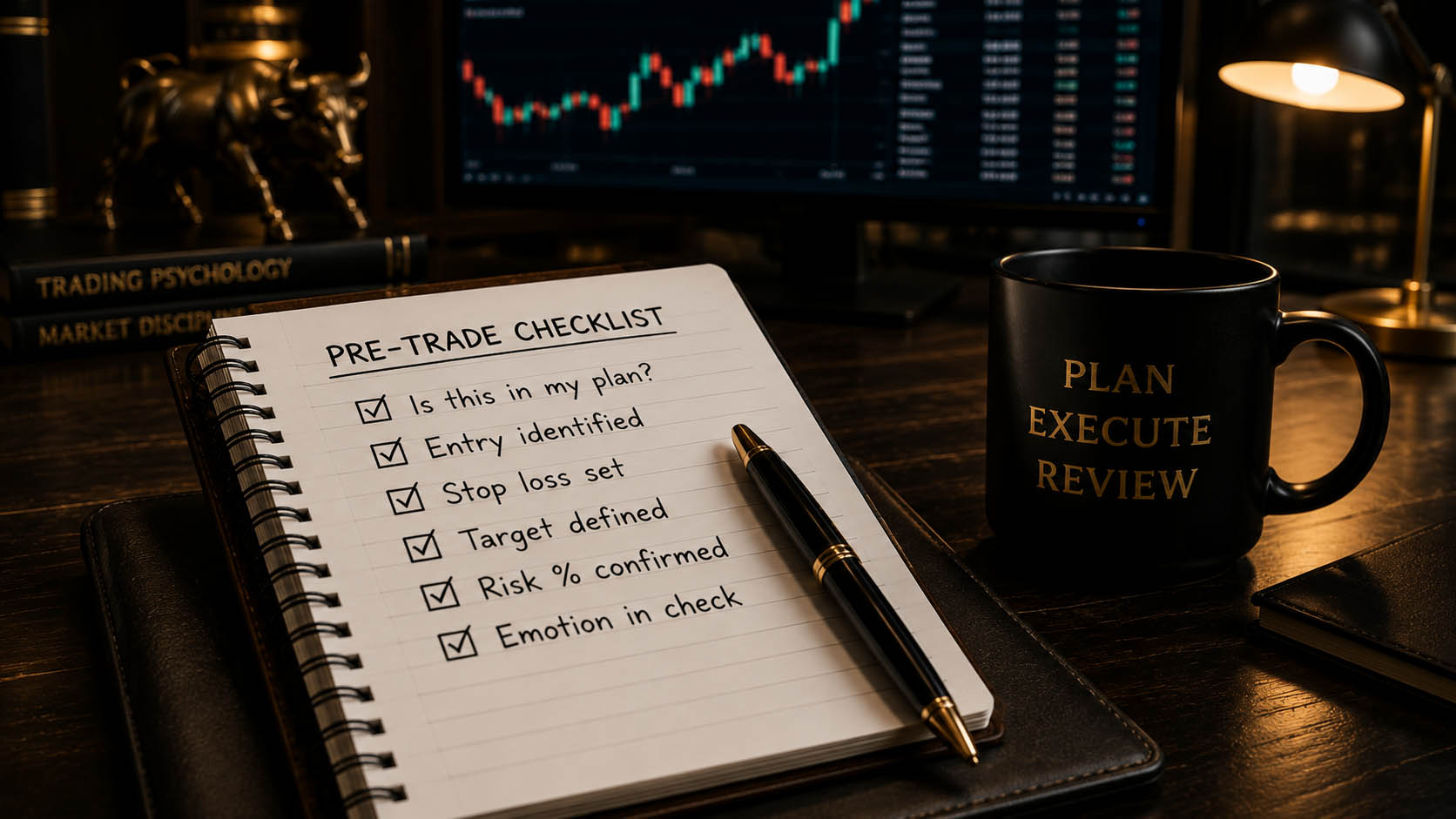
- Know your entry, stop loss, and target before entering.
- Risk the same percentage on every valid trade.
- Accept the loss before the trade is placed.
- Review trades by execution quality, not only profit or loss.
How to Control Greed
You control greed by setting limits before profit starts affecting your judgment. When a trader is winning, discipline can disappear fast.
Use These Rules
- Set a daily profit target and stop once it is reached.
- Set a maximum number of trades per session.
- Never increase risk because you feel confident.
- Withdraw or lock in profits according to a schedule.
- Do not chase trades that already moved without you.
Greed can also make traders ignore capital preservation, which is the real foundation of long-term funded trading.
The Professional Trader’s Emotional Checklist
Before placing a trade, ask yourself these questions. If the answer exposes fear or greed, pause before entering.
| Question | What It Reveals |
|---|---|
| Am I taking this trade because it fits my plan? | Confirms objective execution. |
| Am I trying to recover a previous loss? | Reveals revenge trading. |
| Am I increasing size because I feel confident? | Reveals greed. |
| Am I skipping this setup only because the last one lost? | Reveals fear. |
| Would I still take this trade if I was not close to passing? | Reveals prop firm pressure. |
FAQ
Is fear always bad in trading?
No. Fear can protect you from reckless decisions. The problem starts when fear stops you from following a valid plan.
Is greed always obvious?
No. Greed often feels like confidence, ambition, or opportunity. That is why traders need fixed rules.
What is worse, fear or greed?
Both can destroy consistency. Fear prevents execution. Greed creates unnecessary risk. A professional trader must manage both.
How do I know if I am trading emotionally?
If your trade size, entries, exits, or frequency change based on how you feel, emotion is influencing your execution.
Can a trading journal help?
Yes. A journal helps you identify emotional patterns that repeat across sessions.
10-Question Quiz
- What does fear usually cause in trading?
Answer: Hesitation and early exits. - What does greed usually cause?
Answer: Overtrading and oversizing. - Why is greed dangerous after a winning streak?
Answer: It can make traders abandon risk rules. - What is one sign of fear-based trading?
Answer: Skipping valid setups after a loss. - What is one sign of greed-based trading?
Answer: Increasing lot size randomly. - What should a trader define before entering?
Answer: Entry, stop loss, and target. - What is the best question after a losing trade?
Answer: Did I follow my plan? - Why are prop firm accounts emotionally challenging?
Answer: Traders must manage markets and firm rules. - What helps control greed?
Answer: Daily targets and max trade limits. - What is the professional goal?
Answer: Prevent emotion from controlling execution.
Key Takeaways
- Fear causes hesitation, missed trades, and early exits.
- Greed causes overtrading, oversizing, and rule-breaking.
- Both emotions are dangerous inside prop firm challenges.
- Fixed risk rules reduce emotional decision-making.
- Professional traders judge themselves by execution quality, not one trade result.
Lesson Summary
Fear and greed are two of the most powerful emotions in trading. Fear makes traders avoid valid risk, hesitate, exit early, or freeze after losses. Greed makes traders overtrade, oversize, chase moves, or ignore drawdown rules. Professional traders manage both emotions by using predefined entries, fixed risk, daily targets, maximum trade limits, and a written trading plan.