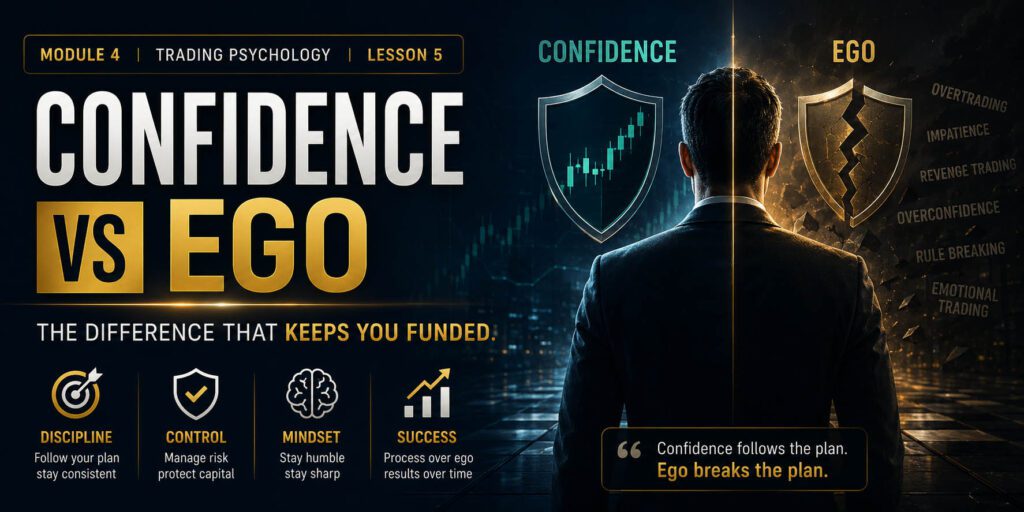
Confidence vs Ego
Confidence helps you execute your plan without hesitation. Ego makes you believe you are bigger than the plan. One builds consistency. The other quietly prepares your next account failure.
Learning Objectives
By the end of this lesson, you should understand the difference between healthy trading confidence and dangerous trading ego.
- Understand what real confidence looks like in trading.
- Identify how ego shows up after wins, streaks, and strong market calls.
- Learn why ego is especially dangerous inside prop firm accounts.
- Recognize the difference between trusting your plan and trusting your emotions.
- Build rules that keep confidence disciplined and ego under control.
- Stay humble while protecting your funded account eligibility.
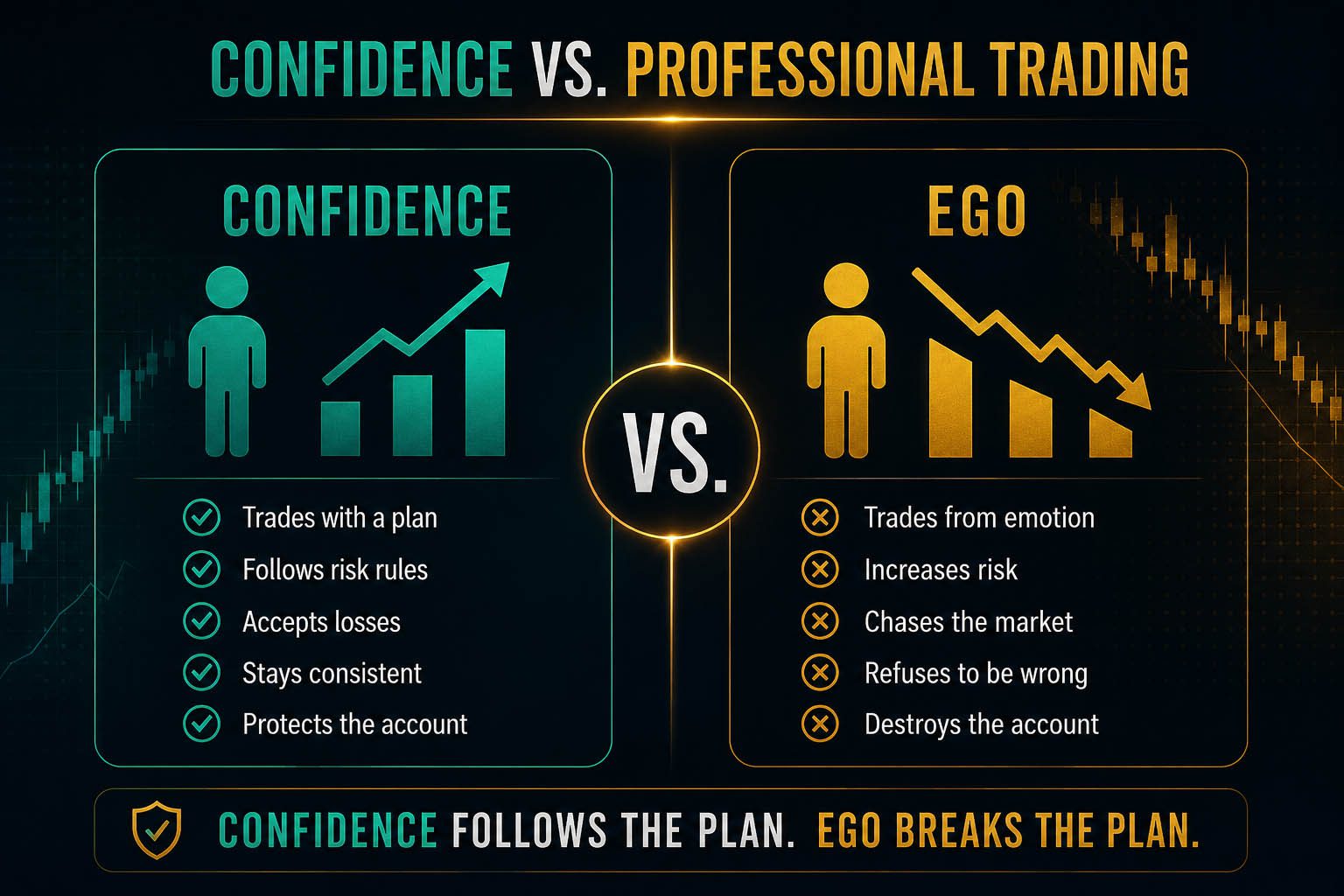
The Difference Between Confidence and Ego
Confidence and ego can feel similar in the moment. Both can make a trader feel certain. The difference is where that certainty comes from.
Confidence comes from preparation, backtesting, journaling, repetition, and following rules. Ego comes from wanting to be right, wanting to feel special, or believing the market must respect your opinion.
Confidence
Calm, prepared, controlled, and willing to accept a loss when the trade does not work.
Ego
Defensive, emotional, oversized, and unwilling to admit when the trade idea is wrong.
This lesson connects directly to Fear vs Greed, because ego often appears when greed disguises itself as confidence.
What Real Trading Confidence Looks Like
Real confidence is quiet. It does not need to force trades, prove anything, or win every day. A confident trader can take a loss without falling apart because their confidence is based on long-term execution, not one result.
Signs of Healthy Confidence
- You can enter a valid setup without fear.
- You can accept a losing trade without revenge trading.
- You follow the same risk rules after wins and losses.
- You do not need to predict every market move.
- You can stop trading after your plan says to stop.
- You measure yourself by execution quality, not one trade outcome.
True confidence is built by following a written professional trading plan, not by guessing correctly once.
What Trading Ego Looks Like
Ego usually appears after success. A trader wins a few trades, calls a big move, passes a phase, or has a strong payout month. Then the voice changes from “follow the plan” to “I got this.” That is where trouble starts.
Signs of Ego
- You increase lot size because you feel hot.
- You ignore your stop loss because you believe price will come back.
- You take trades outside your plan because you “see something.”
- You refuse to close a bad trade because you do not want to be wrong.
- You start thinking normal rules do not apply to you.
- You care more about being right than protecting the account.
Ego often leads straight into revenge trading when the market proves the trader wrong.
Confidence vs Ego Comparison
| Situation | Confidence | Ego |
|---|---|---|
| After a Win | Stays consistent with risk and rules. | Increases size because the trader feels unstoppable. |
| After a Loss | Reviews execution and moves on. | Feels insulted and tries to prove the market wrong. |
| During Drawdown | Reduces risk or pauses trading. | Doubles down to recover faster. |
| Near Profit Target | Waits for clean setups. | Forces trades to finish quickly. |
| When Wrong | Accepts the stop loss. | Moves the stop or holds too long. |

Why Ego Destroys Prop Firm Accounts
Prop firm trading is built on rules. Ego hates rules. That is the problem.
A trader with ego might be talented. They might even have a strong strategy. But if they believe they can override drawdown limits, daily loss limits, max risk, or trade restrictions, the account is always in danger.
Example
A trader wins three days in a row and feels extremely confident. On the fourth day, they increase their lot size because they want to pass faster. The first trade loses. Instead of accepting it, they enter again even larger. Within one session, a strong week turns into a serious drawdown problem.
The market did not destroy the account. Ego did.
This is why every funded trader must respect daily drawdown, maximum drawdown, and firm-specific rules every single day.
The Ego Trap After Winning
Many traders become most dangerous after they are doing well. This sounds backwards, but it is true. A winning streak can lower your guard and make you feel like the plan is less important.
| Winning Feeling | Ego Interpretation | Professional Response |
|---|---|---|
| “I’m on fire.” | Take bigger positions. | Keep risk fixed. |
| “The market is easy.” | Lower setup standards. | Stay selective. |
| “I should make more today.” | Overtrade after target. | Stop when the plan is complete. |
| “I knew that move would happen.” | Chase late entries. | Wait for the next clean setup. |
This is where overtrading can quickly turn a strong day into unnecessary drawdown.
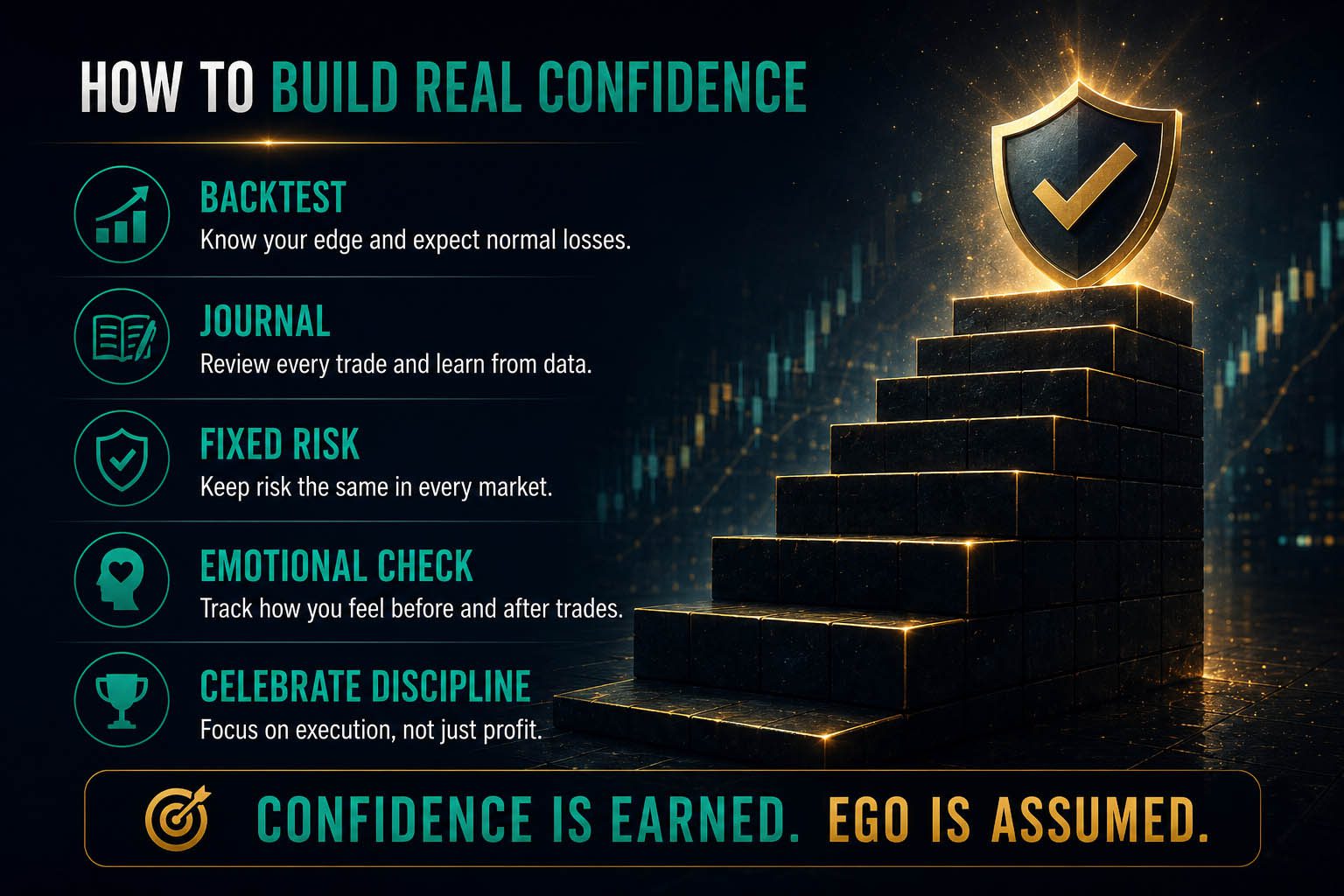
How to Build Real Confidence
Real confidence is earned through repetition. You build it by doing the right things long enough that your mind trusts the process.
Confidence Builders
- Backtest your strategy so you understand normal wins and losses.
- Journal every trade and review execution quality.
- Use fixed risk until consistency is proven.
- Track your emotional state before and after trades.
- Celebrate discipline, not just profit.
- Study your losing trades without taking them personally.
Real confidence also requires proper position sizing, because consistent risk creates consistent decision-making.
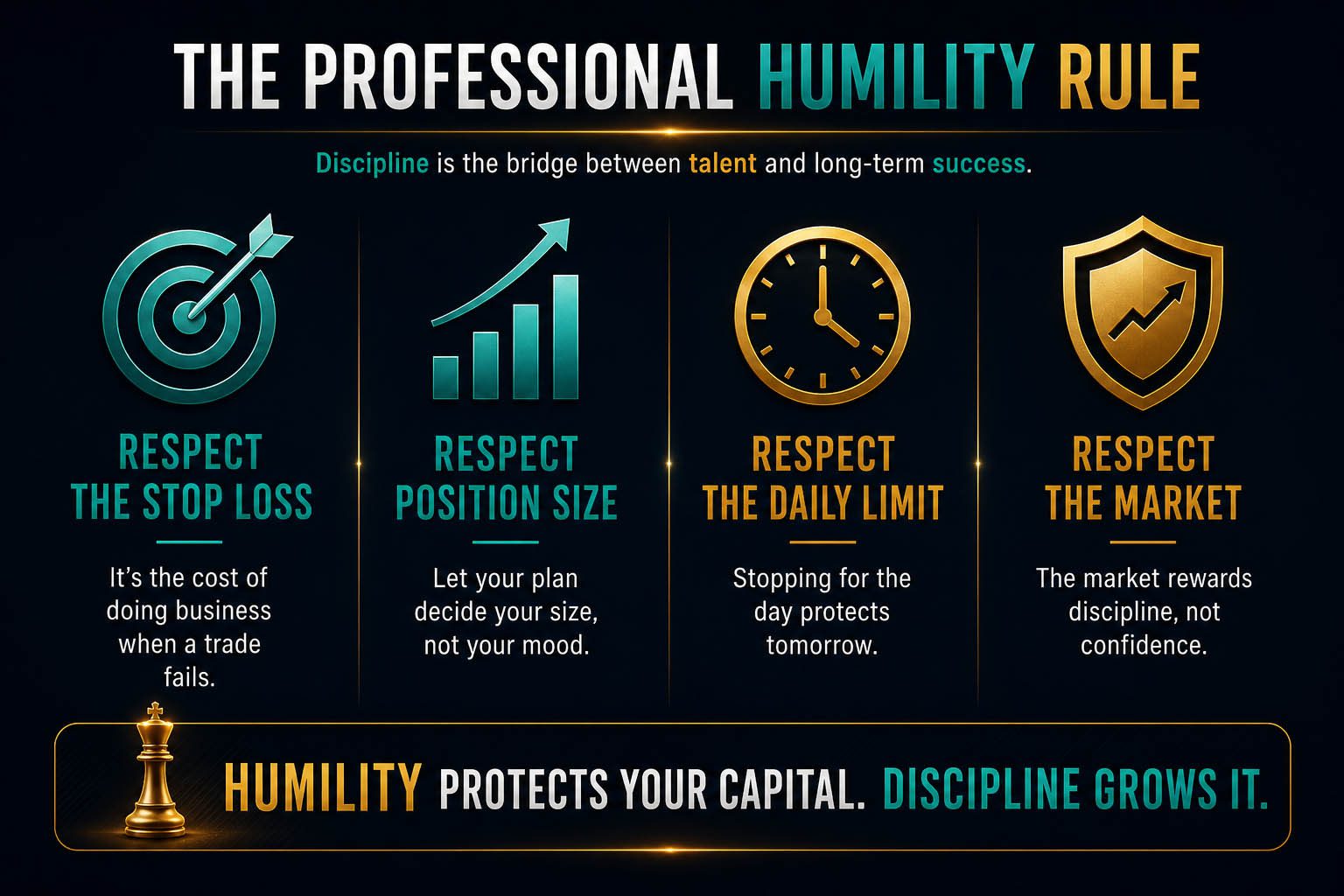
The Professional Humility Rule
Professional traders respect the market because they understand risk. They know that no setup is guaranteed, no streak lasts forever, and no trader is above the rules.
Respect the Stop Loss
The stop loss is not an insult. It is the cost of doing business when a trade idea fails.
Respect Position Size
Your lot size should come from your plan, not from your mood or recent wins.
Respect the Daily Limit
Stopping for the day protects tomorrow’s opportunity.
Respect the Market
The market does not care how confident you feel. It only rewards disciplined execution over time.
FAQ
Is confidence bad in trading?
No. Confidence is necessary. The problem starts when confidence turns into ego and the trader stops respecting risk.
How do I know if I am trading from ego?
If you are increasing risk, ignoring rules, refusing to accept losses, or trying to prove you are right, ego is probably involved.
Can a good trader still have ego?
Yes. In fact, talented traders can be especially vulnerable because early success may make them underestimate risk.
What is the fastest way to reduce ego?
Use fixed rules. Fixed risk, fixed max trades, fixed loss limits, and written trade criteria keep ego from taking control.
Should I lower risk after a big winning streak?
Sometimes yes. If you feel overly excited or invincible, reducing risk or taking a break can protect your account.
10-Question Quiz
- What does real trading confidence come from?
Answer: Preparation, repetition, and process. - What does ego usually care about most?
Answer: Being right. - What is a sign of healthy confidence?
Answer: Accepting a loss without revenge trading. - What is a sign of ego?
Answer: Refusing to close a bad trade. - Why is ego dangerous in prop firm trading?
Answer: Prop firm accounts have rules and ego ignores rules. - What should a trader do after a winning streak?
Answer: Stay consistent with the plan. - What does confidence say?
Answer: “I trust my process.” - What does ego say?
Answer: “I know I’m right.” - What is one way to build real confidence?
Answer: Backtest and review your trades. - What keeps a trader funded long term?
Answer: Discipline and risk control.
Key Takeaways
- Confidence is built from preparation, repetition, and disciplined execution.
- Ego appears when a trader cares more about being right than protecting capital.
- Winning streaks can be dangerous if they make you feel untouchable.
- Prop firm accounts punish ego because rules must be respected every day.
- Professional traders stay humble, follow risk rules, and let the process work.
Lesson Summary
Confidence and ego can feel similar, but they create very different trading outcomes. Confidence comes from preparation, repetition, journaling, and disciplined execution. Ego comes from wanting to be right, feeling untouchable, and believing normal rules no longer apply. Professional traders build real confidence by respecting risk, following the plan, accepting losses, and staying humble after wins.