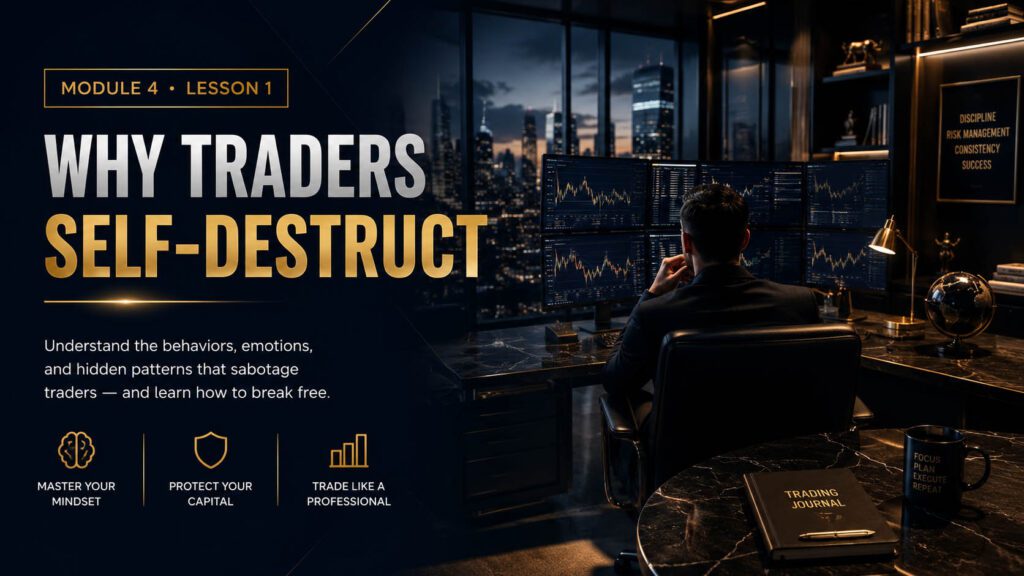
Why Traders Self-Destruct
Most traders do not fail because they cannot find a setup. They fail because they cannot control what they do after the setup appears, after a loss hits, or after a winning streak makes them feel untouchable.
Learning Objectives
By the end of this lesson, you should understand why traders make destructive decisions even when they already know better.
- Identify the most common emotional triggers that cause account damage.
- Understand why discipline breaks down during losses, pressure, and winning streaks.
- Recognize the difference between a trading mistake and a behavioral pattern.
- Build a simple mental framework for protecting your evaluation or funded account.
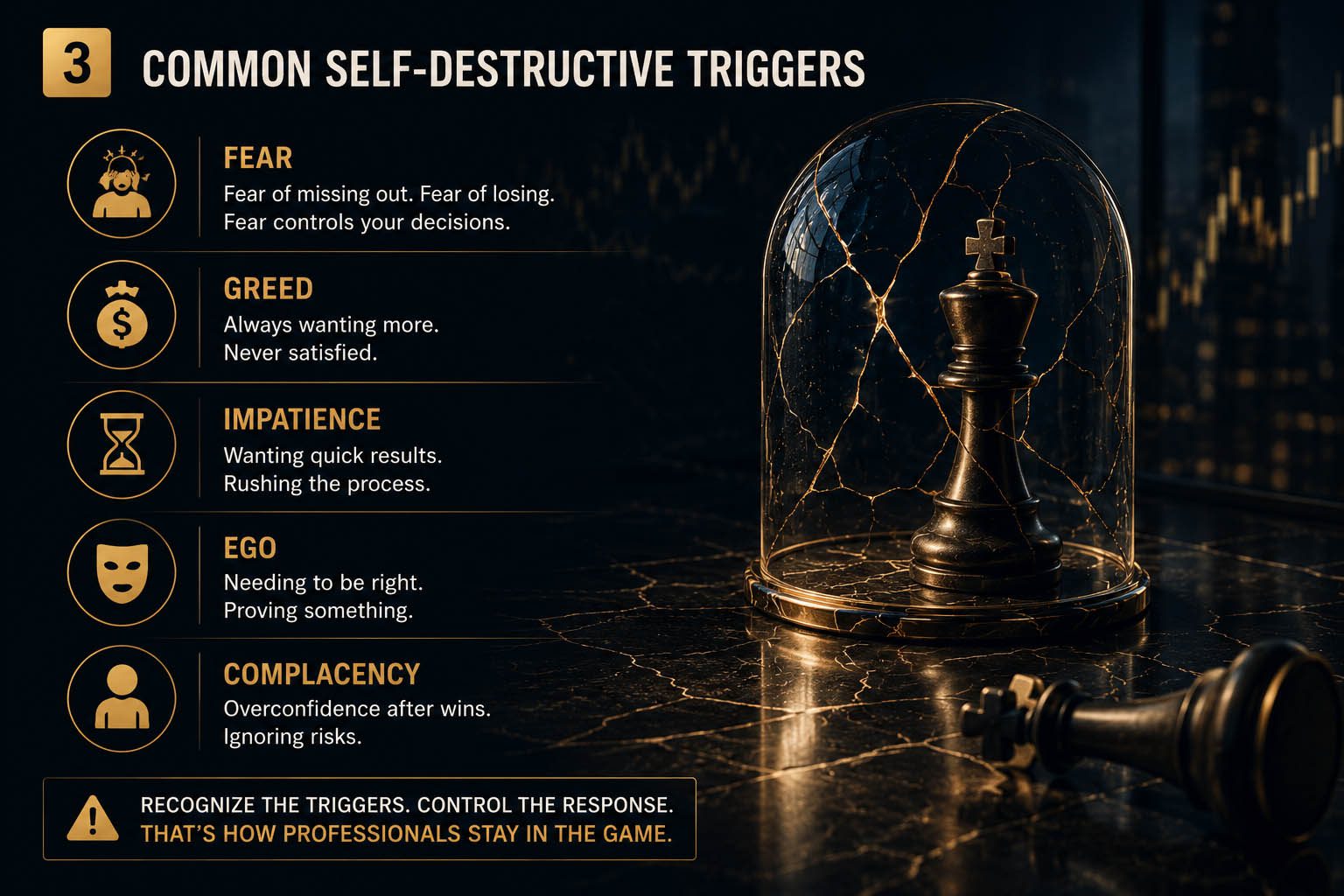
The Real Reason Traders Blow Accounts
Most blown accounts do not happen from one normal losing trade. They happen from a chain reaction. One loss turns into frustration. Frustration turns into a bigger trade. A bigger trade turns into panic. Panic turns into breaking rules. By the time the trader realizes what happened, the damage is already done.
This is self-destruction. It is not always dramatic. Sometimes it looks like taking one extra trade after your daily limit. Sometimes it looks like moving your stop loss because you “know price will come back.” Sometimes it looks like risking too much because you want to pass faster.
This is why trading psychology connects directly to capital preservation. The trader who protects the account earns the right to keep trading.
The Self-Destruction Cycle
When traders lose control, the process usually follows a predictable cycle. Learning this cycle helps you catch the problem before it turns into a failed challenge or breached funded account.
| Stage | What Happens | Common Result |
|---|---|---|
| Trigger | A loss, missed trade, news spike, rejection, or slow market frustrates the trader. | Emotions rise and patience drops. |
| Impulse | The trader feels pressure to make money back or prove they were right. | Rules start feeling optional. |
| Violation | The trader increases lot size, overtrades, moves stops, or enters low-quality setups. | Risk becomes uncontrolled. |
| Damage | The account suffers a large drawdown or rule breach. | The trader loses confidence and repeats the cycle later. |
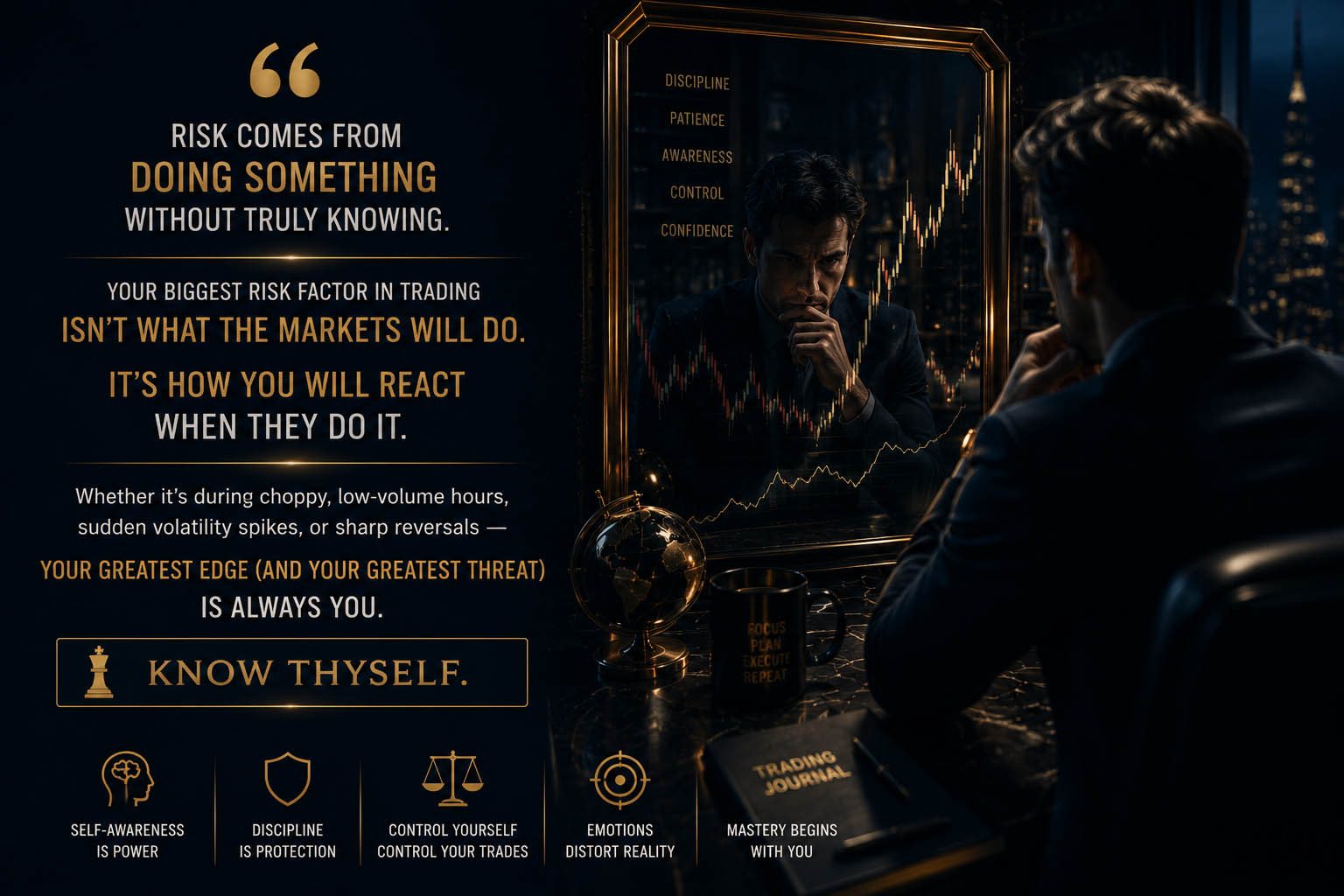
Why Knowing the Rules Is Not Enough
A trader can know the maximum daily drawdown, the profit target, and the consistency rule, but still fail. Knowledge does not automatically create discipline. Discipline comes from structure, repetition, and consequences.
The market pressures your weakest habits. If you are impatient, the market will tempt you to enter early. If you hate losing, the market will tempt you to revenge trade. If you crave fast results, the market will tempt you to oversize.
That is why every trader needs a written professional trading plan, not just a setup they like.
The Five Destructive Trader Behaviors
| Behavior | How It Shows Up | Professional Fix |
|---|---|---|
| Revenge Trading | Entering quickly after a loss to win the money back. | Stop trading after emotional losses. Wait for a fresh setup and fresh mindset. |
| Overtrading | Taking too many trades because the trader feels bored or behind. | Set a maximum number of trades per session before the day starts. |
| Oversizing | Increasing lot size to speed up a challenge or recover drawdown. | Use fixed risk rules. Your lot size should not be decided by emotion. |
| Moving Stops | Widening the stop loss because the trader refuses to accept being wrong. | Accept the planned loss. A small controlled loss is a business expense. |
| Ignoring Rules | Trading around news, holding when not allowed, or violating firm restrictions. | Check the rules before every session. Protect eligibility first, profit second. |
Oversizing is especially dangerous because it breaks the logic of professional position sizing. Lot size should come from your risk plan, not your emotional state.
Pressure Changes Decision-Making
Prop firm trading creates extra pressure because the trader is not only trying to be profitable. They are trying to avoid daily drawdown, avoid max loss, respect consistency rules, and reach a target within the firm’s framework.
That pressure can make traders behave differently than they would on a demo chart. They hesitate on good setups, chase bad setups, close winners too early, hold losers too long, or become obsessed with the account dashboard instead of the trade plan.
This question helps protect you from breaking daily drawdown and other account-killing rules.
Beginner Example: The One Bad Trade That Becomes Five
A trader risks 0.5% on a clean setup and loses. That is normal. But instead of accepting the loss, they immediately enter again with double the lot size. The second trade loses. Now they feel embarrassed and angry. They take a third trade with no setup. Then a fourth. Then a fifth.
The original problem was not the first loss. The original loss was planned and manageable. The real problem was the emotional reaction after the loss.
Professional Traders Think in Systems
Amateur traders ask, “How can I make money today?” Professional traders ask, “Did I follow the system today?” This difference matters because the market will not reward you every day. But if your system has an edge, your discipline gives that edge time to play out.
A trading system is not only entries and exits. It includes your risk limit, your session time, your maximum trades, your news filter, your stop rules, your review process, and your shutdown rule.
| Amateur Question | Professional Question |
|---|---|
| How can I pass faster? | How can I pass without damaging my account? |
| How do I win this trade? | Is this trade worth the risk? |
| How do I make back my loss? | What rule protects me from emotional damage? |
| What setup should I take next? | Should I still be trading today? |
Your Anti-Self-Destruction Rules
Every trader needs rules that protect them from themselves. These rules should be simple enough to follow under pressure.
- Daily loss limit: Stop before the firm forces you to stop.
- Maximum trades: Set a hard cap for the session.
- No revenge entries: After a loss, wait for the next valid setup.
- No lot-size punishment: Never increase risk because you are angry or behind.
- Shutdown rule: If you feel emotionally charged, step away from the platform.
FAQ
Do most traders fail because their strategy is bad?
Some do, but many fail because they cannot execute the strategy consistently. A simple strategy with discipline can outperform a complex strategy traded emotionally.
Is self-destruction only a beginner problem?
No. Experienced traders can also lose control, especially after large wins, large losses, or periods of pressure. The difference is professionals have stronger systems to stop the damage early.
What is the fastest way to reduce emotional trading?
Use smaller risk, define your daily stop, and limit the number of trades. Emotion increases when risk is too large or when the trader has no shutdown rule.
Can I still be aggressive during an evaluation?
You can be strategic, but reckless aggression usually causes problems. The goal is not just to hit the profit target. The goal is to hit it while staying eligible for funding.
10-Question Quiz
- What usually causes traders to blow accounts?
Answer: A chain reaction of emotional decisions. - What is revenge trading?
Answer: Entering emotionally to win money back. - Why is knowing prop firm rules not enough?
Answer: Traders still need discipline under pressure. - What should a trader do after feeling emotionally charged?
Answer: Step away from the platform. - What is a professional trader mainly trying to protect?
Answer: Their capital and eligibility. - Which behavior is an example of oversizing?
Answer: Increasing lot size to recover a loss. - What should your lot size be based on?
Answer: A defined risk plan. - What question does a professional trader ask?
Answer: Is this trade worth the risk? - What is a shutdown rule?
Answer: A rule that tells you when to stop trading. - What is the main lesson of this module opener?
Answer: Traders must control behavior, not just learn setups.
Key Takeaways
- Most traders self-destruct through emotional chains, not one normal loss.
- Prop firm pressure can expose weak habits quickly.
- Revenge trading, overtrading, oversizing, moving stops, and ignoring rules are major account killers.
- Professional traders think in systems, not impulses.
- Your shutdown rule is one of the most important tools you have.
Lesson Summary
Most traders self-destruct because they react emotionally after losses, missed trades, pressure, or winning streaks. The problem is rarely one normal loss. The real danger is the chain reaction that follows: revenge trading, overtrading, oversizing, moving stops, and ignoring rules. Professional traders protect themselves with systems, daily limits, maximum trades, fixed position sizing, and shutdown rules.