
Patience Pays
Patience is one of the most profitable skills a trader can develop. It keeps you out of low-quality trades, protects your capital during bad market conditions, and gives your best setups room to appear.
Learning Objectives
By the end of this lesson, you should understand why patience is not passive. It is an active trading skill that protects your account and improves decision quality.
- Understand why patience is a professional trading edge.
- Learn the difference between waiting and hesitating.
- Identify the emotional triggers that cause impatient trading.
- Understand why patience is critical in prop firm challenges.
- Build rules that help you wait for high-quality setups.
- Use no-trade days as part of professional capital protection.
Why Patience Matters
Most traders lose money because they act too soon, too often, or with too much size. They do not wait for the best opportunity. They trade because they want action.
Patience allows you to separate real setups from market noise. It helps you avoid forcing trades when the market has not given you a clean reason to enter.
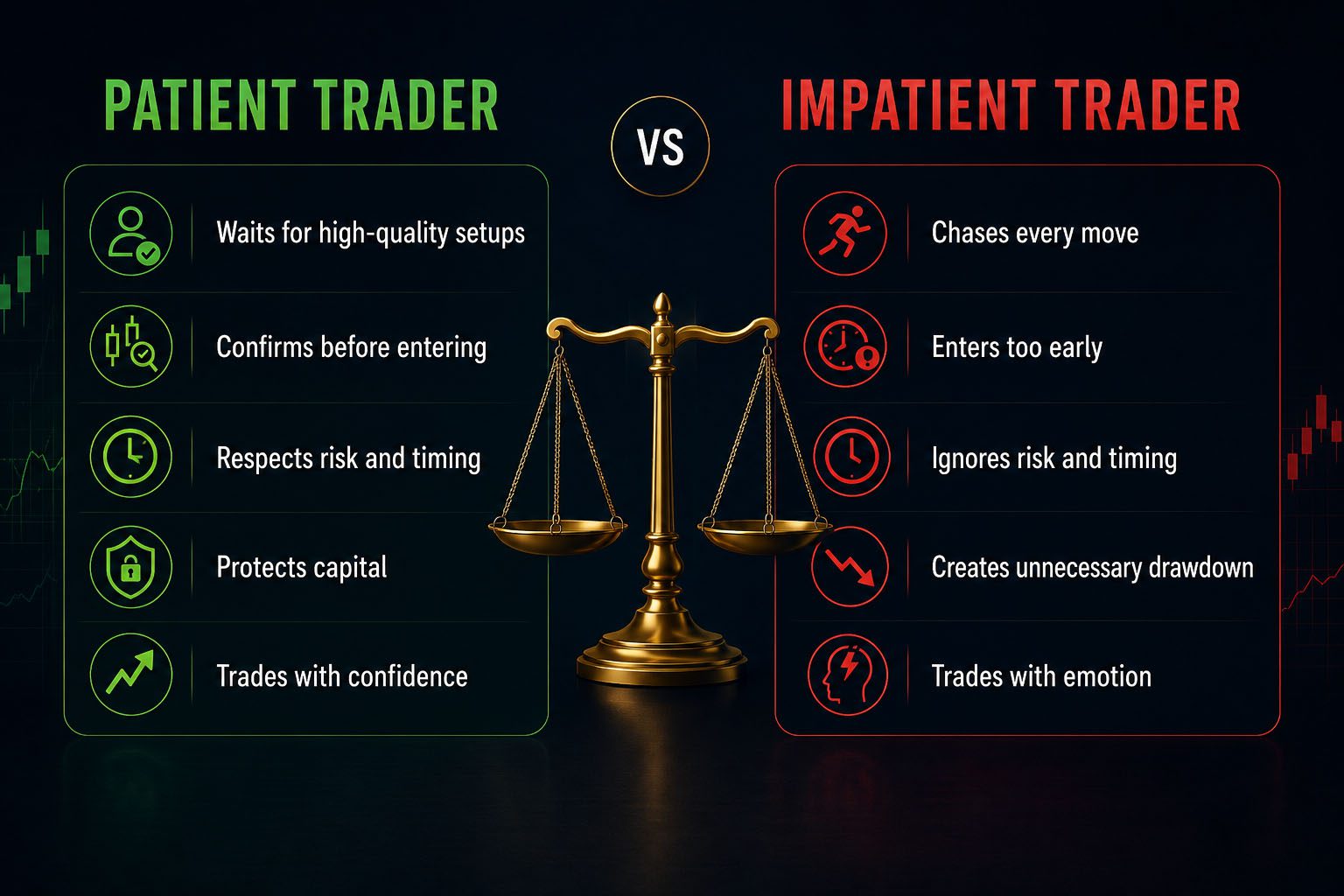
Impatient Trader
Chases price, enters early, trades boredom, and forces setups that are not fully developed.
Patient Trader
Waits for confirmation, respects timing, protects capital, and only risks money when the setup is valid.
This lesson builds directly on Building Discipline, because patience is one of the clearest signs that discipline is working.
Waiting vs Hesitating
Patience does not mean being afraid to trade. Some traders confuse patience with hesitation. These are not the same thing.
Waiting is controlled. Hesitation is fear. Waiting means the setup is not ready yet. Hesitation means the setup is ready, but the trader is scared to execute.
| Behavior | What It Means | Result |
|---|---|---|
| Patience | The trader waits because the setup is incomplete. | Better trade selection. |
| Hesitation | The trader freezes even though the setup is valid. | Missed opportunities. |
| Impulsiveness | The trader enters before the setup is ready. | Weak entries and avoidable losses. |
If the setup is valid but fear stops execution, review Fear vs Greed. If the setup is not ready, waiting is discipline.
Why Traders Become Impatient
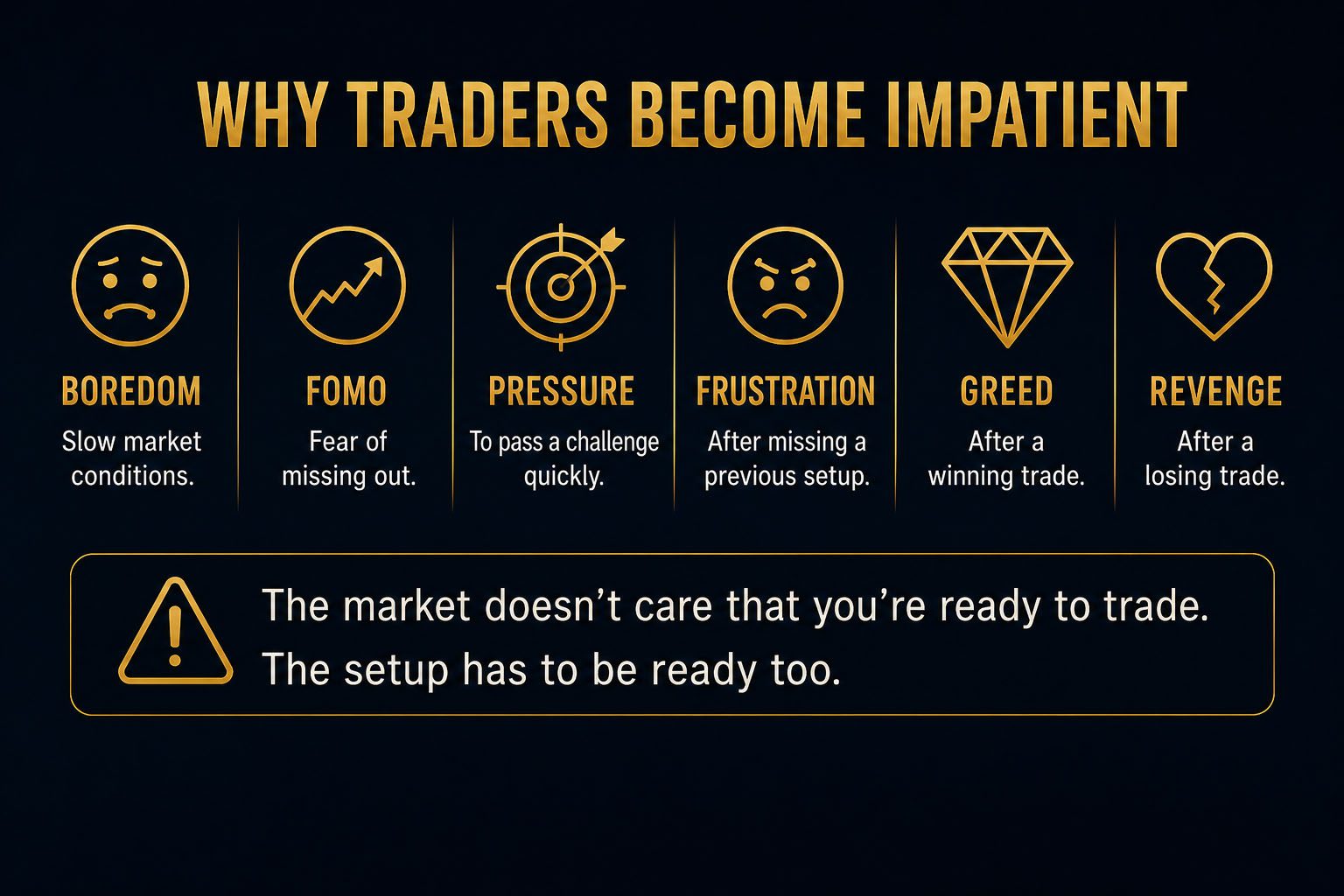
Impatience usually comes from emotional pressure. The trader wants something from the market before the market has offered a real opportunity.
Common Causes of Impatience
- Boredom during slow market conditions.
- Pressure to pass a prop firm challenge quickly.
- Fear of missing out after seeing price move without you.
- Frustration after missing a previous setup.
- Greed after a winning trade.
- Revenge after a losing trade.
Impatience often creates overtrading, because the trader starts treating every move as an opportunity.
Patience Inside a Prop Firm Challenge
Prop firm accounts reward survival first. Profit only matters if you stay within the rules. That makes patience even more important.
An impatient trader may try to pass faster, reach the target in fewer days, or recover losses immediately. That behavior usually creates unnecessary drawdown.
Example
A trader needs 8% to pass Phase One. Instead of waiting for the best setups, they try to force progress every day. They take weak trades during low-quality market conditions and create drawdown. Now the trader needs to recover losses before they can even think about passing.
The problem was not the profit target. The problem was trying to rush the process.
This is why patience protects you from unnecessary daily drawdown and keeps your challenge alive.
The Cost of Entering Too Early
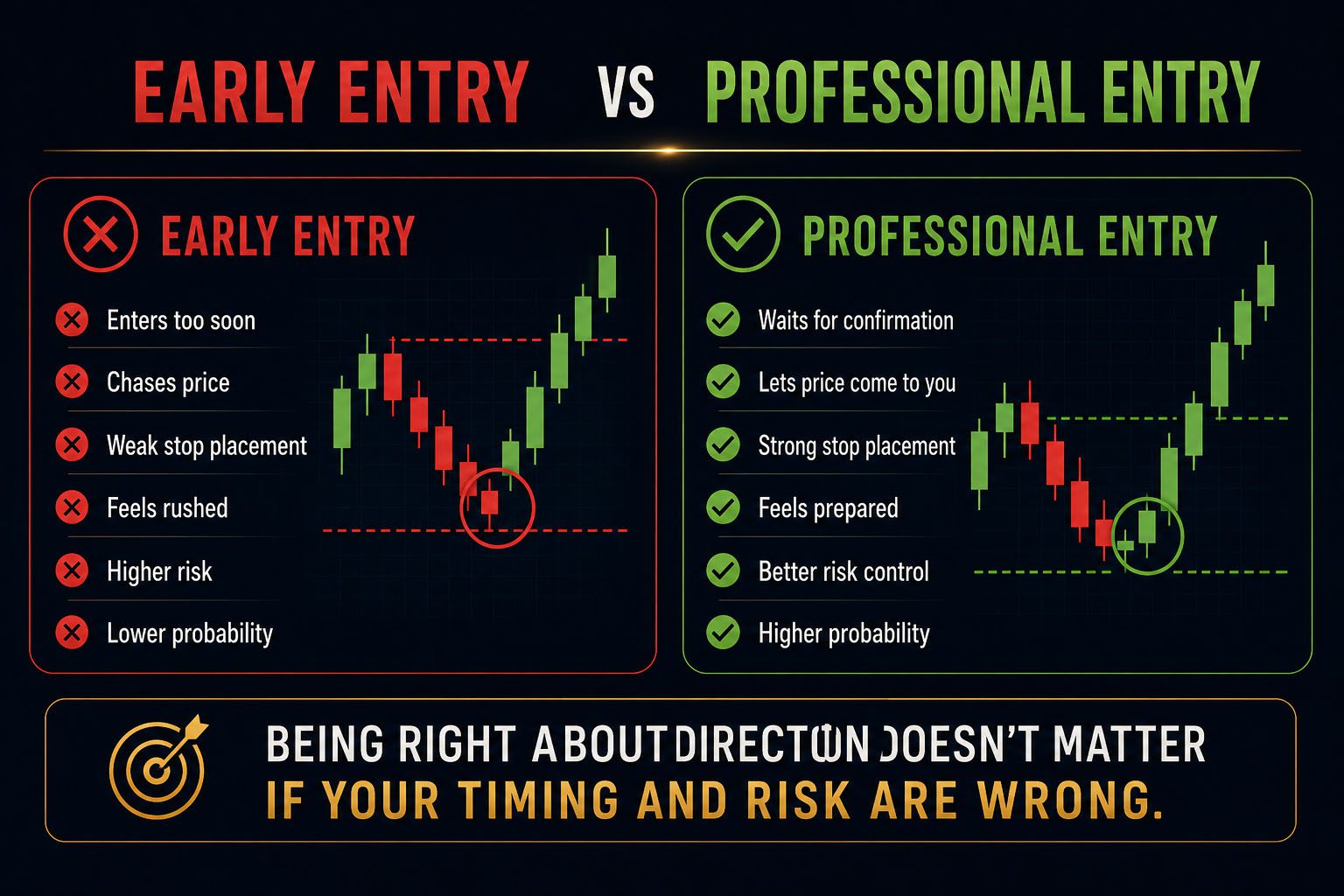
Early entries are one of the most common impatience mistakes. The trader sees an idea forming and enters before confirmation. Sometimes they are directionally right but still lose because the timing was poor.
| Impatient Entry | Professional Entry |
|---|---|
| Enters because price is moving. | Enters because the setup is confirmed. |
| Chases after missing the original entry. | Waits for pullback or accepts the missed trade. |
| Uses a weak stop loss location. | Places the stop where the trade idea is invalidated. |
| Feels rushed. | Feels prepared. |
Early entries can also damage your risk-to-reward, because weak timing often leads to weaker stop placement and poor trade structure.
How Patience Improves Risk Management
Patience gives you better control over position size, stop placement, and reward-to-risk. When you wait for clean setups, you often get clearer levels and better trade structure.
Patient Trading Helps You
- Avoid random entries.
- Reduce unnecessary losses.
- Wait for cleaner stop loss placement.
- Enter closer to meaningful levels.
- Avoid overtrading during bad conditions.
- Protect mental energy for high-quality opportunities.
This is where patience supports capital preservation. Avoiding bad trades is part of protecting the account.
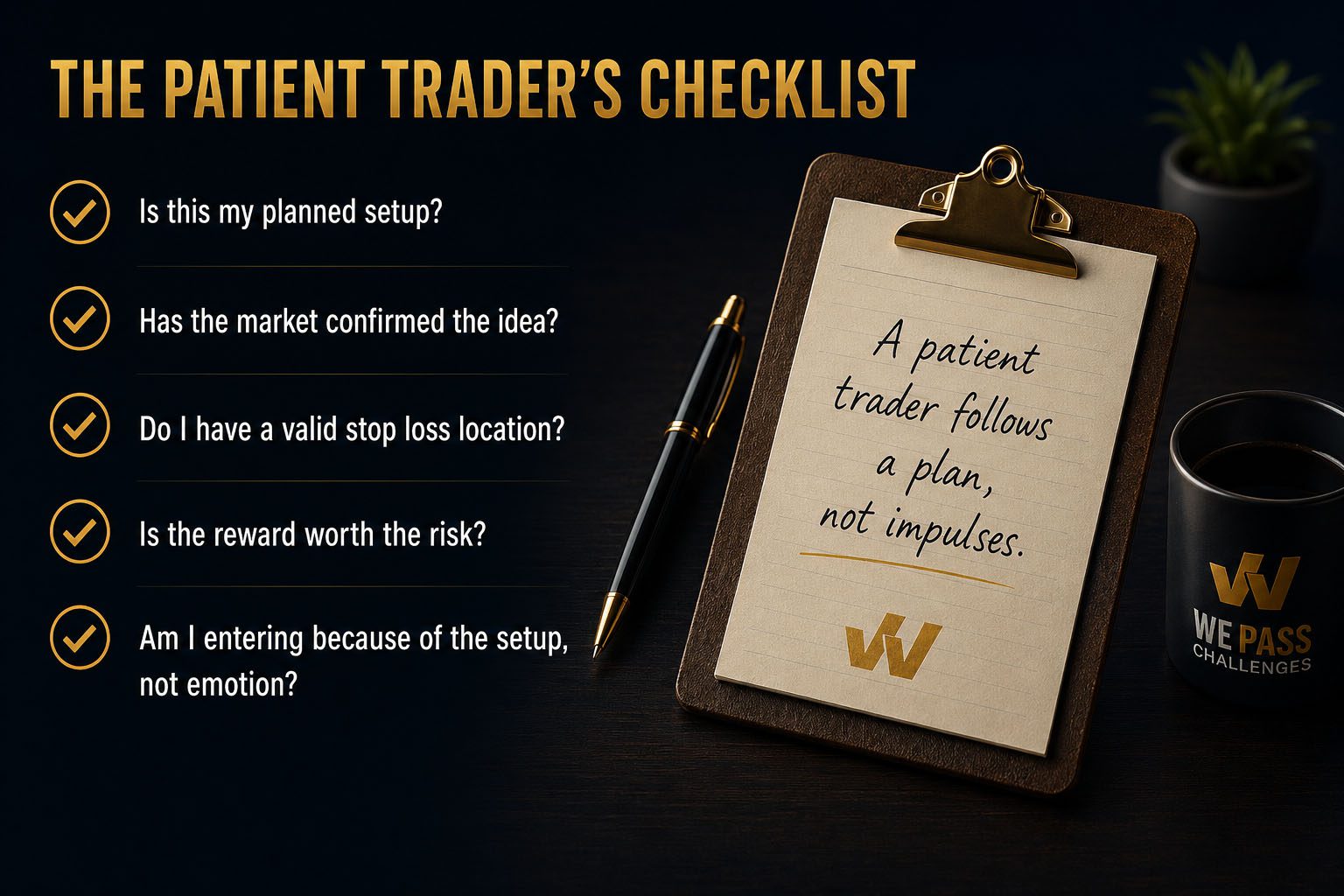
The Patient Trader’s Checklist
Before entering, use this checklist. If the answer is no, the trade is not ready.
| Question | Why It Matters |
|---|---|
| Is this my planned setup? | Prevents random trades. |
| Has the market confirmed the idea? | Prevents early entries. |
| Do I have a valid stop loss location? | Protects risk management. |
| Is the reward worth the risk? | Prevents bad trade structure. |
| Am I entering because of the setup, not emotion? | Protects discipline. |
Rules That Build Patience
Patience becomes easier when your rules are clear. If your rules are vague, your emotions will create excuses to enter.
- Trade only during your planned sessions.
- Wait for confirmation before entering.
- Never chase a trade after the entry is gone.
- Use alerts instead of staring at charts all day.
- Limit the number of trades per session.
- Accept no-trade days as part of professional trading.
- Write down the reason for every trade before entering.
These patience rules should live inside your professional trading plan, not just in your head.
No-Trade Days Are Part of the Business
One of the hardest lessons for new traders is accepting that some days do not deserve a trade. A no-trade day can be a sign of discipline, not failure.
Professional traders understand that capital preservation is part of performance. You do not need to make money every day. You need to avoid unnecessary losses while waiting for your edge.
This is exactly why knowing when not to trade is a professional skill, not a weakness.
FAQ
Does patience mean I should trade less?
Usually, yes. But the goal is not fewer trades for the sake of fewer trades. The goal is better trades.
How do I know if I am being patient or scared?
If the setup is incomplete, you are being patient. If the setup is valid and you still cannot execute because of fear, that is hesitation.
Can patience help me pass a challenge faster?
Indirectly, yes. Patience helps you avoid drawdown, which often makes passing easier. Rushing usually slows traders down.
What should I do when I miss a trade?
Accept it and wait for the next opportunity. Chasing after a missed trade usually creates poor risk.
Is a no-trade day a bad thing?
No. If the market does not offer a valid setup, not trading is the professional decision.
10-Question Quiz
- What does patience help traders avoid?
Answer: Low-quality trades and emotional entries. - What is the difference between patience and hesitation?
Answer: Patience waits for incomplete setups; hesitation freezes on valid setups. - Why is patience important in prop firm challenges?
Answer: It helps traders avoid unnecessary drawdown. - What is a common sign of impatience?
Answer: Chasing price after missing entry. - What should a trader do if the entry is gone?
Answer: Accept the missed trade and wait. - Why can early entries be dangerous?
Answer: The setup may not be confirmed yet. - What is a no-trade day?
Answer: Sometimes a disciplined professional decision. - What does a patient trader wait for?
Answer: Confirmation and clean structure. - What can help reduce impatient trading?
Answer: Using alerts and clear rules. - What is the main goal of patience?
Answer: Improve trade quality and protect capital.
Key Takeaways
- Patience is a trading skill, not weakness.
- Waiting is different from hesitating.
- Impatient trades often come from boredom, FOMO, greed, or pressure.
- Prop firm traders need patience to protect drawdown and stay compliant.
- A no-trade day can be a professional decision when no valid setup appears.
Lesson Summary
Patience is one of the most valuable skills in trading because it keeps traders out of low-quality setups and protects capital during poor market conditions. Patient traders wait for confirmation, clean structure, valid risk, and emotional control before entering. Impatient traders chase price, enter early, force setups, and create unnecessary drawdown. In prop firm trading, patience helps traders survive long enough for their edge to work.