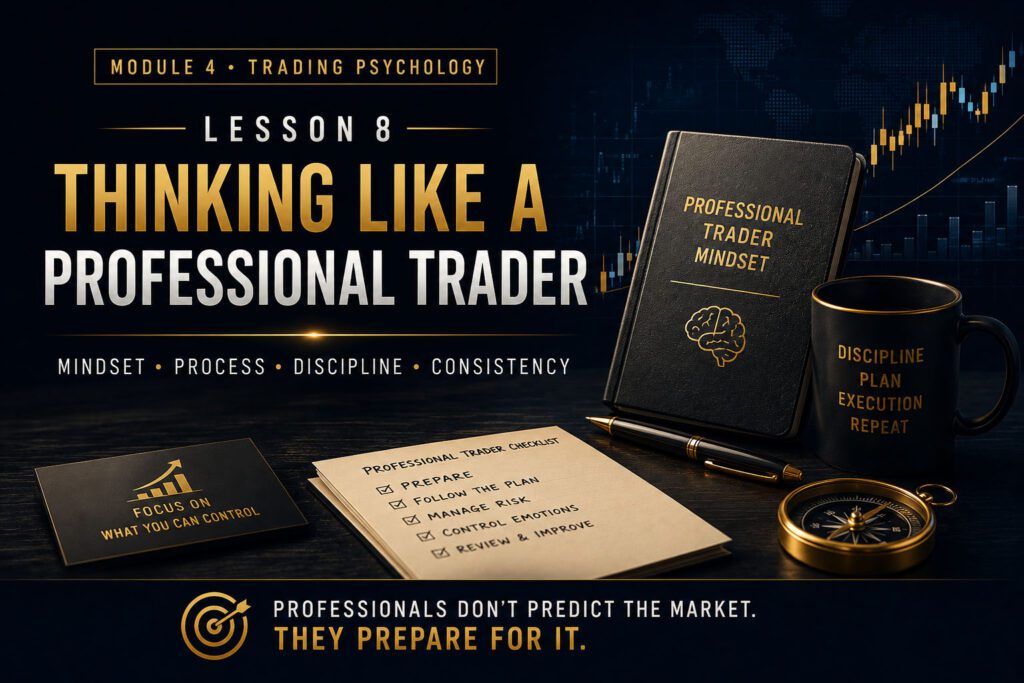
Thinking Like a Professional Trader
Professional traders do not think in single trades. They think in systems, risk, probabilities, execution, and long-term survival. This mindset shift is what separates gamblers from funded traders.
Learning Objectives
By the end of this lesson, you should understand how professional traders think before, during, and after each trading session.
- Understand the mindset difference between amateurs and professionals.
- Learn why professionals focus on process over outcome.
- Think in probabilities instead of certainty.
- Understand why capital protection comes before profit.
- Build a professional framework for decision-making.
- Review your trading behavior like a funded trader, not a gambler.
The Professional Trader Mindset
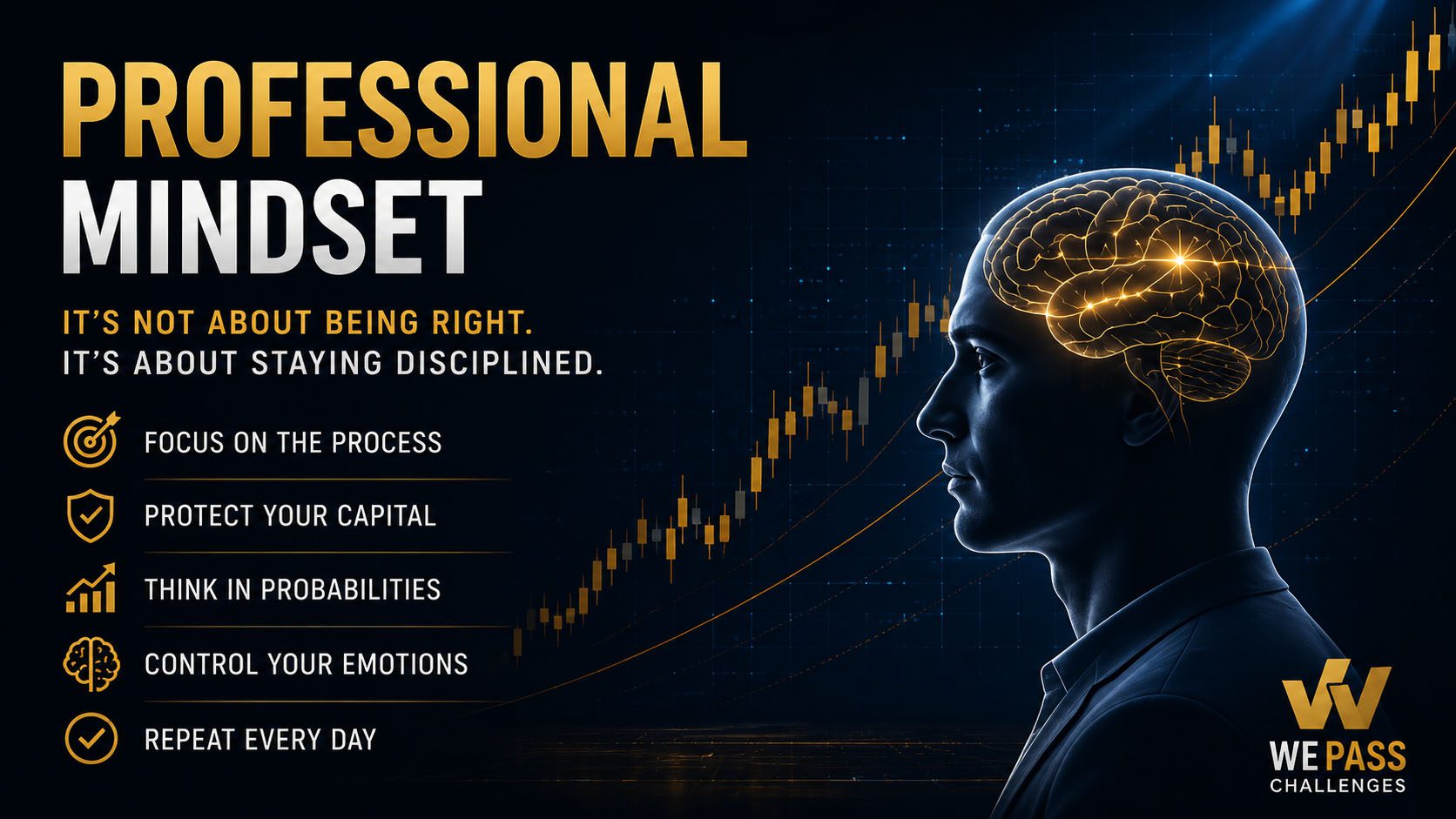
A professional trader does not approach the market looking for excitement. They approach it like a business. Their goal is not to be right on every trade. Their goal is to make disciplined decisions repeatedly.
This is a major shift. Most beginners want the market to prove them right. Professionals want their process to stay consistent.
Amateur Thinking
“I need this trade to win.”
Professional Thinking
“I need to execute this trade correctly, win or lose.”
This lesson brings together everything from Building Discipline, Patience Pays, and Confidence vs Ego.
Professionals Think in Probabilities
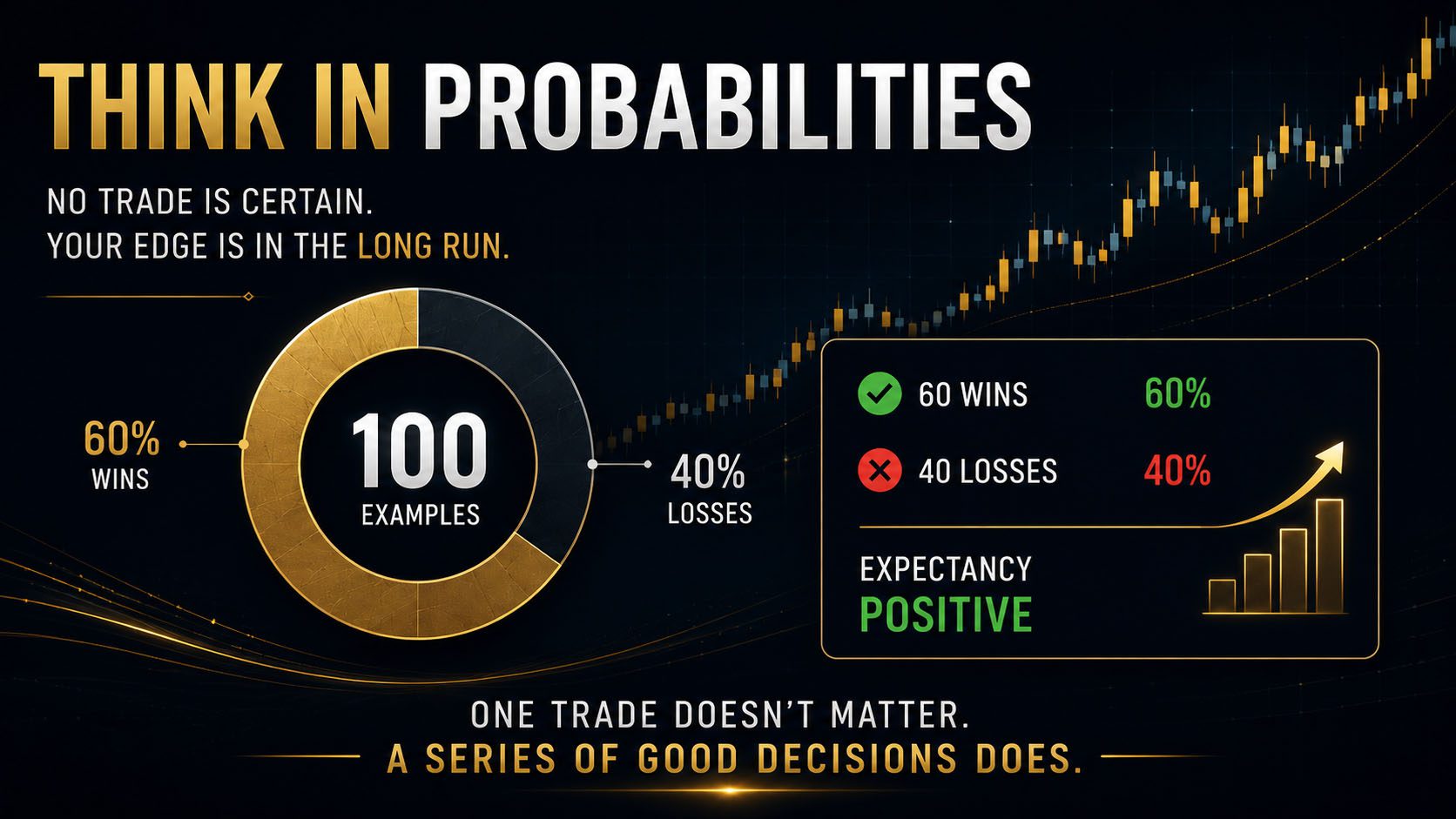
No trader knows what the next candle will do. Professionals accept this. They do not need certainty to trade. They need a repeatable edge and controlled risk.
Thinking in probabilities means understanding that one trade does not define you. A good setup can lose. A bad trade can win. The goal is to judge your decisions over a series of trades, not one outcome.
| Beginner Thought | Professional Thought |
|---|---|
| “This trade has to work.” | “This trade fits my edge.” |
| “A loss means I was wrong.” | “A loss is part of the sample size.” |
| “I need to win today.” | “I need to execute correctly today.” |
| “The market owes me a recovery.” | “The market owes me nothing.” |
This mindset supports strong risk-to-reward trading, because every trade is only one example inside a larger sample size.
Capital Protection Comes First
Professionals understand that capital is inventory. Without capital, there is no business. That is why protecting the account comes before chasing profit.
In prop firm trading, this matters even more. You are operating inside rules. Daily loss, max loss, consistency requirements, and payout rules all demand professional risk control.
Professional Capital Rules
- Never risk the account for one idea.
- Never let one day destroy the week.
- Never increase risk to recover emotionally.
- Never trade without knowing the invalidation point.
- Never prioritize speed over survival.
This is the foundation of capital preservation. The funded trader who survives gets more chances to get paid.
Process Over Outcome
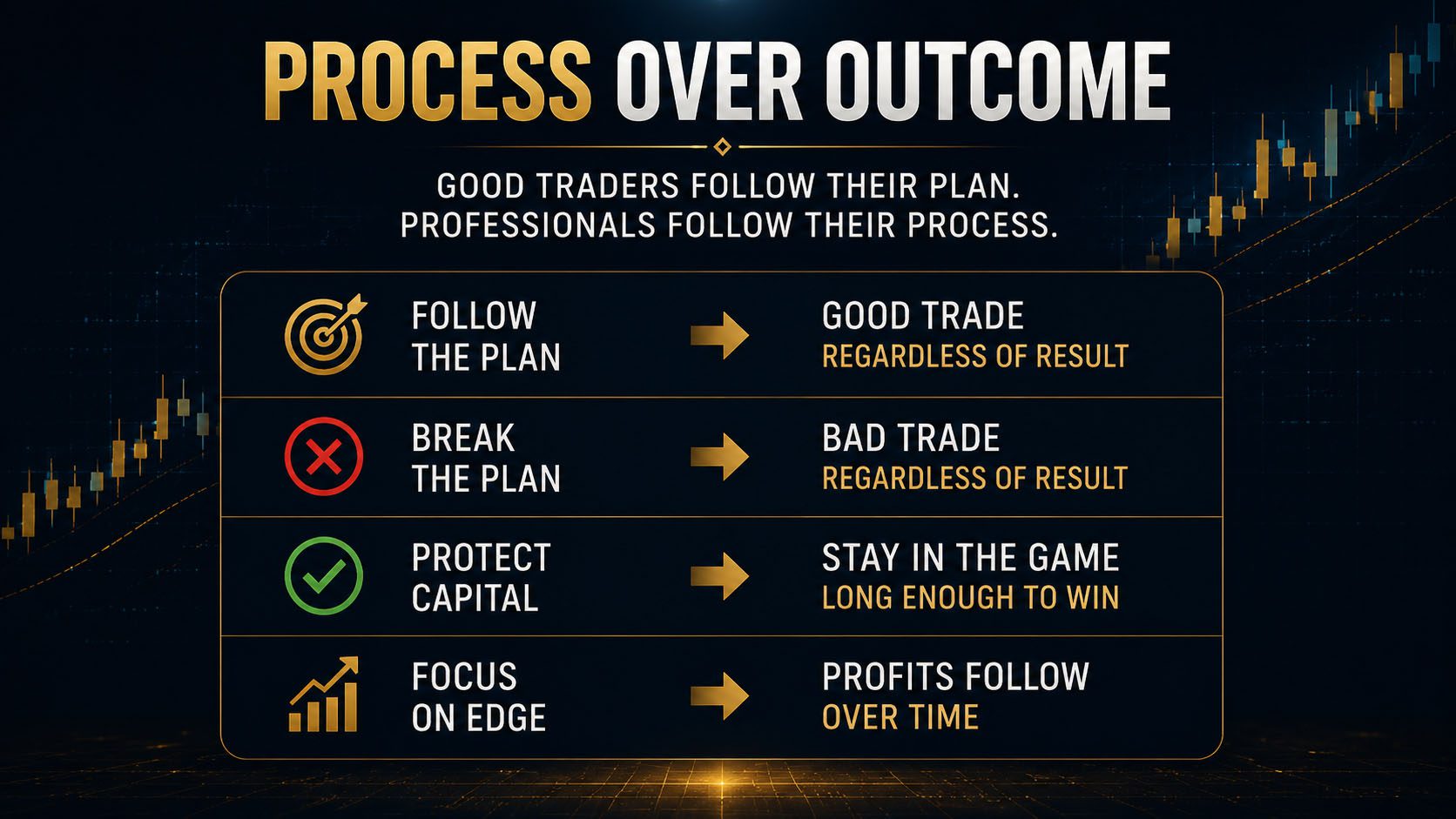
A professional trader can lose money and still have a good trading day if they followed the plan. They can also make money and still have a bad trading day if they broke rules.
This is one of the hardest concepts for beginners to accept. Profit feels good, so beginners assume profitable decisions were good decisions. But the market can reward bad behavior in the short term.
| Result | Execution | Professional Evaluation |
|---|---|---|
| Win | Followed plan | Good trade. |
| Loss | Followed plan | Good trade, normal outcome. |
| Win | Broke rules | Bad trade, dangerous habit. |
| Loss | Broke rules | Bad trade, needs correction. |
That is why your professional trading plan must define what good execution looks like before the trade happens.
Professional Traders Prepare Before They Trade
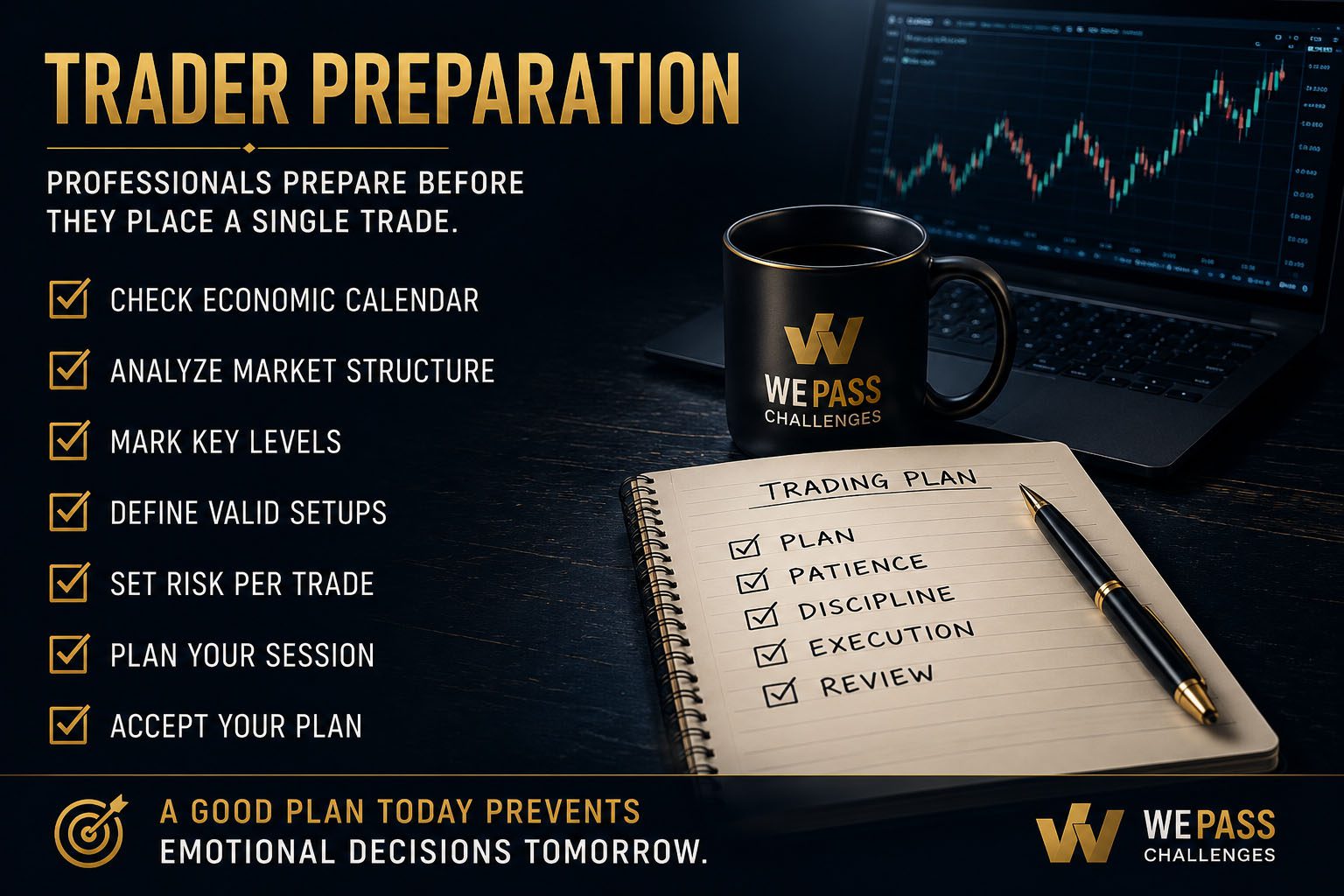
Professionals do not sit down and randomly react to candles. They prepare. They know the session, the major levels, the news risk, the account rules, and the setups they are waiting for.
Before the Session
- Check the economic calendar.
- Review higher-timeframe market structure.
- Mark important levels.
- Define valid trade setups.
- Confirm risk per trade.
- Set the daily stop point.
Preparation also helps traders avoid hidden prop firm rule violations, especially around news, holding restrictions, EAs, copy trading, and payout eligibility.
Professional Traders Know When to Stop
Knowing when to stop is a professional skill. Beginners often stop only when they are forced to stop. Professionals stop because the plan says the session is complete.
| Stop Condition | Why It Matters |
|---|---|
| Daily target reached | Protects profit from greed. |
| Two losses in a row | Prevents emotional recovery trading. |
| No valid setups | Prevents boredom trading. |
| Major news approaching | Reduces uncontrolled volatility risk. |
| Mental state is poor | Prevents emotional execution mistakes. |
This is why knowing when not to trade is just as important as knowing when to enter.
The Professional Decision Framework
Before entering any trade, a professional trader asks better questions.
- Does this setup match my plan?
- Where is my invalidation point?
- Is the reward worth the risk?
- Am I trading because of structure or emotion?
- Does this trade respect my prop firm rules?
- Would I take this same trade again over 100 examples?
These questions work best when paired with proper position sizing and a clear risk plan.
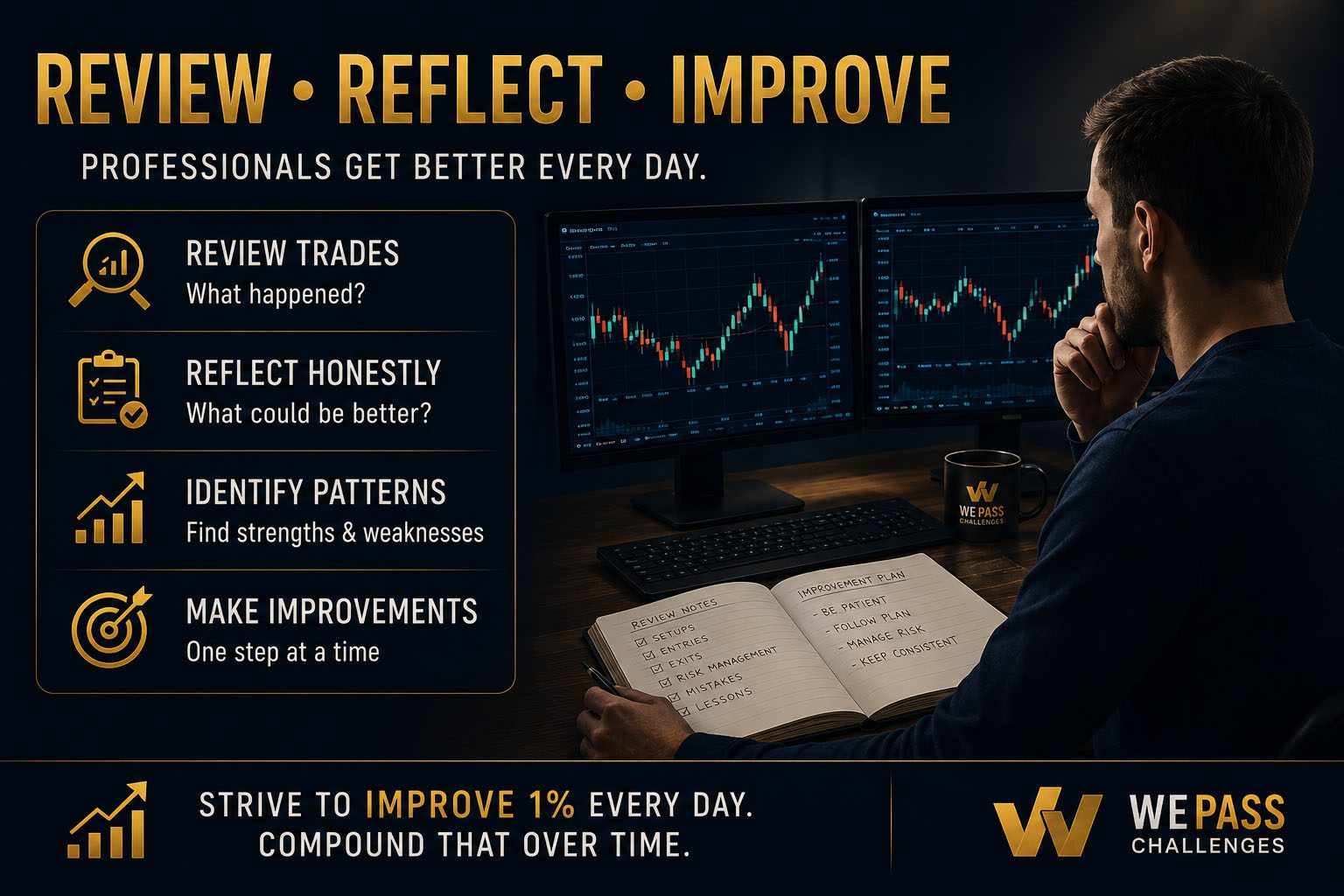
How Professionals Review Performance
Professional traders review their behavior, not just their balance. They want to know whether their decisions are improving.
| Review Area | Professional Question |
|---|---|
| Setup Quality | Did I take only valid setups? |
| Risk Control | Did I respect my position size and stop loss? |
| Psychology | Was I calm, rushed, greedy, fearful, or frustrated? |
| Rule Compliance | Did I protect the account from violations? |
| Improvement | What one behavior needs to improve next session? |
FAQ
Do professional traders win every day?
No. Professional traders lose too. The difference is that losses are planned, controlled, and reviewed.
What is the biggest difference between amateurs and professionals?
Professionals prioritize process, risk control, and consistency. Amateurs often prioritize excitement, prediction, and fast results.
Can a beginner think like a professional?
Yes. Professional thinking is built through habits, preparation, risk management, and honest review.
Why is process more important than outcome?
Because short-term outcomes can be random. Process is what creates long-term consistency.
How do I know if I am improving?
You are improving when your rule violations decrease, your preparation improves, your risk stays consistent, and your emotional reactions become easier to control.
10-Question Quiz
- What do professional traders focus on?
Answer: Process, risk, and consistency. - What does thinking in probabilities mean?
Answer: Judging performance over many trades. - Why does capital protection come first?
Answer: Without capital, there is no business. - Can a losing trade be a good trade?
Answer: Yes, if it followed the plan. - What should professionals do before trading?
Answer: Prepare levels, risk, news, and setups. - What is one professional stop condition?
Answer: Daily target reached. - What does a professional trader ask before entering?
Answer: Does this trade match my plan? - What do professionals review?
Answer: Behavior, risk, setup quality, and compliance. - What is dangerous about a profitable rule-breaking trade?
Answer: It can reinforce bad habits. - What creates long-term consistency?
Answer: Repeatable process and disciplined execution.
Key Takeaways
- Professional traders think in process, risk, and probabilities.
- Capital protection comes before chasing profit.
- A good trade is judged by execution, not only outcome.
- Preparation reduces emotional decision-making.
- Professional review turns trading experience into improvement.
🎉 Module 4 Complete
You have completed Trading Psychology.
You now understand how traders self-destruct, how fear and greed affect execution, how revenge trading and overtrading damage accounts, how discipline and patience protect capital, and how to think like a professional funded trader.
Next up: Module 5 — Passing the Evaluation
Lesson Summary
Thinking like a professional trader means shifting from single-trade emotion to long-term process. Professionals think in probabilities, protect capital first, prepare before trading, know when to stop, ask better questions before entering, and review behavior after every session. This mindset is what allows a trader to survive prop firm pressure and build long-term consistency.