
Understanding Profit Targets
Learn what profit targets are, why prop firms use them, and how professional traders reach them without forcing trades, over-risking, or breaking drawdown rules.
Lesson Goal
If there’s one number every prop firm trader becomes obsessed with, it’s the profit target. Traders stare at it every day, trying to calculate how quickly they can reach it. Ironically, that obsession is one of the biggest reasons traders fail.
Professional traders don’t chase the target. They focus on executing quality trades, protecting capital, and letting the target come naturally. Understanding this mindset can completely change how you approach your next prop firm challenge.
What Is a Profit Target?
A profit target is the amount of profit you must generate during the evaluation without breaking any trading rules.
For example, a prop firm might require an 8% or 10% return before considering your evaluation successful.
| Account Size | Profit Target |
|---|---|
| $50,000 | $4,000 (8%) |
| $100,000 | $8,000 (8%) |
| $200,000 | $16,000 (8%) |
Why Do Prop Firms Use Profit Targets?
Profit targets aren’t designed to punish traders. They’re designed to demonstrate that you can consistently generate returns while respecting risk management.
Anyone can get lucky once. Prop firms want traders who can produce profits without violating daily drawdown, maximum drawdown, or taking reckless positions.
Important Mindset Shift
The evaluation isn’t testing whether you can make money.
It’s testing whether you can make money professionally.
This is why a trader needs more than a good entry. They need position sizing, trade discipline, and a plan for protecting the account.
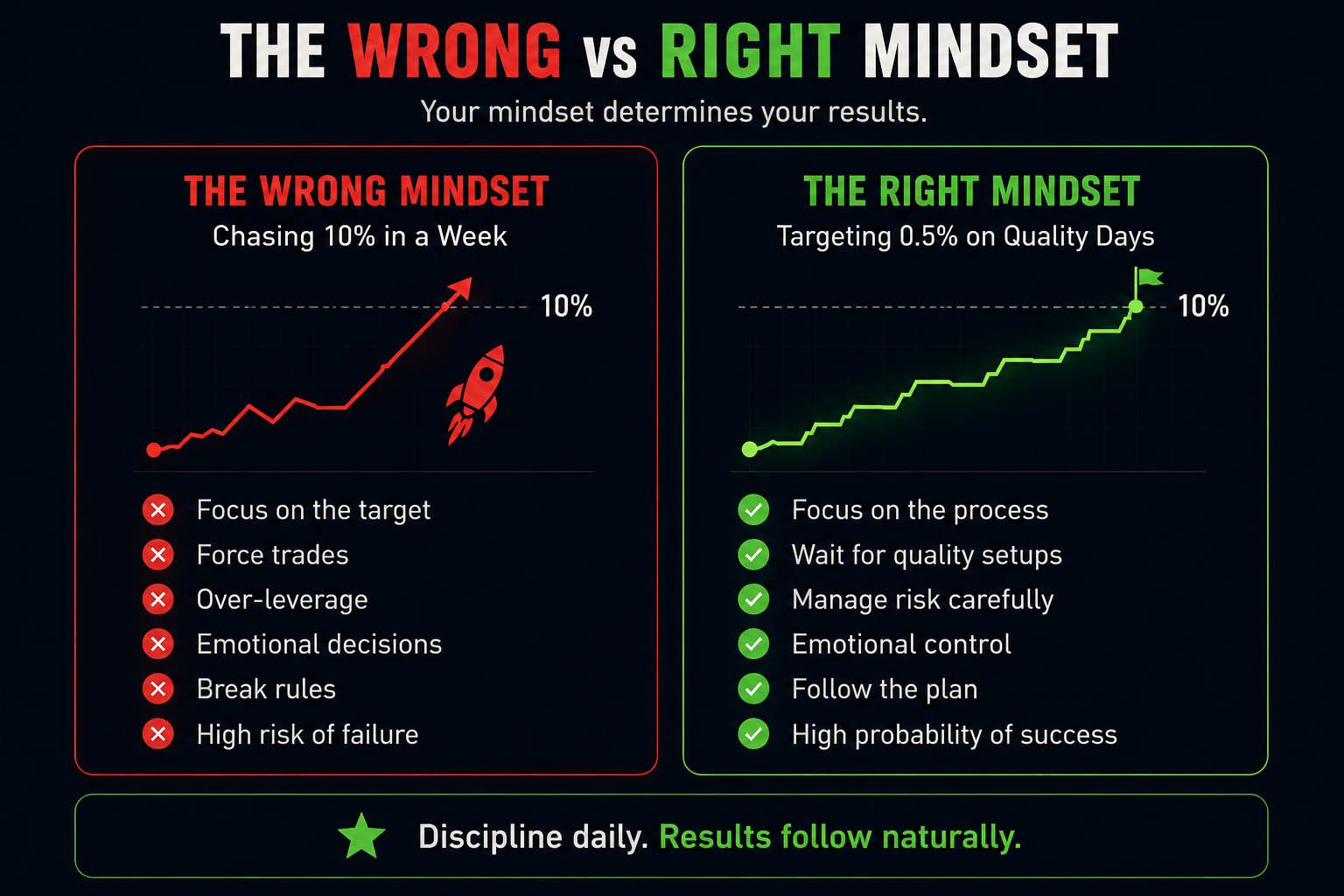
The Biggest Mistake Traders Make
Most traders immediately calculate how much they need to make every day.
Then they force trades.
They over-leverage.
They revenge trade.
They violate drawdown.
The profit target never caused the failure. The emotional pressure did.
Example
Target: 10%
Trader thinks: “I need 10% quickly.”
Professional thinks: “I need 0.5% on good trading days.”
That difference matters. One mindset creates pressure. The other creates a process.
Break the Target Into Smaller Goals
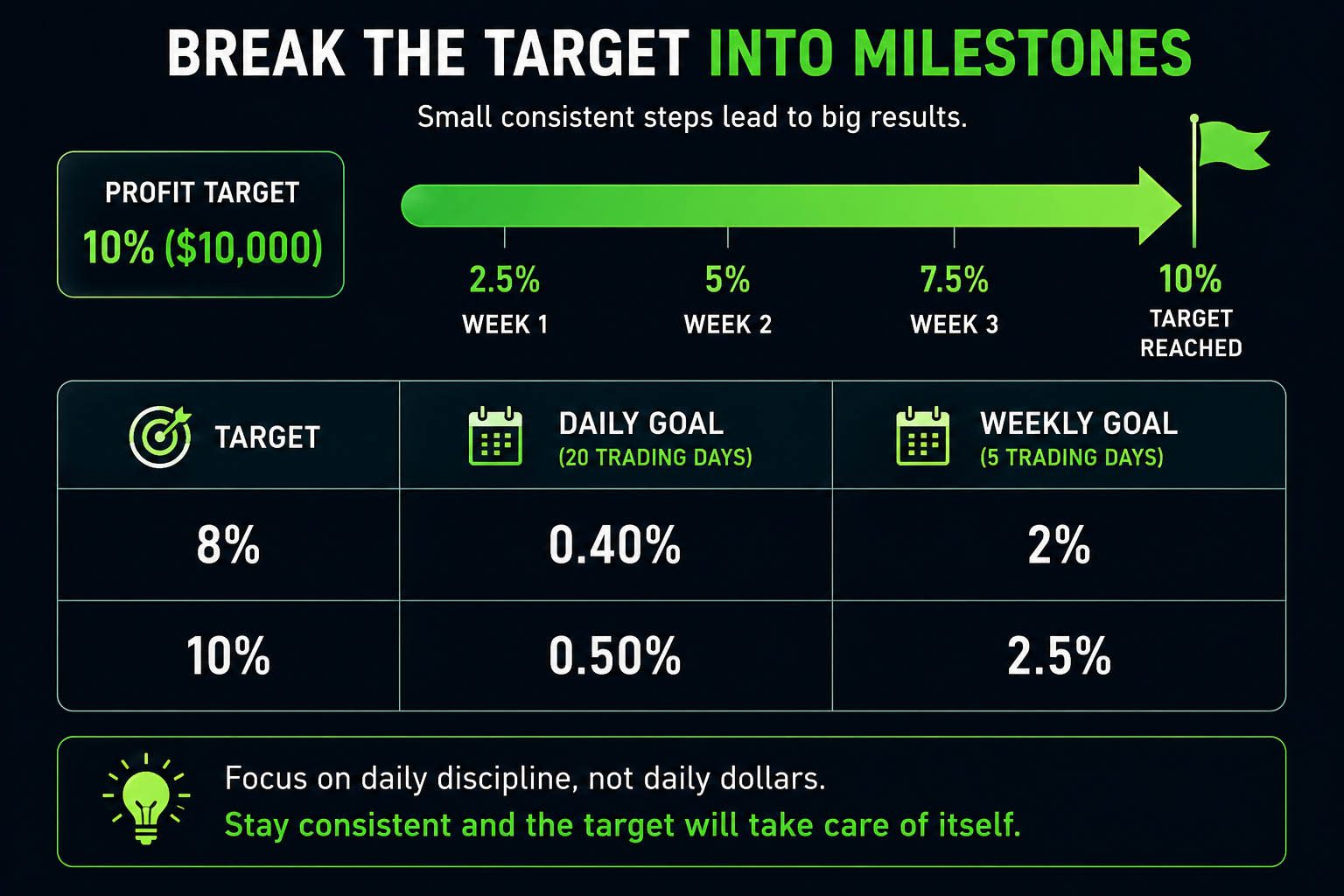
One of the best ways to reduce pressure is to divide the target into smaller milestones.
| Target | Daily Goal | Weekly Goal |
|---|---|---|
| 8% | 0.40% | 2% |
| 10% | 0.50% | 2.5% |
Breaking the target down also helps you align each trade with your risk-to-reward rules instead of chasing random profit.
What Happens If You Reach the Target Early?
Many traders hit the target… then continue trading.
That’s often where everything falls apart.
If your firm has minimum trading days, protect the account.
Don’t gamble away an already successful evaluation.
Quick Tip
Once the target is reached, your job changes from making money to protecting what you’ve earned.
At that point, your focus should shift toward capital preservation, minimum trading day requirements, and clean rule compliance.
Professional Mindset
Professional traders don’t wake up thinking, “I need to make 10% today.”
They wake up asking, “Is there a quality setup worth risking money on today?”
That difference is enormous.
The first mindset chases money.
The second protects capital.
Capital protection usually wins.
This mindset should be part of your professional trading plan before the evaluation begins.
Key Takeaways
- Profit targets measure consistency — not luck. The firm wants to see controlled performance, not one oversized win.
- Break large goals into smaller milestones. Smaller goals reduce pressure and improve decision-making.
- Never chase the target emotionally. Chasing usually leads to overtrading and drawdown violations.
- Protect profits once the target is reached. After reaching the goal, rule compliance matters more than adding extra profit.
- Good trading decisions create profit targets naturally. Process first, target second.
Lesson Quiz
- Why do prop firms use profit targets?
- Should traders focus on the target or the process?
- Why is breaking the target into smaller goals helpful?
- What should you do after reaching the target early?
- What usually causes traders to fail before reaching the target?
Lesson Summary
Profit targets aren’t something to chase — they’re something to earn through disciplined execution. The traders who consistently pass prop firm evaluations are rarely the ones trying to make the most money in the shortest amount of time. They’re the ones who manage risk, stay patient, and allow steady progress to carry them across the finish line.