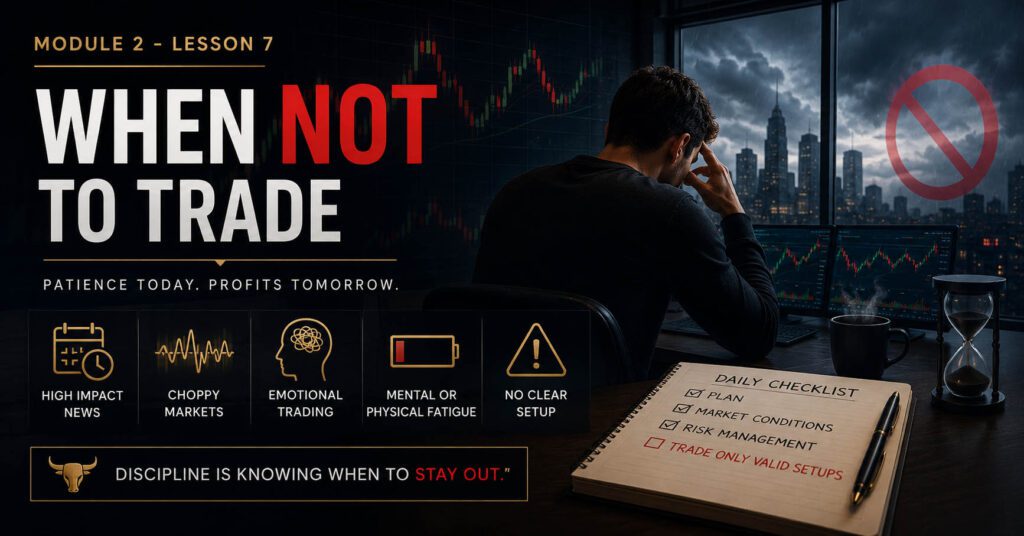
When Not to Trade
Learn when to avoid the market, protect your capital, and stop low-quality trades before they damage your prop firm challenge or funded account.
Lesson Goal
Most beginner traders believe success comes from finding more trades. Professional traders understand the opposite. Long-term success in prop firm trading often comes from knowing when not to trade.
This lesson will teach you how to avoid low-quality trading conditions, high-impact news, emotional decisions, revenge trading, fatigue, and FOMO. If you want to pass a prop firm challenge and keep a funded account, avoiding bad trades is just as important as finding good trades.
Why Knowing When Not to Trade Matters
A prop firm challenge is not only a test of strategy. It is a test of discipline. Many traders understand risk management on paper, but they fail because they trade during the wrong conditions. They enter during news, chase price after big moves, revenge trade after losses, or continue trading when they are mentally exhausted.
The best traders are selective. They do not need to trade every candle, every session, or every day. They wait for conditions that match their trading plan. When the market does not offer a clean opportunity, they protect their account by doing nothing.
| Beginner Mindset | Professional Mindset |
|---|---|
| I need to trade today | I only trade if my setup appears |
| I missed the move, so I should chase | A missed trade is part of the business |
| I lost, so I need to win it back | A loss is a business expense |
| More trades means more opportunity | Better trades mean better results |
Do Not Trade During High-Impact News
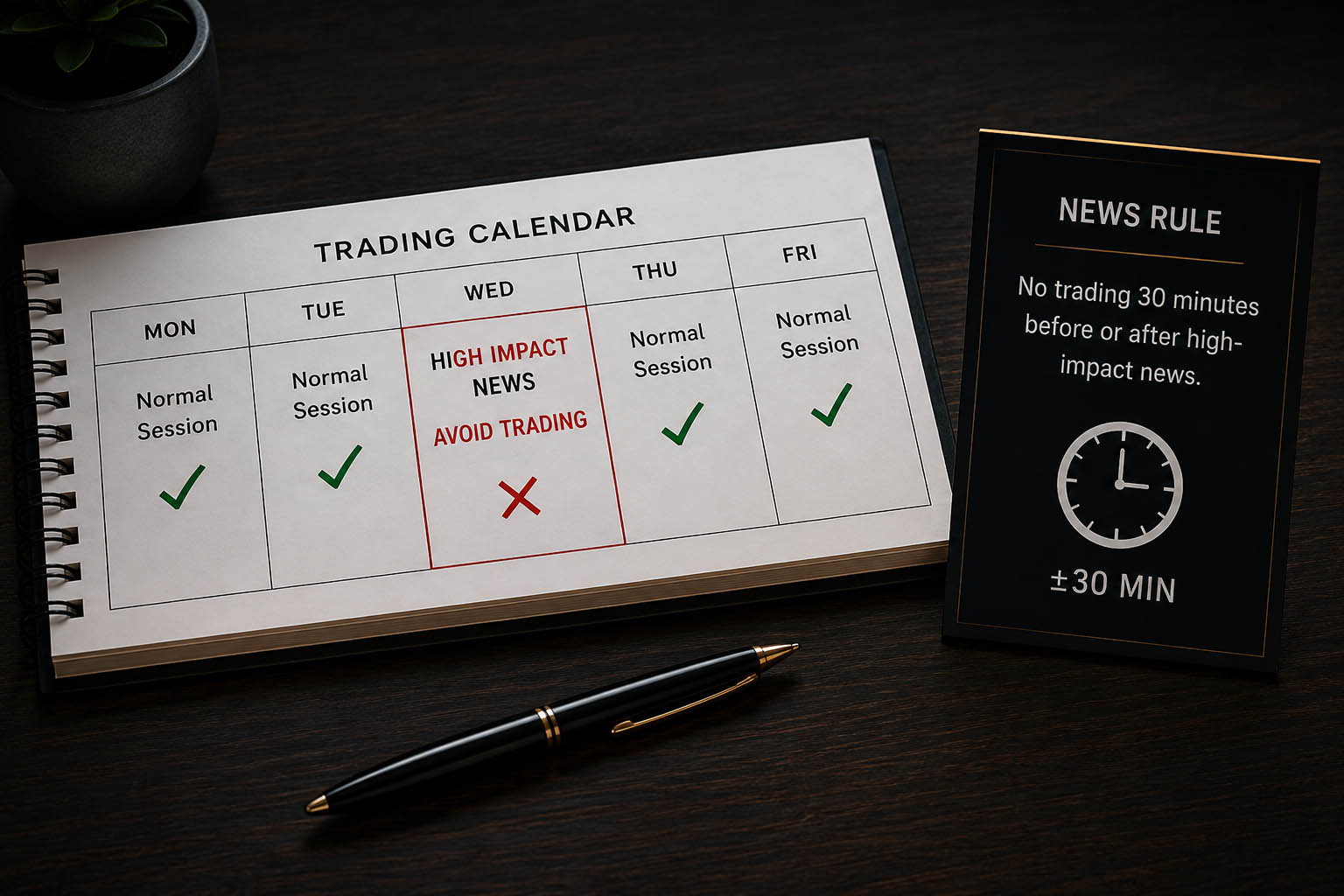
High-impact news is one of the fastest ways to lose a prop firm challenge. Economic releases can create sudden volatility, spread widening, slippage, delayed fills, and unpredictable price movement. Even if your trade idea is correct, the execution can still damage your account.
Common high-impact events include CPI, NFP, FOMC statements, central bank rate decisions, unemployment data, GDP releases, and major geopolitical announcements. Prop firm traders should always check an economic calendar before placing trades.
| News Event | Why It Matters |
|---|---|
| CPI | Can move USD pairs, gold, indices, and crypto sharply |
| NFP | Often creates fast spikes and whipsaws |
| FOMC | Can change market expectations instantly |
| Central Bank Decisions | Can create extreme volatility in currencies and indices |
Professional Rule
Unless your strategy is specifically designed for news trading, avoid opening new trades 30 minutes before and 30 minutes after high-impact news.
News risk can quickly trigger maximum daily loss or create a larger maximum drawdown problem than expected.
Do Not Trade in Low Liquidity Conditions
Low liquidity means fewer active buyers and sellers are participating in the market. When liquidity is thin, price can move strangely. Spreads can widen, candles can become choppy, and technical levels may break without meaningful follow-through.
Many forex traders focus on the London session, New York session, and London-New York overlap because these periods usually offer stronger liquidity and cleaner price movement. Trading outside your best session can lead to forced trades and poor execution.
- Avoid trading when spreads are unusually wide.
- Avoid dead market hours when price is barely moving.
- Avoid thin holiday markets.
- Avoid forcing trades during sessions that do not fit your strategy.
- Avoid trading when price action is messy and directionless.
Do Not Revenge Trade After a Loss
Revenge trading happens when a trader takes another trade because they are angry about a loss. This is one of the most common reasons traders fail prop firm evaluations. The second trade is usually not based on the trading plan. It is based on emotion.
Professional traders accept losses as part of the business. They do not treat every loss like a personal attack. If the trade followed the plan, the loss is simply data. If the trade broke the plan, the lesson is to improve execution.
| After a Loss | Professional Response |
|---|---|
| You feel angry | Step away from the screen |
| You want to increase lot size | Keep risk fixed or stop trading |
| You want to win it back quickly | Review whether the next setup is actually valid |
| You broke your rule | Journal the mistake and protect the account |
Do Not Trade When You Are Tired
Fatigue is underrated in trading. A tired trader may read charts incorrectly, ignore risk rules, miss news events, enter late, or hold losers too long. Trading requires decision quality. If your mind is not sharp, your execution will suffer.
If you are exhausted, distracted, sick, angry, rushed, or mentally drained, the best decision may be to skip the session. Protecting your account is more important than forcing one more trade.
Simple Test
If you would not trust yourself to manage someone else’s money right now, do not trade your prop firm account right now.
This is not weakness. This is capital preservation. Protecting the account means protecting it from the market and from your own worst decisions.
Do Not Trade From FOMO
FOMO means fear of missing out. In trading, it usually happens after price has already moved. The trader sees a large candle, feels like the opportunity is disappearing, and jumps in late without proper risk-to-reward.
This is dangerous because late entries often place the stop loss too far away and the take profit too close. That destroys the risk-to-reward profile. A trade that looks exciting can still be a bad professional decision.
- If the move already happened, wait for the next setup.
- If the stop loss is too large, skip the trade.
- If the reward is not at least your minimum requirement, skip the trade.
- If you feel rushed, slow down.
- If you are entering only because price is moving fast, do not trade.
Do Not Trade Without a Clear Setup
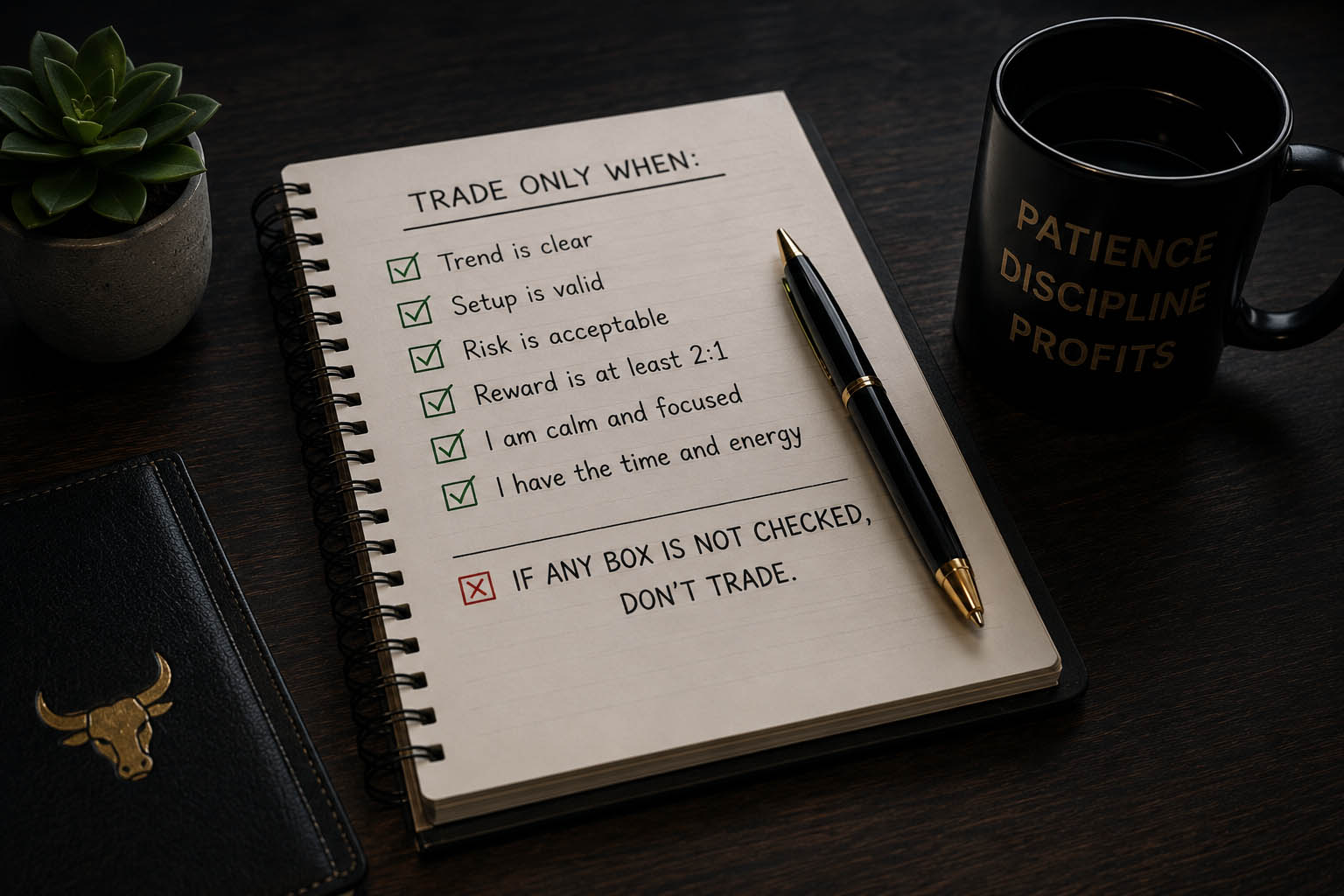
A professional trading plan defines exactly what a valid setup looks like. If the market does not match that setup, there is no trade. Guessing, predicting, and forcing entries are not professional trading behaviors.
A trader who waits for clean conditions may take fewer trades, but those trades are usually higher quality. This is especially important in funded trading because every low-quality trade consumes drawdown and increases the chance of breaking a rule.
Need Help Passing Without Breaking Rules?
WePassChallenges focuses on controlled risk, rule compliance, and disciplined execution. If you want help navigating a prop firm challenge without gambling your account, our team can help you understand the safest path forward.
Visit WePassChallenges →No-Trade Checklist
- Is high-impact news less than 30 minutes away?
- Are spreads wider than normal?
- Is price action choppy and unclear?
- Are you angry after a loss?
- Are you tired, distracted, or emotional?
- Are you chasing a move that already happened?
- Does the trade fail your minimum risk-to-reward requirement?
- Have you already reached your daily trade limit?
Key Takeaways
- Knowing when not to trade is a major part of professional risk management. Avoiding bad trades protects your account.
- High-impact news can create slippage, spreads, and unpredictable movement. This can break risk rules quickly.
- Low liquidity can produce messy price action and poor fills. Clean execution matters.
- Revenge trading is one of the fastest ways to fail a prop firm challenge. Anger and risk do not mix.
- Fatigue lowers decision quality and increases mistakes. A tired trader is a dangerous trader.
- FOMO usually leads to late entries and poor risk-to-reward. Missing a trade is better than forcing a bad one.
- Sometimes the best trade is no trade. Protect the account first.
Frequently Asked Questions
When should I not trade?
You should avoid trading during high-impact news, low liquidity, emotional states, fatigue, revenge trading conditions, and when there is no valid setup according to your trading plan.
Should prop firm traders trade during news?
Most prop firm traders should avoid high-impact news unless their strategy is specifically designed for news trading and the firm allows it. News can create slippage and volatility that increases rule violation risk.
Is it okay to skip a trading day?
Yes. Professional traders skip days when market conditions do not fit their plan. Not trading is better than forcing low-quality trades that damage the account.
What is revenge trading?
Revenge trading is when a trader enters another trade out of anger or frustration after a loss. It usually leads to poor decisions, over-risking, and larger drawdowns.
How do I avoid FOMO trading?
Use a written trading plan, define your setup in advance, require a minimum risk-to-reward ratio, and accept that missed trades are part of trading.
Lesson Quiz
- Why can high-impact news be dangerous for prop firm traders?
- What are two signs of low liquidity?
- What is revenge trading?
- Why can fatigue cause bad trading decisions?
- What should you do if you feel FOMO after a large market move?
Lesson Summary
Knowing when not to trade is one of the most valuable skills in prop firm trading. By avoiding high-impact news, low liquidity, revenge trading, fatigue, emotional decision-making, and FOMO, traders protect their drawdown and increase their chances of long-term consistency. Professional traders do not force trades. They wait for the right conditions and protect capital first.